New Media Unlocked!
You can now publish on USA TODAY through MarketersMEDIA. That's 142M+ monthly visitors and DR 92 backlinks for every release you publish.
Better reach, better SEO, better credibility.

You can now publish on USA TODAY through MarketersMEDIA. That's 142M+ monthly visitors and DR 92 backlinks for every release you publish.
Better reach, better SEO, better credibility.
Table of Content


A lot of consumers today prefer discovering brands through social media and peer recommendations rather than traditional advertising.
Word-of-mouth has gone digital, and it moves faster than ever.
For PR and communications teams, this changes how attention is earned. A single share from the right person can put your story in front of the exact audience you want, with context and credibility already attached.
People start talking about it, commenting on the post, resharing it, and bringing others into the conversation.
That means more people seeing your brand and more potential customers paying attention to what you offer.
This is what shared media is about.
Shared media is content that your brand originally creates, but that is then amplified and circulated by your audience through social networks and online communities.
For example, shared media is when someone shares your blog post on LinkedIn, reposts your brand video on Instagram Stories, or screenshots your tweet and sends it to a friend.
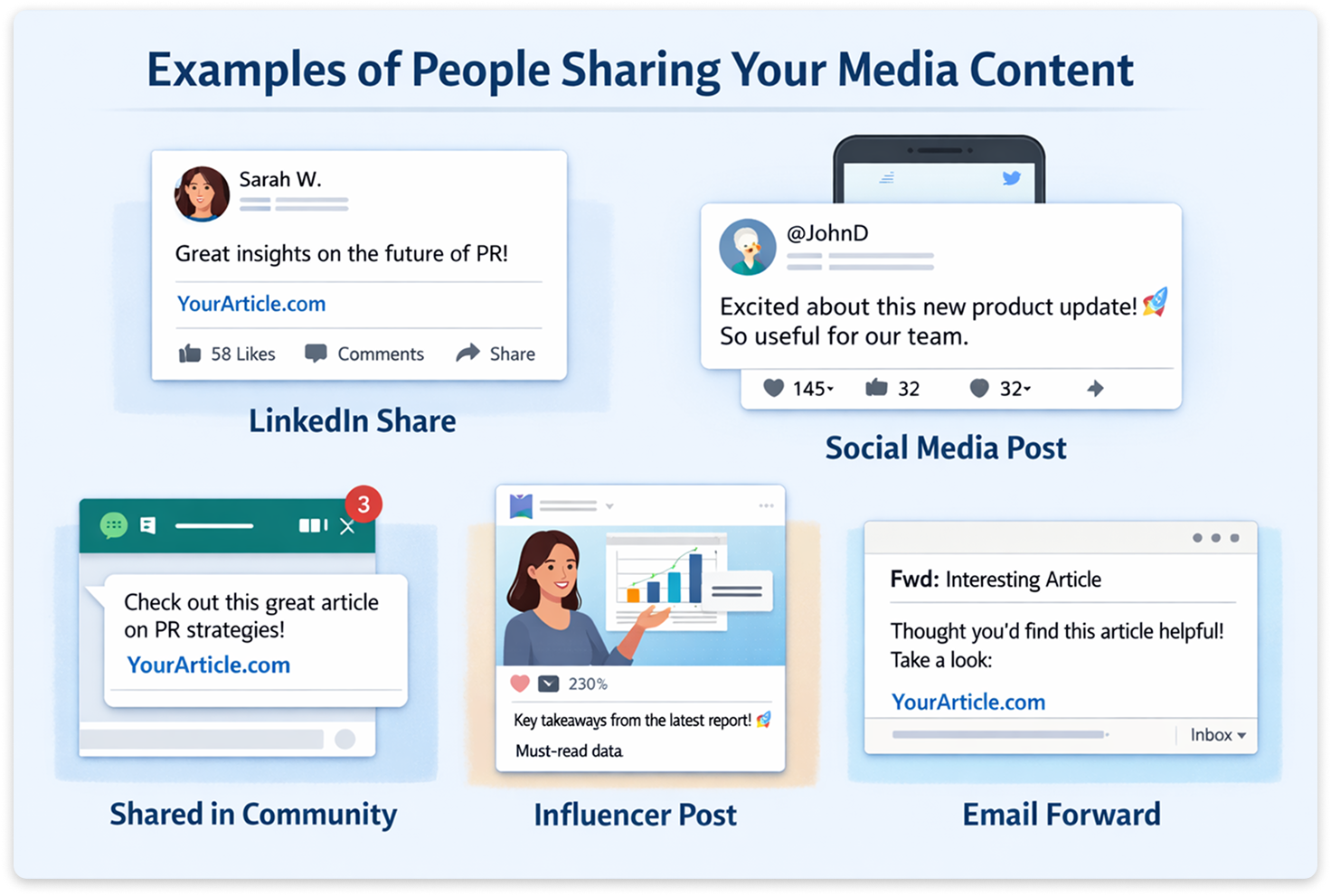
You made the content. They distributed it.
But, many brands assume that posting on their own social media accounts counts as shared media. It doesn’t, not until someone else picks it up and passes it along.
The key word is “shared,” and the person doing the sharing is your audience, not your brand.
To really understand shared media, it helps to see how it compares to the other three PESO categories.
Paid media is any exposure you purchase on a platform you don’t own.
This includes social media ads, search engine advertising (where you pay to appear at the top of results for specific keywords), native advertising (sponsored content designed to blend with editorial content), and display ads.
| Aspect | Shared Media | Paid Media |
| Method | Your audience shares your content | You pay for placement and exposure |
| Reach | Limited by how much people value your content | Limited by your budget |
| Result | Authenticity and community trust | Visibility and scale |
That said, the two channels work well together.
A paid campaign can spark the initial awareness that leads to organic sharing. Think of paid as the spark and shared as the fire.
Earned media is attention your brand receives from sources it doesn’t control. It can be media coverage in publications, mentions in podcasts, organic influencer reviews, or ratings on review platforms like TripAdvisor or Trustpilot.
You didn’t pay for it, but you earned it by doing something noteworthy.
Shared media and earned media can look similar on the surface because neither involves direct payment.
| Aspect | Shared Media | Earned Media |
| Source | Your audience or social media users | A third party, such as a journalist or media outlet |
| Content type | Your content, like a blog post or announcement | Coverage about your brand, like a news article or review |
| Example | A customer reposts your blog on Instagram Stories | A media outlet publishes a story about your brand |
| Result | Extends reach through social sharing | Builds credibility through third-party coverage |
Owned media is any content your brand originates and fully controls.
This includes your website, blog posts, landing pages, newsletters, help articles, and your official social media accounts. You own the message. You control the format, timing, and distribution.
Owned media is the starting point for shared media. Your brand creates a piece of content (owned), and then your audience picks it up and circulates it (shared).
The content remains the same. The only change is who is distributing it and why. When a user shares your blog post, they’re giving it their implicit endorsement.
That’s the transformation from owned to shared, and it’s one of the most valuable things that can happen to your content.
Shared media lives wherever people share content with each other. Here’s where that happens most:
Facebook remains one of the largest sharing environments, especially for links, videos, and community discussions.
It’s common to see articles, announcements, and videos circulate through groups and personal feeds, often picking up comments and reshares along the way.
Instagram is built around visual sharing, from reposted Stories and Reels to tagged mentions of products and experiences.
Brands often see their content travel through screenshots, reposts, and mentions rather than direct links.
X is designed for real-time sharing, which makes it a natural home for news, commentary, and trending conversations. It’s where links, screenshots, and short takes spread quickly through reposts and quote posts.
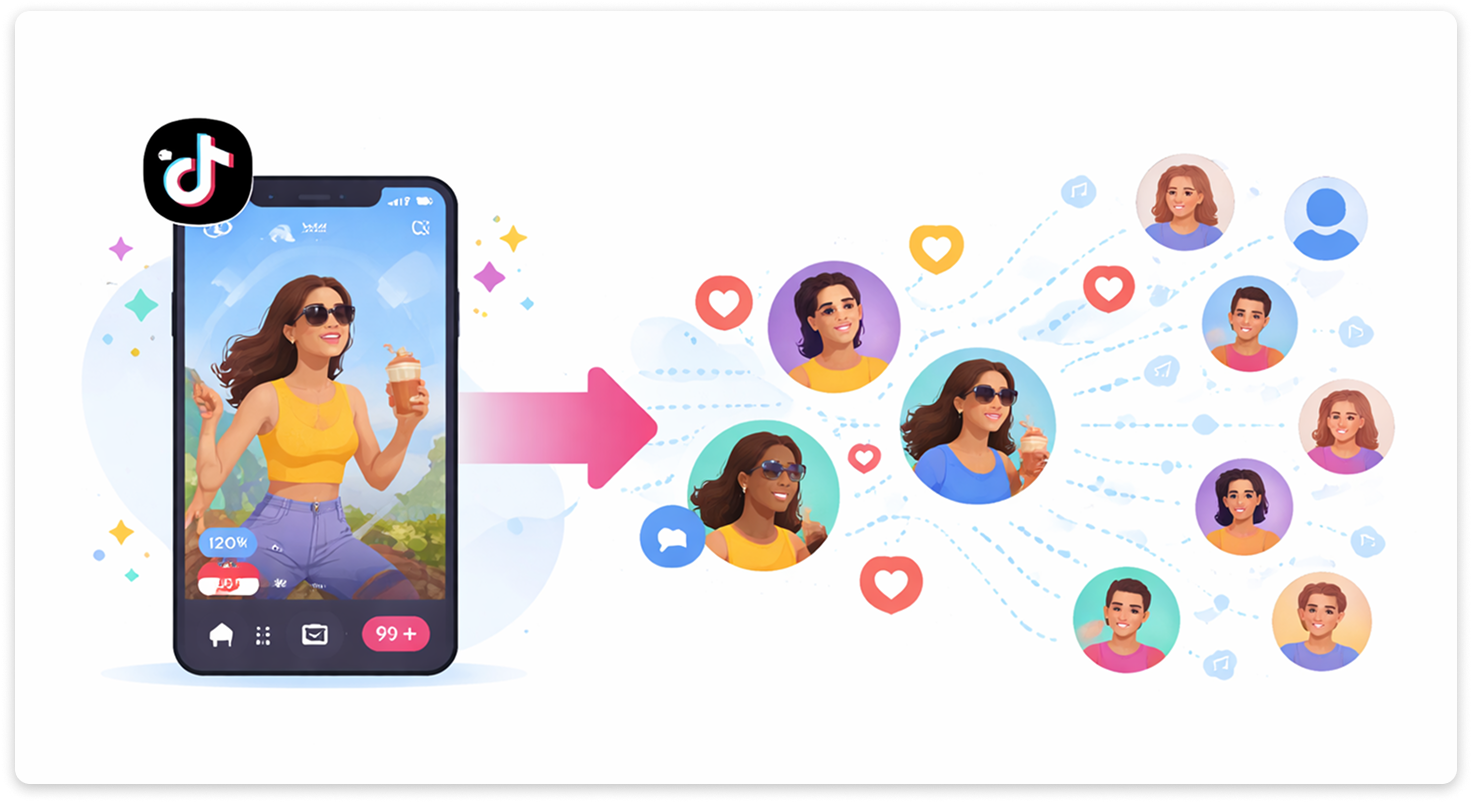
TikTok has become one of the strongest drivers of viral sharing, especially for short-form video aimed at younger audiences.
A single clip can be remixed, reposted, and referenced across thousands of accounts in a short time.
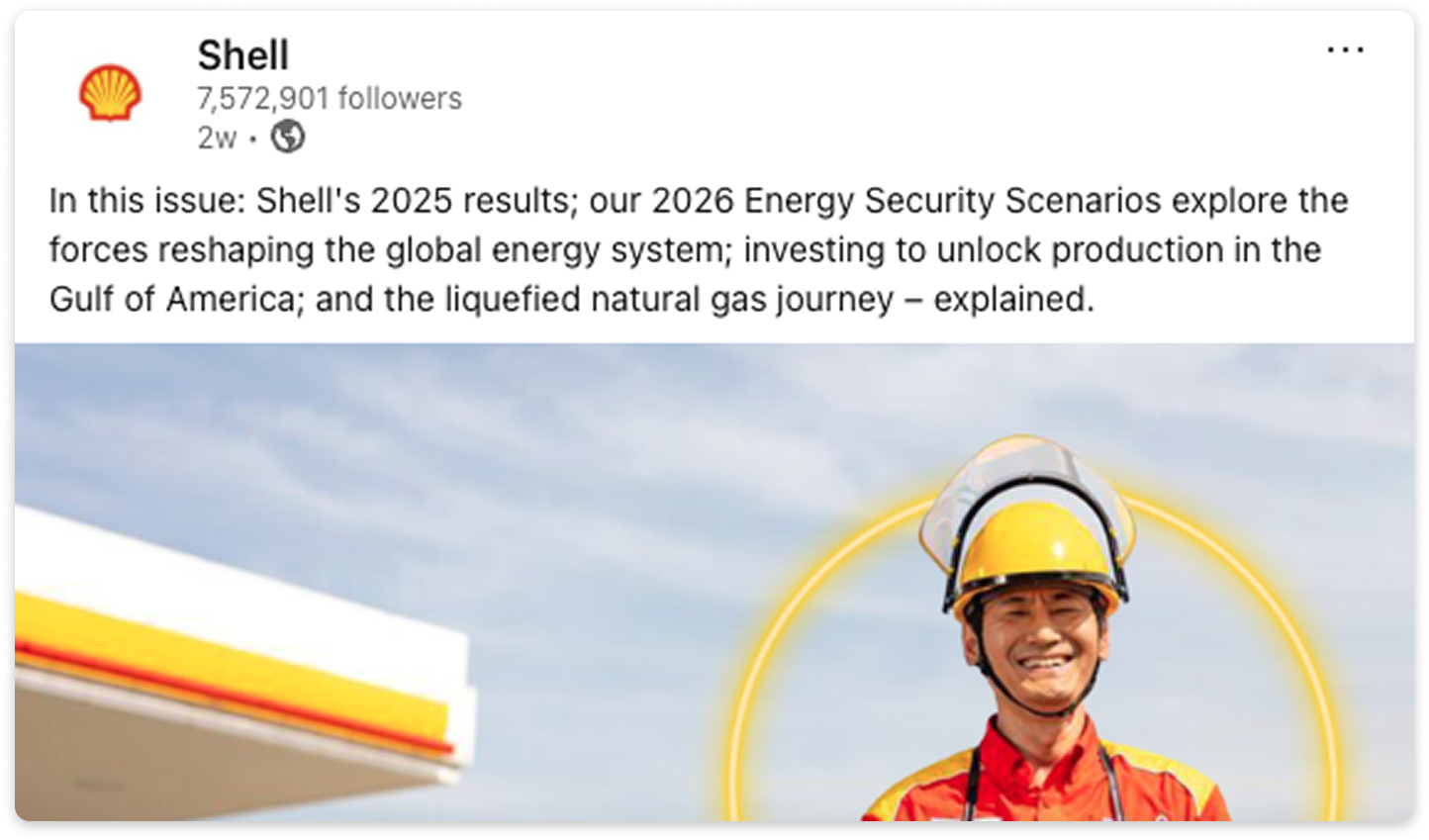
LinkedIn is the main platform for professional sharing, including thought leadership posts, industry news, and career-related content. This is where B2B content and company announcements often get the most traction.
Example of company announcement posted on LinkedIn by Shell:
YouTube makes video easy to share across the web, with embeds appearing on websites, in newsletters, and in social posts. Many videos spread far beyond YouTube itself because they’re shared everywhere else.
Pinterest works more like a long-tail sharing platform, where people save and recirculate visual content over time, especially in areas like lifestyle, home, food, and fashion.
Shared media also appears outside of traditional social networks. Apple Music and Spotify let users share playlists and tracks, which matters for brands with podcasts or audio content.
Reddit and online forums are big sharing spaces where niche communities discuss and recirculate content, sometimes giving it a second life.
And email forwarding still counts too. When someone forwards an article or newsletter to a colleague, that’s shared media in action.
The pattern is always the same. Your brand creates the content. Other people decide where it goes. And that shift in control is exactly why shared media matters so much for modern PR and communications teams.
When someone shares your content, it reaches their followers — many of whom have likely never encountered your brand before.
For example, someone shares Grid My Business, an AI-powered local SEO and rank tracking tool, on their own Instagram to show how they use it. They’re not running an ad. They’re just sharing it with their own audience, and that single post puts your brand in front of people who may have never heard of it before.
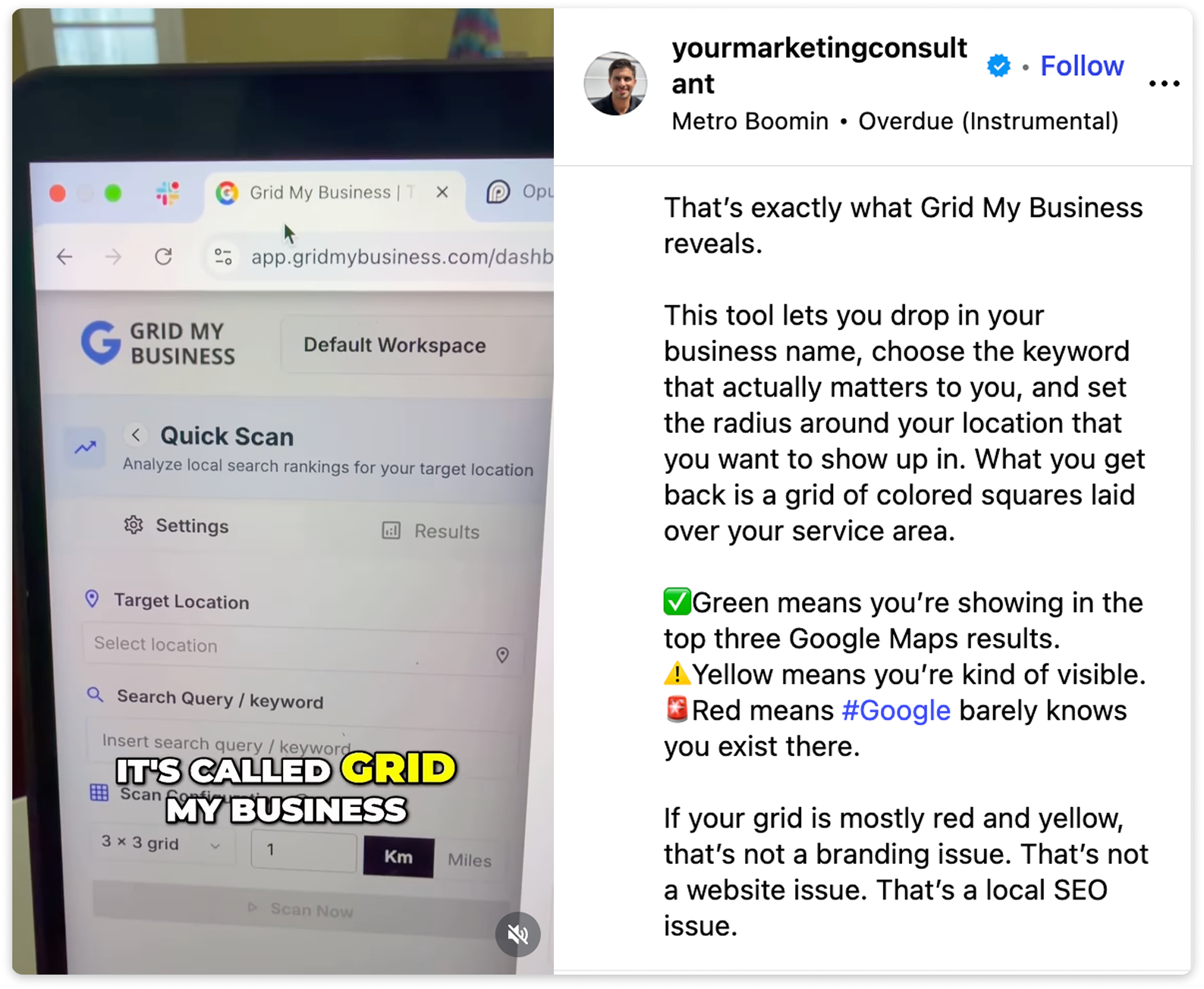
This is organic audience expansion that no paid targeting can fully replicate, because the distribution is based on genuine human connections rather than algorithmic matching.
Shared media also expands your reach into demographics outside your usual targeting parameters. If your content resonates with an unexpected audience and gets shared within that community, you’ve discovered a new potential customer base you might not have thought to pursue.
There’s an SEO dimension here too.
Content that is widely shared often attracts backlinks, increases dwell time when people visit your site, and signals to search engines that your content is valuable—all of which can improve your search visibility over time.
When someone shares your content, they’re putting their personal credibility behind it. Their network sees the share as an implicit endorsement.
This is especially significant in an era where consumers are increasingly skeptical of traditional advertising.
A recommendation from a peer carries weight that a paid ad simply can’t match. Shared media is, at its core, digital word-of-mouth and word-of-mouth has always been the most trusted form of marketing.
Unlike owned or paid media, shared media is inherently interactive.
When your content is shared, it invites comments, reactions, replies, and further sharing. This two-way interaction humanizes your brand and turns passive viewers into active participants.
Over time, consistent engagement through shared media builds community.
Brands that show up in their audience’s conversations, respond to feedback, and participate in discussions create a sense of connection that goes far beyond a typical brand-to-consumer relationship.
Shared media is the most cost-effective channel in the PESO Model.
Unlike paid media, it doesn’t require a media budget. And unlike earned media, it doesn’t require the same level of relationship building with journalists and editors.
The “cost” of shared media is the quality of your content and the time invested in understanding your audience well enough to create something worth sharing.
That doesn’t mean shared media is free. Instead, it requires creative investment, strategic thinking, and ongoing monitoring. And it only works when your content is built and distributed with sharing in mind.
The foundation of shared media success is content that people actually want to share. That’s easier said than done, but it starts with a few core practices.
Before you create anything, you need to know who you’re creating it for.
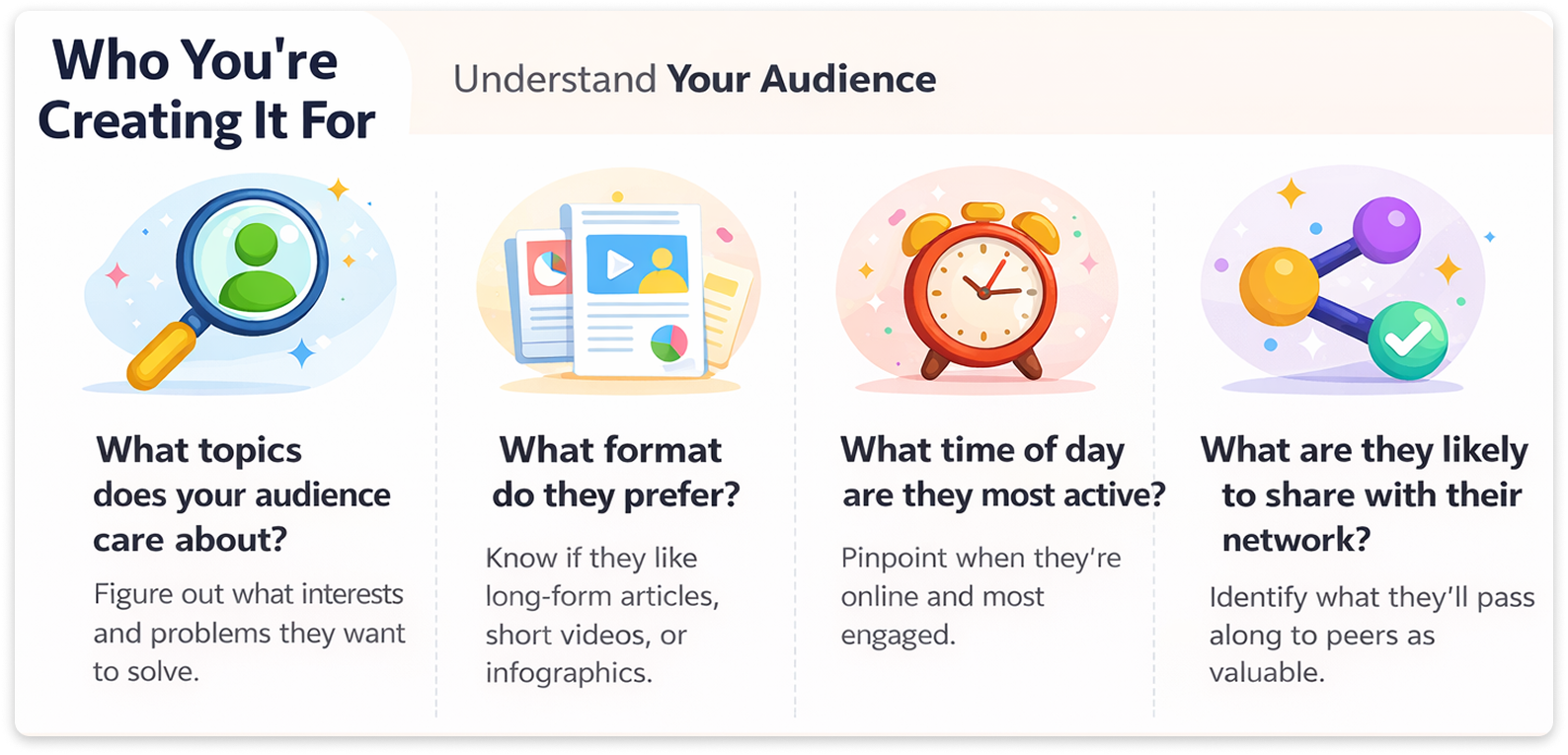
Research your audience through platform analytics, social listening tools, and direct engagement.
The more precisely you understand their interests and behaviors, the better your chances of creating content that resonates.
In 2026, audiences are scrolling past polished, AI-generated content faster than ever. What stops the scroll is something real: a genuine story, an honest perspective, a behind-the-scenes moment.
Emotional and relatable storytelling creates the kind of connection that makes people want to share.
Thai Life Insurance ads are famous for using heartfelt stories that people pass around because they feel something, not because they’re ads. For example:
This applies to your brand voice too.
Content that sounds like a corporate broadcast gets ignored. Content that sounds like a human being, gets shared.
Visual content consistently outperforms text-only content in sharing behavior.
Images, videos, infographics, and even well-designed memes increase engagement and make content easier to absorb and pass along.
This applies beyond social media too. When your brand publishes press releases or PR content, including rich multimedia elements increases the chance that journalists, influencers, and readers will share it further.
Want your brand story featured on credible media outlets?
MarketersMEDIA Newswire helps you get the kind of third-party visibility these big brands achieved—through press release distribution to established publications. Get in touch with us today.
Hashtags make your content discoverable beyond your existing followers and connect it to broader conversations your audience is already having.
A well-chosen hashtag can dramatically expand the reach of a campaign. Think of Coca-Cola’s #ShareACoke as a textbook example of a branded hashtag that mobilized a global community.
Tagging relevant people, partners, or brands also increases the chance of your content being reshared by those parties to their own networks.
Content that asks a question, challenges a common assumption, or takes a clear stance tends to generate more comments and shares than content that simply informs.
Give your audience something to respond to.
If you’re going to encourage discussion, be prepared to participate in it. Monitor comments, respond to questions, and engage with the people interacting with your content.
And be ready to moderate. Open discussions can sometimes attract negativity, and you need a clear plan for managing that.
Quizzes, polls, calculators, games, contests, and giveaways all invite active participation rather than passive consumption.
Look at the number of likes and comments this giveaway post received:
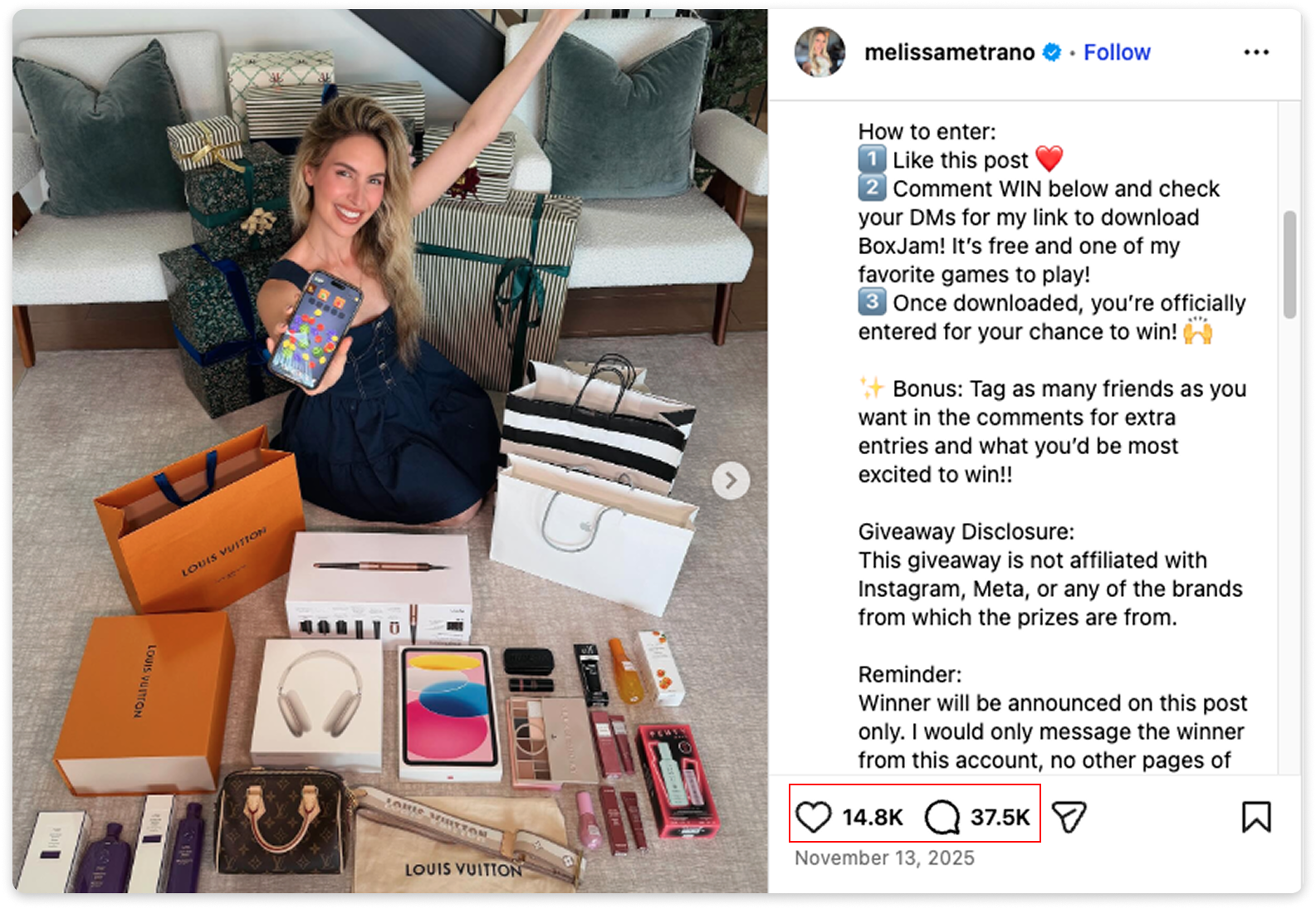
Interactive content is inherently more shareable because people want to show their results, challenge their friends, or spread the word about a competition they’re entering.
This type of content also generates valuable first-party data about your audience’s preferences and behaviors.
Once you start putting these strategies into practice, the next question is obvious: how do you know which content is really driving shares, reach, and engagement?
Tracking shared media metrics shows you what actually gets shared and why, instead of relying on guesswork.
It helps you prove whether shared content is expanding your reach, driving traffic, or supporting your brand goals. Most importantly, it gives you the insight to improve future content and focus your effort where it has the biggest impact.
Here are the key metrics to track when evaluating your shared media performance.
This is the most direct measure of shared media success.
When someone shares your content, they’re voting with their reputation. Track shares across platforms and over time to understand which content types and topics resonate most with your audience.
Reach tells you how many unique users have seen your content. As your content gets shared, your reach expands beyond your own follower base. Monitoring reach alongside shares helps you understand how far your content is actually traveling.
Amplification rate is the ratio of shares to your total reach or impressions. It tells you how effectively your audience is spreading your content relative to how many people saw it. A high amplification rate means your content is doing exactly what shared media is supposed to do.
Social sentiment analysis tells you the tone of the conversations surrounding your shared content — positive, negative, or neutral.
This is especially important for monitoring how your brand is being perceived as content spreads beyond your control.
When shared content drives people back to your website or other owned assets, that’s referral traffic. This metric connects shared media activity to tangible business outcomes—it shows you whether the conversations happening on social platforms are translating into visits, signups, or sales.
Track referral traffic in your analytics platform and look at what happens after people land on your site to understand the full impact of your shared media efforts.
Shared media is now one of the main ways brands earn attention, trust, and visibility.
When people choose to share your content, they’re not just helping you reach more screens. They’re helping shape how your brand is seen, talked about, and remembered.
The real opportunity is not in chasing viral moments, but in building a steady presence that people want to pass along. That means creating content with real value, paying attention to how your audience responds, and staying close to the conversations happening around your brand.
Shared media rewards consistency, relevance, and authenticity far more than polished messaging alone.
And here’s the part many teams overlook: if you want shared media to work for your brand, you also need to get better at social media marketing itself.
The stronger your social media skills, the better you understand what resonates, how platforms work, and how people actually share content. In today’s digital environment, improving how you create, present, and engage on social platforms is not optional. It’s what makes the difference between content that gets posted and content that gets passed along.
A: B2B brands can benefit just as much, especially on platforms like LinkedIn, YouTube, and niche communities. Thought leadership posts, case studies, and practical insights often get shared within professional networks because they help people do their jobs better or make better decisions.
A: Negative or mixed reactions are part of shared media because you don’t control the conversation. The best approach is to monitor sentiment, respond where it makes sense, clarify misunderstandings, and avoid getting defensive. How you handle criticism often matters more than the criticism itself.
A: Yes, because shared media is driven by people, not just algorithms. Platform changes may affect visibility, but genuine sharing between users, in groups, messages, and communities, still moves content across networks. In many cases, personal sharing is more resilient than purely algorithm-driven reach.
Sometimes, but it works best when the request feels natural and relevant. Calls to action like “share this with someone who needs it” or “send this to your team” work better than generic “please share” messages. The content itself still needs to earn the share.
You can’t control how people talk about your content, but you can control the clarity of your original message, visuals, and positioning. Strong, simple messaging and recognizable branding make it more likely that your story stays intact as it travels.


 PR playbook to get your brand cited in AI answer
How to check and fix what AI says about your brand
2 minutes checklist to make your PR AI-friendly
PR playbook to get your brand cited in AI answer
How to check and fix what AI says about your brand
2 minutes checklist to make your PR AI-friendly

![24 Best Press Release Examples [For All Occasions]](https://marketersmedia.com/wp-content/uploads/2025/03/Press-Release-Examples-for-All-Occasions.png)