New Media Unlocked!
You can now publish on USA TODAY through MarketersMEDIA. That's 142M+ monthly visitors and DR 92 backlinks for every release you publish.
Better reach, better SEO, better credibility.

You can now publish on USA TODAY through MarketersMEDIA. That's 142M+ monthly visitors and DR 92 backlinks for every release you publish.
Better reach, better SEO, better credibility.
Table of Content


Social media campaigns can be unpredictable.
Some resonate immediately, while others struggle to gain traction. In most cases, the difference comes down to strategy.
This guide explores the fundamentals of social media marketing and highlights real campaign examples that show how different strategies drive results.

Social media marketing involves using social platforms to build brand awareness, engage audiences, and support actions such as signups, inquiries, or purchases.
What sets it apart from traditional advertising is how people interact with the content. Traditional ads rely on interruption, while social media content is selected by the audience. As a result, effective campaigns tend to focus on providing value, whether that value comes from being informative, entertaining, or community-driven.
In practice, brands use social media marketing effectively by matching content formats to platform behavior, aligning campaigns with business goals, and measuring performance consistently over time.
Social platforms increasingly support purchases without requiring users to leave the app. Features such as Instagram Shopping, TikTok Shop, and Facebook Marketplace reduce friction between discovery and checkout.
Live shopping formats used by brands like Sephora and L’Oréal combine product demonstrations, interactive tools, and real-time purchasing. This allows social media to function not only as a discovery channel, but also as a direct sales driver.
For B2B brands, platforms like LinkedIn make it possible to reach decision-makers based on job title, industry, and company size. This targeting supports campaigns across the entire buying journey, from early awareness to evaluation.
When used consistently, social campaigns can help lower cost per lead, influence pipeline value, and surface new prospects that may not have engaged through other channels.
A consistent social presence helps build recognition and credibility over time. Brands that regularly share relevant, useful content tend to establish authority within their category.
This long-term trust supports other marketing efforts by improving conversion rates and strengthening customer relationships beyond individual campaigns.
Go From ‘Overlooked’ to ‘In-Demand’
Find out what’s blocking your PR success—and how to change it fast.

Different types of social media marketing campaigns work best depending on the goal, audience, and platform. The categories below represent the most commonly used approaches across industries.
Organic Content Marketing: This includes unpaid posts, videos, and stories shared with existing audiences. Organic content helps establish a consistent voice, build trust, and maintain ongoing engagement over time.
Paid Social Advertising: Paid campaigns use platform targeting to reach specific audiences beyond current followers. They are commonly used to drive traffic, generate leads, or support product launches with faster visibility.
Influencer Collaborations: Partnering with creators allows brands to tap into established trust within specific communities. These collaborations often feel more personal and can range from simple mentions to fully integrated content.
User-Generated Content (UGC): UGC encourages customers to share their own experiences with a brand. Because it comes from real users, it often feels more authentic and can strengthen social proof when shared more broadly.
Community Management: Engaging with comments, responding to questions, and supporting conversations helps build long-term relationships. Over time, this interaction can lead to stronger loyalty and advocacy.
While every campaign is different, successful social media efforts often share a few common characteristics. These principles apply across platforms, even though execution may vary. Together, they explain why some campaigns gain traction.
Each platform has its own formats, algorithms, and audience expectations. TikTok favors short, attention-grabbing videos. LinkedIn performs best with professional and educational content. Instagram rewards strong visuals and storytelling.
Campaigns that tailor their content to fit each platform tend to experience stronger engagement than those that don’t.
Audiences are quick to recognize content that feels overly promotional. Campaigns that connect to real experiences, values, or needs tend to generate more meaningful engagement.
This does not mean removing promotion entirely. Instead, the message is integrated into a story that feels relevant and credible to the audience.
Timing can influence how a campaign performs. Content tied to holidays, trends, or live events often gains traction because it aligns with what people are already paying attention to.
Relevance matters more than speed. Brands that contribute something useful or thoughtful to a conversation usually see a better response than those that join without clear intent.
Measuring the success of social media marketing involves looking beyond surface-level engagement and understanding how campaigns support awareness, conversions, and long-term impact.
Engagement metrics show how people interact with content, including likes, comments, shares, saves, and clicks. Different actions signal different levels of interest, with comments and shares often indicating deeper involvement.
Conversion and attribution track actions such as website visits, signups, or purchases. Attribution connects those actions back to the content that influenced them, which is especially useful in longer or multi-touch buying journeys.
Earned media value estimates the exposure generated beyond paid promotion. It helps illustrate the impact of organic sharing, particularly in campaigns that achieve wide reach.
Brand and sales lift measures changes in awareness or recall, while sales lift tracks revenue impact during or after a campaign.
Measurement provides context for what worked, what didn’t, and where improvements can be made over time.
Good social media marketing examples typically show clear alignment between platform, audience, and goal. The campaigns below highlight how different brands approach engagement, sales, and long-term visibility using distinct strategies.
Strategic Context:
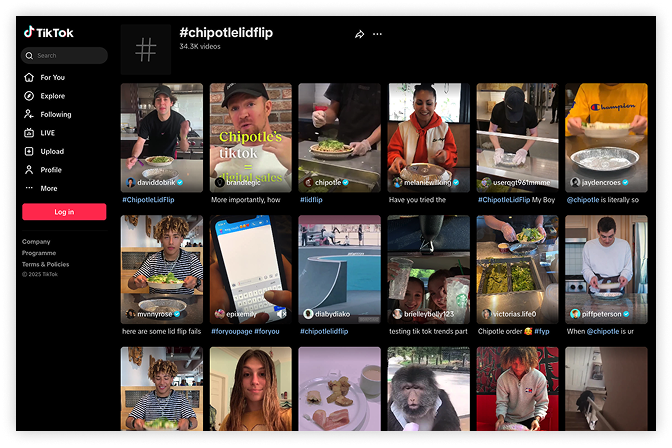
Chipotle wanted to connect with Gen Z, a key segment of its delivery audience and one that spends significant time on TikTok. Rather than relying on a traditional ad, the brand launched a simple challenge designed to feel native to the platform.
What They Did:
Chipotle introduced the #ChipotleLidFlip challenge featuring creator David Dobrik flipping the lid of a burrito bowl with a quick wrist motion. The action was easy to replicate and visually satisfying, making it well-suited for short-form video.
The Results:
Within six days, the challenge generated more than 110,000 video submissions and over 100 million views. Early engagement helped trigger TikTok’s recommendation system, further amplifying reach.
Why It Worked:
Rather than relying on high-budget production, the campaign emphasized platform fit and simplicity. The challenge aligned with TikTok’s visual style and encouraged participation from a broad audience.
Strategic Context:
Poppi aimed to grow awareness and sales among younger consumers. Instead of working with a large group of influencers, the brand focused on creating a single, high-impact experience.
What They Did:
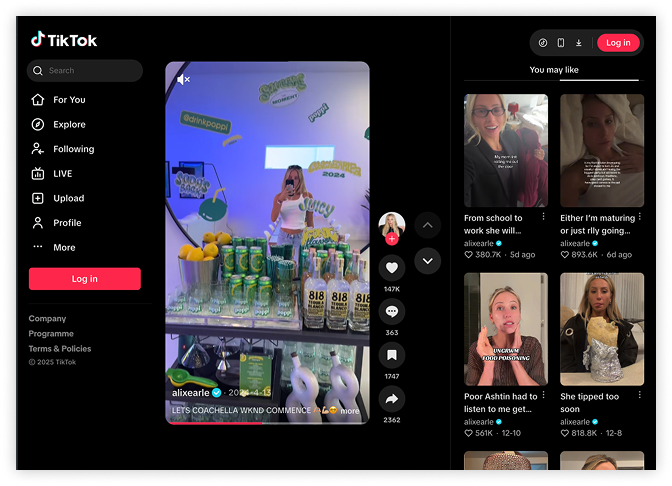
During Coachella, Poppi hosted creator Alix Earle in a fully branded house designed to match her style and content format. This allowed her to create and share content naturally, with Poppi products appearing as part of her environment rather than as scripted placements.
The Results:
Over three days, Earle posted more than 20 TikTok videos that generated over 50 million impressions. Poppi recorded a 200% increase in sales during the campaign period.
Why It Worked:
The campaign prioritized alignment over scale. By investing in a strong fit between brand, creator, and setting, Poppi enabled authentic content with clear commercial impact.
Strategic Context:
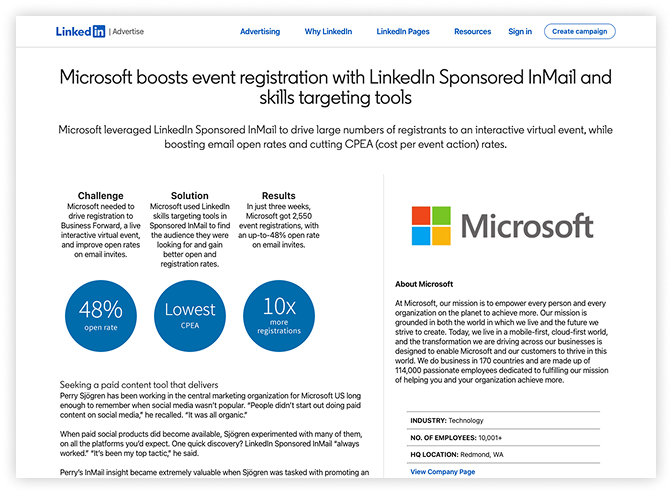
Microsoft India needed to reach B2B decision-makers across long buying cycles involving multiple stakeholders. The campaign focused on sustained visibility rather than short-term attention.
What They Did:
Microsoft ran a LinkedIn campaign over six quarters using a brand-to-demand approach. Content was mapped to each stage of the buying journey, from early thought leadership to product demonstrations and ROI tools. Messaging and visuals were localized for the Indian market, helping the content resonate more strongly with the target audience.
The Results:
The campaign reduced cost per lead by 25% while maintaining lead volume. It also surfaced new prospects, with 35% of engaged decision-makers having no prior interaction with Microsoft’s marketing.
Why It Worked:
The campaign aligned with the pace of the B2B sales cycle, using appropriate content formats at each stage and adapting messaging for local relevance. This helped Microsoft remain visible to the right audience over time.
Strategic Context:
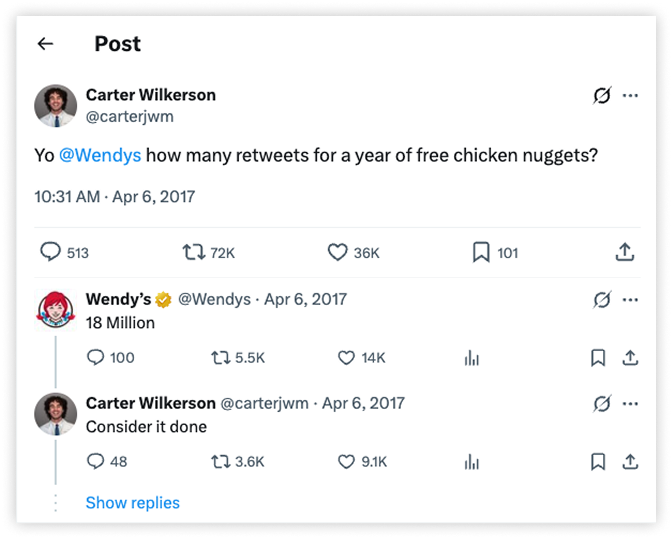
When a teenager tweeted Wendy’s asking how many retweets were needed for free chicken nuggets for a year, the brand responded with “18 million.” What began as a simple exchange quickly turned into a viral challenge.
What They Did:
Rather than treating the tweet as a one-off moment, Wendy’s leaned into the conversation. As attention grew and celebrities joined in, the brand maintained a consistent voice aligned with its established social persona. To extend the impact beyond engagement, Wendy’s donated $100,000 to a foster care charity in the teen’s name.
The Results:
The campaign became one of the most shared brand moments on Twitter and generated widespread media coverage well beyond the original interaction.
Why It Worked:
Wendy’s treated the interaction as an ongoing conversation rather than a campaign. By responding quickly, staying authentic, and adding a meaningful outcome, the brand reinforced its reputation for responsiveness and creativity.
Effective social media marketing is less about isolated tactics and more about how well strategy, platform choice, and execution align.
The examples in this guide show that successful campaigns take different forms. Some focus on participation and community, while others emphasize sustained visibility or pipeline support. What they share is intentional planning and a clear understanding of how audiences engage on each platform.
To get started or refine an existing approach:
Over time, consistent measurement and thoughtful adjustment help turn individual campaigns into repeatable results.
A: Organic social media refers to unpaid content that reaches audiences through regular posting, sharing, and platform algorithms. It supports long-term engagement and relationship building. Paid social uses targeted advertising to reach new audiences more quickly and drive actions such as traffic, leads, or sales.
A: Paid campaigns often show early performance signals within days. Organic efforts typically take longer, depending on consistency and audience growth. Many brands see meaningful momentum within three to six months.
A: Budgets vary depending on goals, industry, and platform. Smaller campaigns may start with a few hundred dollars, while larger initiatives often require ongoing monthly investment. The key is aligning spend with clear, measurable objectives.
A: The right platform depends on where your audience is most active and how they prefer to engage. LinkedIn is commonly used for B2B outreach, while TikTok, Instagram, and Facebook often perform well for consumer brands. Starting with one or two platforms can make execution more manageable.
A: Content strategy starts with clear goals and an understanding of what your audience finds useful or interesting. Defining a few core themes helps guide messaging and maintain consistency over time.
A: While tactics vary by industry, the underlying principles tend to remain consistent. Platform fit, audience relevance, and clear objectives matter more than industry-specific trends.
A: Yes. Social media success is often driven by clarity, relevance, and consistency rather than budget size. Smaller brands can stand out by being focused, responsive, and closely connected to their audience.
A: Posting frequency should balance visibility with sustainability. Many brands perform well with two to five posts per week, depending on the platform. Consistency tends to matter more than volume.
A: Agencies provide access to specialized expertise and can support complex campaigns. In-house teams offer deeper brand knowledge and greater control over daily execution. The right choice depends on goals, resources, and timelines.


 PR playbook to get your brand cited in AI answer
How to check and fix what AI says about your brand
2 minutes checklist to make your PR AI-friendly
PR playbook to get your brand cited in AI answer
How to check and fix what AI says about your brand
2 minutes checklist to make your PR AI-friendly