New Media Unlocked!
You can now publish on USA TODAY through MarketersMEDIA. That's 142M+ monthly visitors and DR 92 backlinks for every release you publish.
Better reach, better SEO, better credibility.

You can now publish on USA TODAY through MarketersMEDIA. That's 142M+ monthly visitors and DR 92 backlinks for every release you publish.
Better reach, better SEO, better credibility.
Table of Content
No headings found.


Content marketing only works when it reaches the right audience. You can publish great content every week, promote it everywhere, and still see nothing happen if you’re aiming at the wrong people.
Not all content serves the same purpose.
In digital marketing, most strategies fall into two broad camps:
If your goal is to attract companies, organizations, or decision-makers inside larger teams, B2B content marketing is the lane you want to be in. It focuses on credibility, clarity, and usefulness, not noise.
Done right, it helps your business get noticed for the right reasons, and stand out in a space where most competitors are saying the same things.
B2B content marketing is the practice of using content to attract, educate, and convert other businesses. Instead of selling directly, it uses useful information to build trust, prove expertise, and move buyers closer to a decision.
In B2B, buyers do more research, involve more people, and take longer to decide. Content helps at every stage of that process. It explains problems, compares options, answers objections, and shows why a solution is worth considering.
Think about it this way: when a marketing director searches, “how to improve brand visibility in AI search results”, or a founder looks for “strategies to increase media coverage,” they’re not ready to buy anything yet, They’re trying to understand their problem and evaluate possible approaches. That’s where your content meets them.
The end goal is not just traffic; it’s to generate qualified leads, support sales conversations, and build long-term credibility in your market.
Good B2B content is practical and specific. It focuses on real business problems, clear solutions, and measurable outcomes. It is designed to help decision-makers understand what you do, why it matters, and when it makes sense to choose you.
When done well, B2B content marketing becomes part of your sales system, not just a branding exercise.
Buyers pay attention to credibility. They look for signals that you understand their problems and can explain solutions clearly.
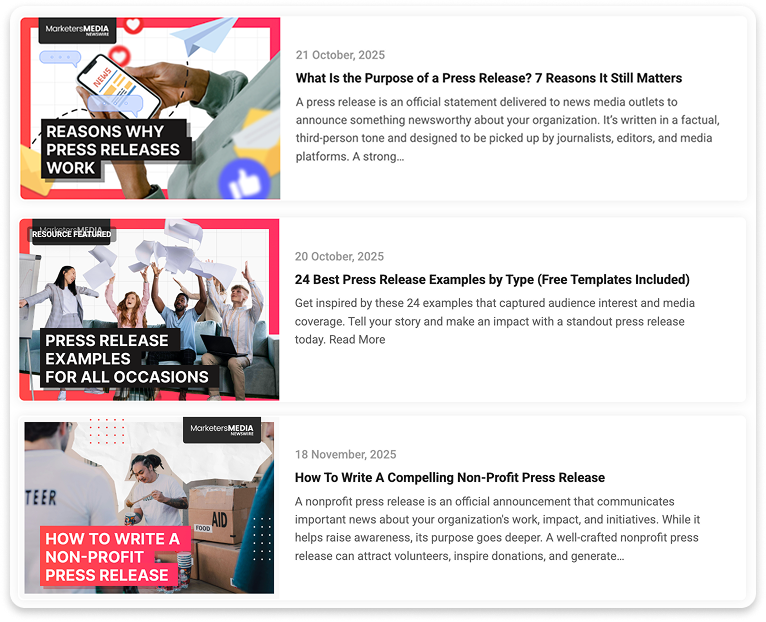
For instance, as a press release distribution service, MarketersMEDIA Newswire publishes content on the purpose of press releases, real examples and templates, and how to write effectively.
Over time, that consistency is what separates a brand that gets ignored from one that gets shortlisted.
In B2B, trust is rarely built in a single interaction. It’s built through repeated proof that your content is useful, accurate, and grounded in real-world experience.
Good content keeps working long after it’s published. Unlike ads, which stop the moment you stop paying, useful content can keep bringing in the right people month after month.
When you publish content that answers real questions and solves real problems, it starts showing up in search, getting shared, and being referenced by others.
That creates a steady flow of inbound leads without having to rely on constant ad spend.
When prospects talk to you after reading your content, they are usually more prepared.
They already understand the problem, they know what kind of solution they’re looking for, and they have a basic idea of how your product or service works.
That changes the sales conversation.
Instead of spending time explaining fundamentals, your team can focus on fit, details, and next steps. Fewer calls are spent on education, and more calls move toward decisions.
Good B2B content acts like a filter and a pre-qualifier. It answers common questions upfront, sets expectations, and helps the right prospects move faster through the buying process.
B2B content marketing also shows you what your audience is interested in.
When people read certain articles more than others, click specific pages, or search for particular topics on your site, they are telling you what problems they want to solve. That feedback is visible in your traffic, your forms, and your inquiries.
Over time, this helps you make better decisions about what to write, what to offer, and what to focus on in your sales and marketing. Instead of guessing what your market wants, you can use real behavior to guide your next moves.
You don’t need a huge advertising budget to compete. Content keeps working after it’s published, which means one good article, guide, or resource can keep bringing in the right people over time.
Instead of paying for every click or impression, you invest in content once and let it compound. That makes it easier to grow without increasing your spending every month.
For many B2B teams, this is what makes content marketing sustainable. It gives you a steady way to attract leads, support sales, and build visibility without relying on constant ad campaigns.
Instead of creating random content, you need to think about how buyers actually move from problem to purchase.
Most B2B decisions follow the three marketing funnel stages, and your content should support each one.
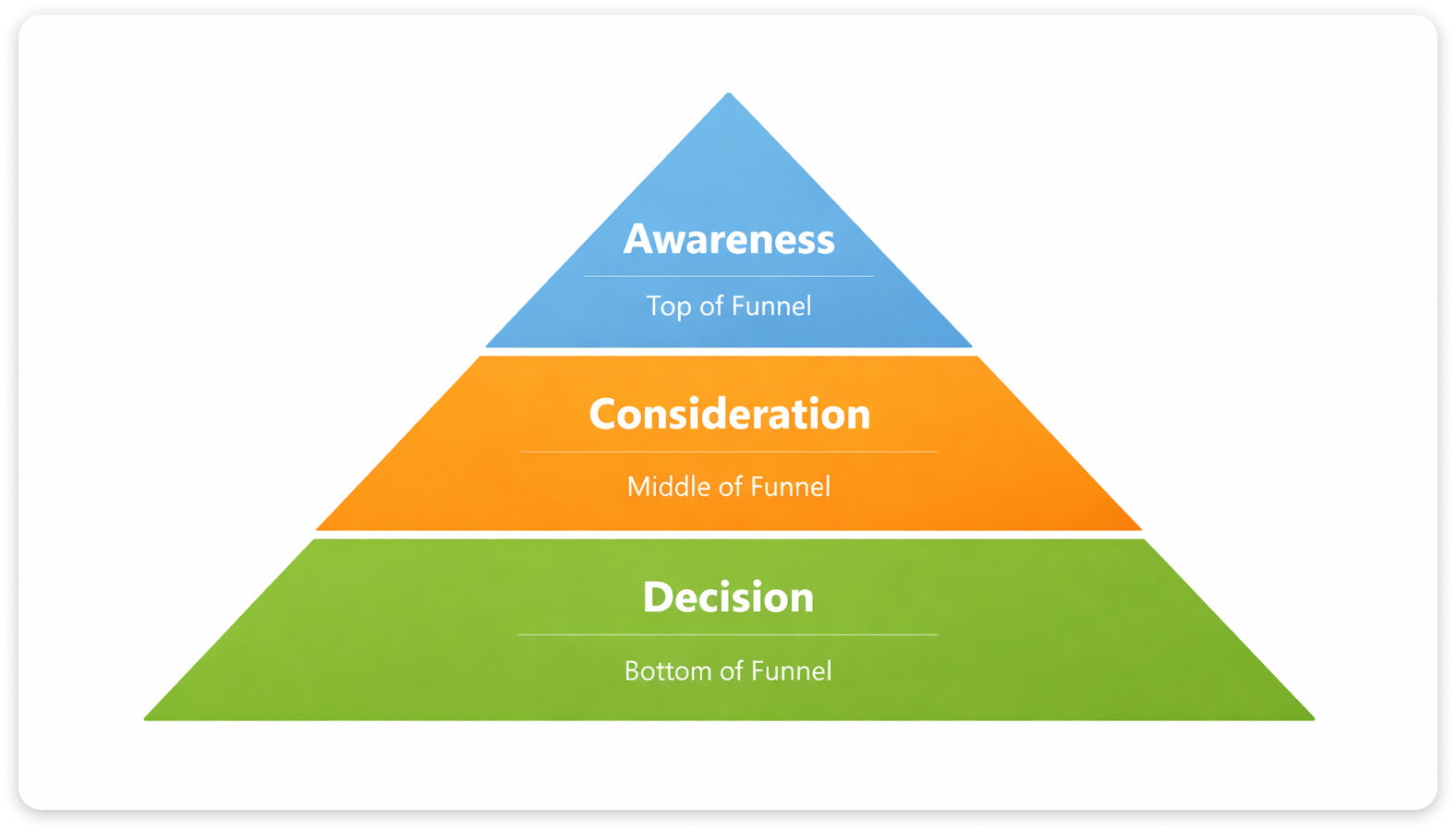
At this stage, people know something isn’t working, but they may not have a clear name for the problem yet.
Their searches look like “how to fix slow website speed” or “average B2B conversion rates in 2025.”
Your content here should help them understand what’s going on, why it matters, and what kind of problem they are really dealing with.
Here, buyers have defined the problem and are comparing options. Their searches shift to things like “Grid My Business vs Localo for small business” or “custom development vs no-code tools.”
This is where comparison guides, use cases, and practical explanations help them evaluate different approaches and see where your solution fits.
At this point, they are close to buying and need final confirmation. Searches become more specific, like “ROI calculator for marketing automation” or “enterprise ERP implementation costs.”
Your content should focus on proof, clarity, and risk reduction. Case studies, pricing details, and clear implementation steps matter most here.
Your content strategy should cover all three stages. Many companies focus only on awareness or only on closing, and leave the middle of the funnel empty.
That gap is often where good leads lose momentum or choose someone else.
Don’t waste time creating content nobody’s searching for. Use keyword research to find:
Most content gets ignored because it says the same things as everyone else. If you want your content to work, it needs to be useful, specific, and honest.
Here are a few ways to do that:
This can be your own data, your own experience, or patterns you see across your customers. You don’t need massive datasets to do this. Even simple surveys, internal results, or real-world observations can give readers insights they won’t find in generic blog posts.
For instance, you can create a case studies and resources page that shows how your clients achieved specific results by using your product or service.
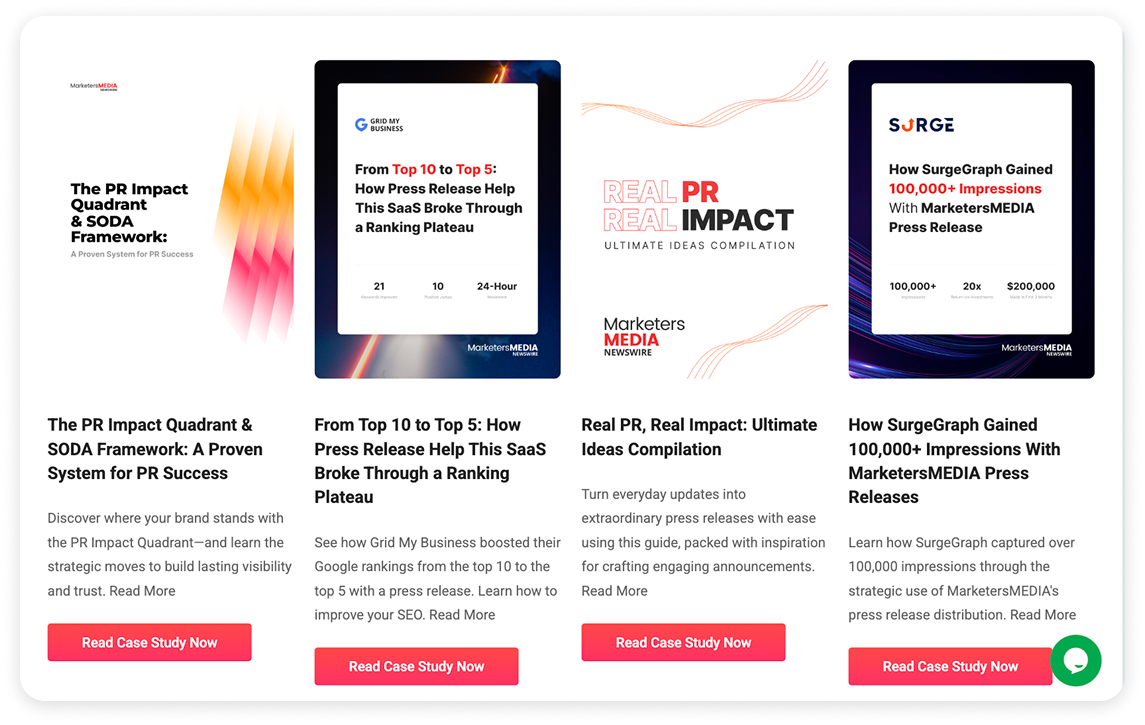
Broad topics attract broad, low-intent readers. Specific topics attract the right readers.
Instead of writing about general ideas, focus on clear situations and real challenges your audience is dealing with.
People trust content more when it shows what actually happened, including what didn’t work.
Explaining the process, the mistakes, and the outcomes makes your content more believable and more useful.
You don’t need to hide your solution. If your product or service solves the problem, use it in your examples.
Walk people through how it works and what it looks like in practice. This helps them understand the value before they ever talk to sales.
Not everyone who looks at your product cares about the same things. A finance leader, a technical lead, and a day-to-day user will all ask different questions and look for different details.
That means one piece of content cannot do all the work.
At a minimum, you should think about your content in a few simple ways:
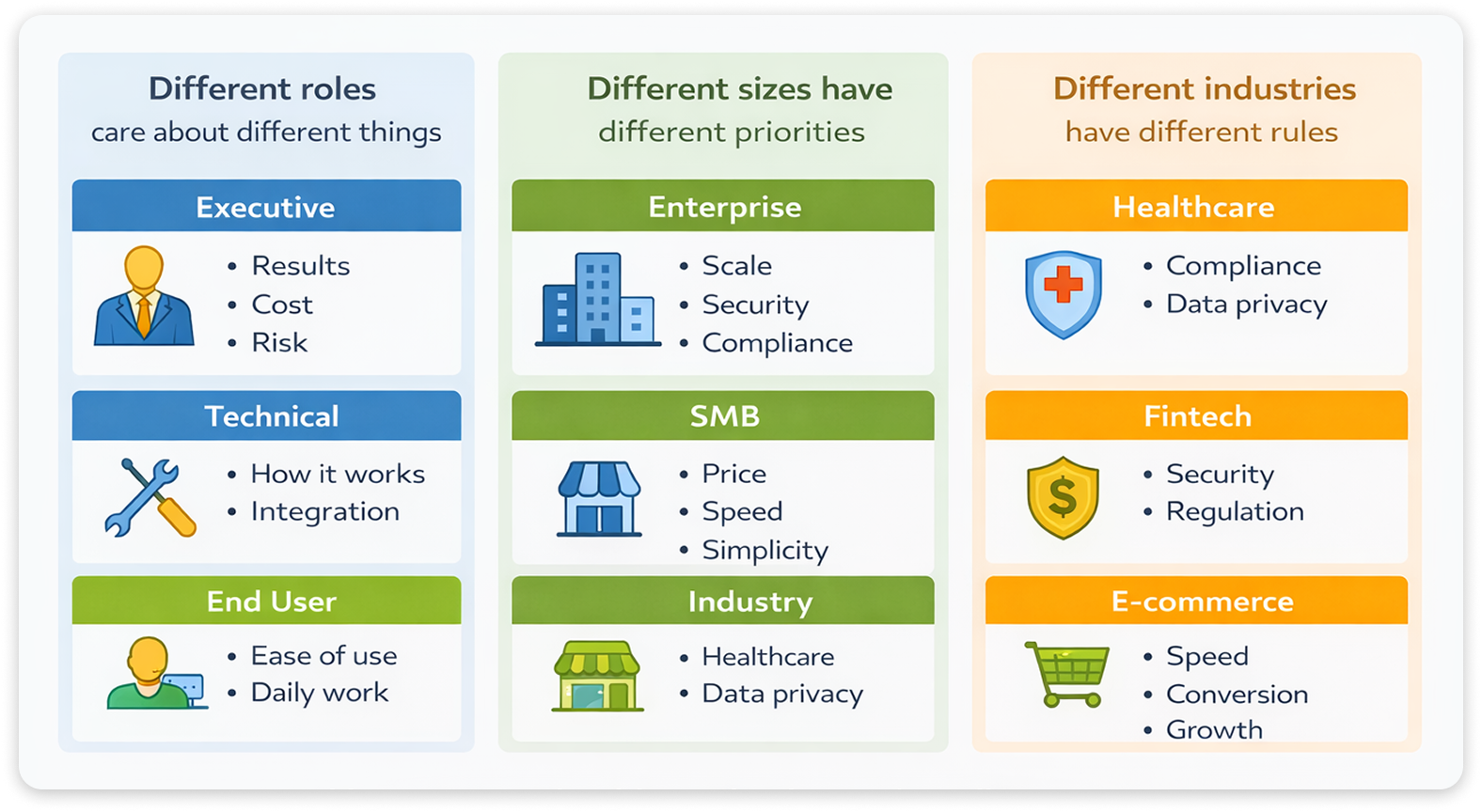
You don’t need dozens of versions of everything. A simple way to start is to group your content into a few clear categories, such as product updates, industry topics, business impact, and practical guides.
This makes it easier to cover different needs without overcomplicating your content strategy.
Writing good content is not enough. If people don’t see it, it won’t help your business. You need a few reliable ways to get your content in front of the right audience.
Here are some practical ways to do that.
Use press release distribution strategically: When you have genuine news worth announcing, press release distribution helps you reach media sites and wider audiences. This gives your content more visibility than posting it only on your own website.
Create a learning hub on your site: Some companies build a simple resource center or “academy” where people can learn useful skills. This attracts the right audience and lets them discover your product naturally while they’re learning.
Offer simple tools people can use right away: Things like calculators, checklists, or small tools are useful and easy to share.
For instance, MarketersMEDIA Newswire offers a free AI Press Release Generator on its website:
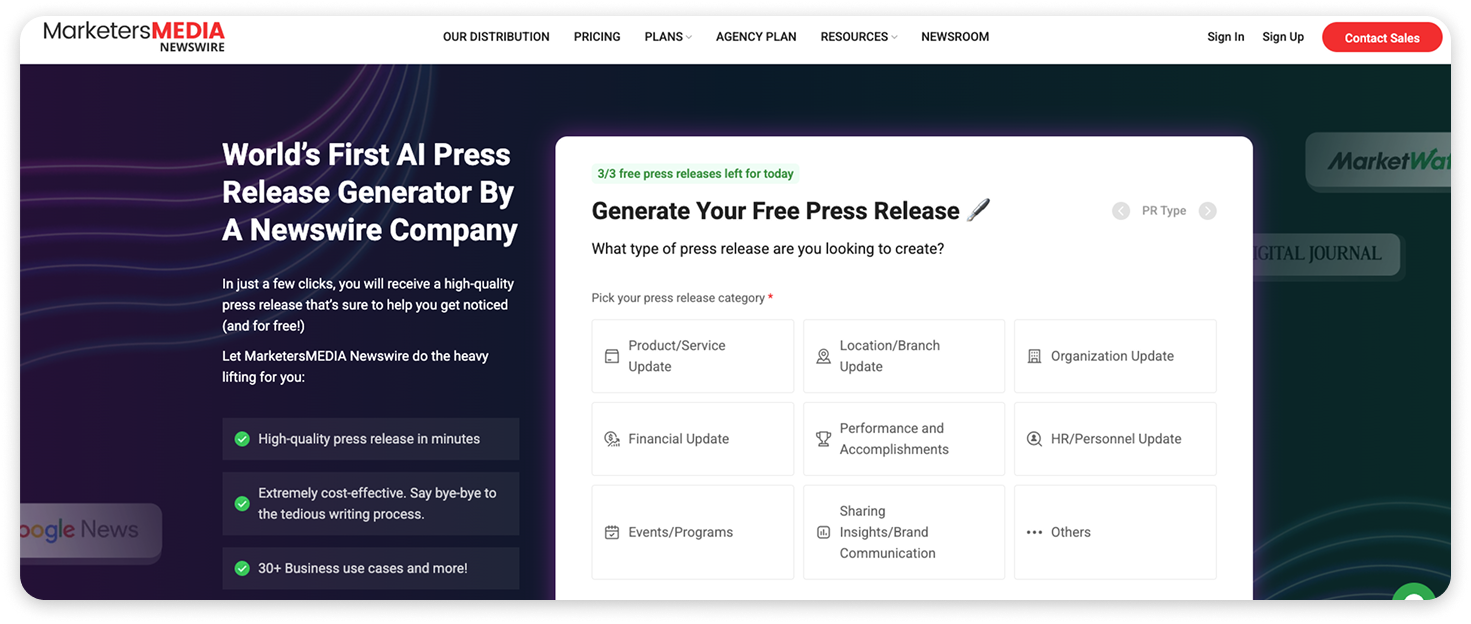
They give people quick value and a reason to come back to your site.
Reuse your content in different formats: One good article doesn’t have to stay as one article. You can turn it into social media posts, emails, short videos, or guides. This helps you reach more people without starting from scratch every time.
The goal is to build a system where your content keeps getting seen, shared, and reused, instead of being published once and forgotten.
It’s easy to track things that look good but don’t really matter, like page views or likes. What matters more is whether your content helps you get real leads and real deals.
Here are a few practical questions your content should help answer:
Content marketing usually takes time to pay off. Early on, results can be slow. Over time, as your content library grows and keeps working in the background, the returns become more visible and more consistent.
That’s why it should be measured over months, not weeks.
HubSpot built an entire academy offering free certifications. They don’t push sales—they empower professionals with skills.
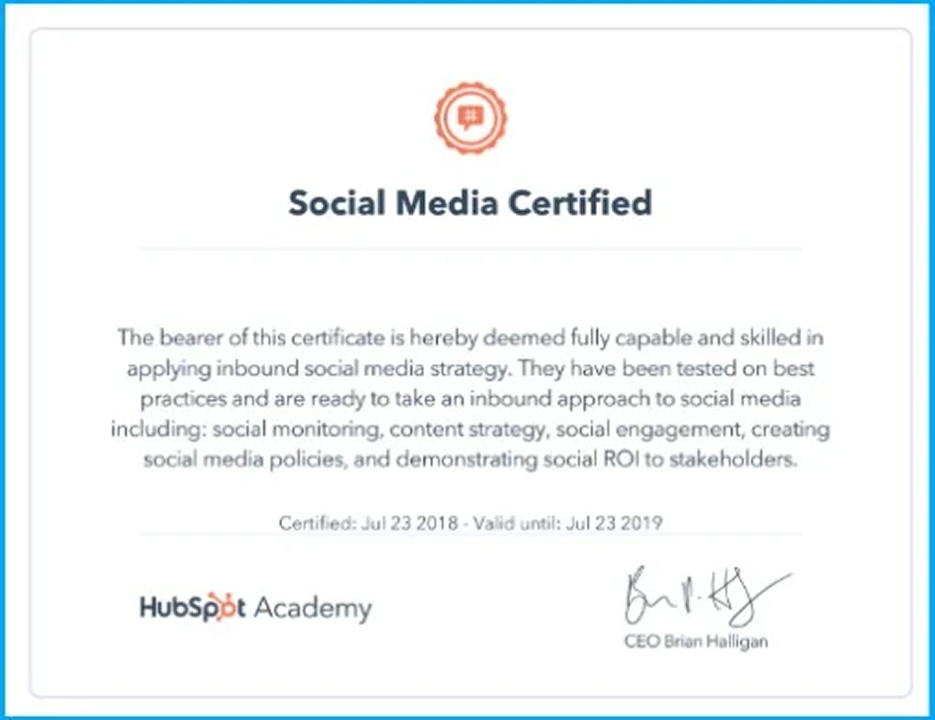
By the time someone’s ready to buy, HubSpot is already the trusted name. Result: 30.2 million monthly website visits.
Slack doesn’t sell project management software. They sell workplace transformation. Their “So Yeah, We Tried Slack” series uses real customer stories with humor and emotion.
It positions Slack as a cultural shift, not just another tool.
Every Ahrefs blog post teaches SEO strategy using their own software as the solution. They give away high-level tactics for free, making the transition to paying customers feel natural.
Result: $40M+ in ARR with zero outside funding or paid ads.
Gong analyzes massive datasets (like 300 million cold calls) to provide insights nobody else can match.
“The most effective cold call opening line according to 300 million calls” is content that establishes instant authority.
SurgeGraph used press release distribution to achieve significant SEO benefits, including high-value backlinks and over 100,000 impressions.
Their consistent press release efforts improved search engine rankings—showcasing how distribution amplifies content impact when done strategically.
Want your brand story featured on credible media outlets?
MarketersMEDIA Newswire helps you get the kind of third-party visibility these big brands achieved—through press release distribution to established publications. Get in touch with us today.
B2B content marketing isn’t about churning out blog posts. It’s about becoming the resource buyers turn to when they’re trying to solve real problems.
The companies that win aren’t the ones with the biggest budgets. They’re the ones answering real questions, using real data, and showing up consistently where their buyers are doing their research.
To start:
If you want to understand how PR fits into your broader B2B content strategy, check out our complete guide on B2B PR.


 PR playbook to get your brand cited in AI answer
How to check and fix what AI says about your brand
2 minutes checklist to make your PR AI-friendly
PR playbook to get your brand cited in AI answer
How to check and fix what AI says about your brand
2 minutes checklist to make your PR AI-friendly