New Media Unlocked!
You can now publish on USA TODAY through MarketersMEDIA. That's 142M+ monthly visitors and DR 92 backlinks for every release you publish.
Better reach, better SEO, better credibility.

You can now publish on USA TODAY through MarketersMEDIA. That's 142M+ monthly visitors and DR 92 backlinks for every release you publish.
Better reach, better SEO, better credibility.
Table of Content


Most PR teams know how to generate coverage but fewer know how to prove that coverage actually worked.
Once your brand is mentioned in the right publications, the next step is to measure whether that exposure produced a real outcome for the business.
Did it bring qualified traffic? Did it increase brand visibility in the industry? Did it influence perception among potential customers or partners?
Answering these questions requires measurement. This is where PR KPIs become essential.
As public relations becomes a larger part of modern marketing strategies, the pressure to show measurable results has also increased.
The global PR industry is projected to exceed $133 billion by 2027, according to industry analysis.
At that scale, measurement is important.
Stakeholders will be expecting data. Leadership teams will want clear signals that PR activity is contributing to broader business goals.
PR KPIs provide that visibility.
They help teams track progress, identify which efforts are delivering results, and adjust strategies when performance falls short.
Want your brand story featured on credible media outlets?
MarketersMEDIA Newswire helps you get the kind of third-party visibility these big brands achieved—through press release distribution to established publications. Get in touch with us today.
A Key Performance Indicator (KPI) is a measurable value used to evaluate whether a strategy is achieving its intended objectives.
In public relations, KPIs help teams measure whether their communication efforts are producing meaningful results.
Instead of focusing only on activity, such as sending press releases or pitching journalists, KPIs shift attention toward outcomes.
They answer practical questions such as:
Without KPIs, PR work can appear busy but directionless.
Teams may generate coverage without understanding whether it is reaching the right audiences or supporting business priorities.
Effective PR KPIs help organizations:
Understanding how KPIs function also explains why many organizations rely on them to justify communication budgets and strategic decisions.
Tracking PR performance can help to protect the value of your work.
A campaign that generates thousands of impressions in the wrong publications is not delivering real value.
Visibility alone does not guarantee that the right audience is paying attention.
PR KPIs help confirm whether your messaging is reaching the people who are actually relevant to your business.
Instead of focusing only on volume, teams can evaluate whether coverage appears in the publications, platforms, and communities that influence their target market.
PR budgets often come under scrutiny, especially when companies are reviewing marketing spend during tighter financial periods.
Clear KPIs help answer the most common question from leadership: What are we getting from this investment?
Metrics such as referral traffic, lead generation, and sentiment improvements provide tangible evidence that PR activity contributes to business performance.
Performance is difficult to improve without a reference point.
KPIs establish a baseline that allows PR teams to compare campaigns over time. By tracking the same indicators across different initiatives, teams can identify which strategies consistently perform well and which ones require adjustment.
Over time, these benchmarks help define what effective PR performance actually looks like for the organization.
PR influence often spreads across multiple touchpoints in the customer journey. A single article might introduce a brand to a prospect long before they convert into a customer.
Because of this, PR impact rarely appears in simple last-click attribution models.
KPIs help connect earned media exposure to broader outcomes such as website traffic, brand sentiment, lead generation, and eventual sales.
This broader view helps organizations recognize the long-term value PR contributes to growth.

Use press releases to get your brand mentioned and recommended by ChatGPT, Gemini, and Perplexity when people search.
 PR playbook to get your brand cited in AI answersHow to check and fix what AI says about your brand2 minutes checklist to make your PR AI-friendly
Where would you like to receive the AI PR toolkit:
These terms get used interchangeably, but they mean different things.
These are raw data points. They tell you what happened.
Total mentions, number of press releases sent, campaign reach: these are all metrics. They’re useful for tracking activity, but they don’t tell you whether that activity was effective.
PR KPIs are strategic indicators tied to goals.
They tell you whether what happened actually mattered. An increase in positive media coverage over a target period, an improvement in brand sentiment score, or a reduction in crisis response time: these are KPIs.
They connect activity to outcomes.
| PR Metrics | PR KPIs | |
| Definition | Raw data points measuring activity | Measurable values tied to strategic goals |
| Purpose | Overview of volume and output | Evaluate progress toward business objectives |
| Examples | Number of press releases, media mentions | 20% increase in positive coverage, sentiment shift |
| Usage | General tracking and reporting | Strategic decision-making and budget justification |
The shift from tracking metrics to reporting KPIs is what separates PR teams that survive budget reviews from those that don’t.
Media mentions volume refers to how many times your brand appears across media channels within a given period.
It is one of the most basic indicators of PR visibility and helps show whether your brand is part of the ongoing industry conversation.
Tracking mentions over time helps PR teams understand whether their outreach is generating steady coverage or only short bursts of attention tied to specific campaigns.
A consistent level of mentions often signals sustained media interest, while sudden spikes followed by long quiet periods may suggest that visibility depends heavily on individual announcements.
For example, after launching a new product, a PR team may track mentions across:
This is to see how widely the story spreads and which publications are driving the most attention.
Share of voice measures how much of the industry conversation your brand owns compared with competitors.
It is calculated by dividing your brand’s mentions by the total number of mentions across your industry during a specific period.
This KPI helps PR teams understand whether their brand is gaining visibility or being overshadowed by competitors.
Even if your mention volume is growing, a declining share of voice may indicate that competitors are generating coverage at a faster rate.
For example, if your brand receives 400 mentions in a month while total industry mentions reach 2,000, your share of voice would be 20 percent.
This means your brand accounts for one-fifth of the media conversation within your market during that period.
Sentiment analysis evaluates whether media coverage about your brand is positive, neutral, or negative.
Example of negative media coverage on Krispy Kreme:
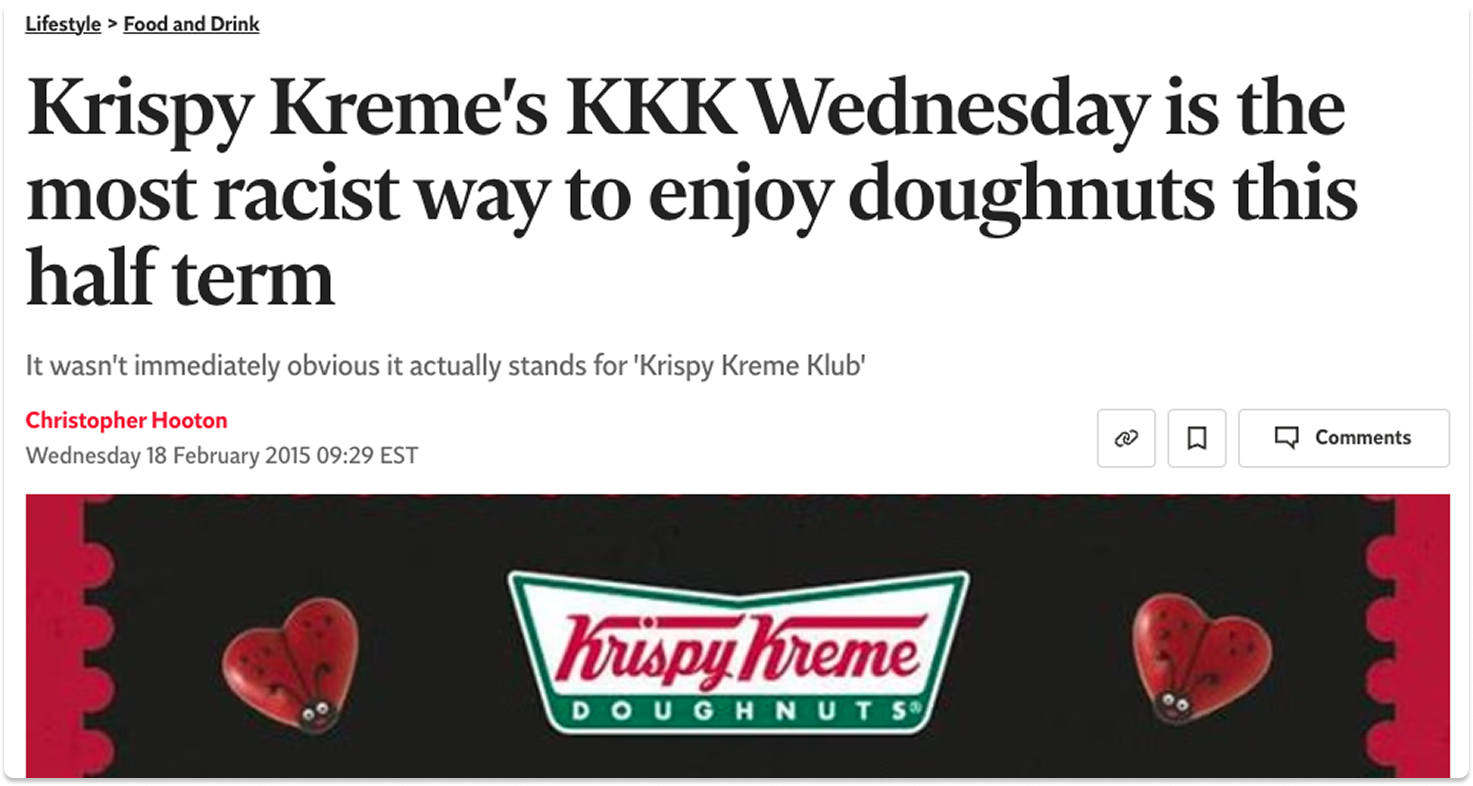
helps PR teams understand not just how often the brand is mentioned, but how those mentions are framed.
High mention volume alone does not guarantee positive brand perception.
Sentiment analysis helps identify whether media coverage strengthens brand reputation or raises potential concerns among audiences.
Engagement rate measures how audiences interact with PR-related content across social media platforms or digital media channels.
This includes actions such as:
While reach indicates how many people may have seen a message, engagement reveals whether the message resonated with the audience.
High engagement typically suggests that the topic is relevant, interesting, or valuable to readers.
Website traffic from PR activities measures the number of visitors who arrive at your website after encountering your brand through media coverage.
This KPI helps connect earned media exposure to audience behavior.
If media placements consistently drive visitors to your website, it suggests that your PR coverage is encouraging readers to learn more about your brand.
Conversion rate from PR leads measures the percentage of visitors who take a desired action after arriving from PR-driven coverage.
This action could include signing up for:
Example of conversion action on MarketersMEDIA website:
This KPI helps PR teams understand whether earned media is not only attracting attention but also influencing meaningful business outcomes.
Media impressions estimate the potential number of people who could have seen your media coverage.
This figure is typically based on the audience size of the publications that carried your story.
Although impressions do not guarantee that every person read the article, they provide a useful estimate of how widely your message was distributed.
For example, if your announcement appears in several publications with a combined monthly readership of four million, the estimated impressions for that campaign would be four million.
Crisis response time measures how quickly a PR team responds after identifying a reputational issue or public concern.
In crisis situations, speed plays a critical role in shaping public perception. A prompt response helps control the narrative and prevent misinformation from spreading.
For example, if a negative customer complaint begins trending on social media, issuing an official response within a short timeframe can help reassure audiences and maintain trust.
Influencer impact measures the visibility and engagement generated when influencers mention or promote your brand as part of a PR campaign.
This KPI helps determine whether collaborations with influencers are contributing to brand awareness, audience engagement, or website traffic.
For example, a partnership with an industry influencer may result in thousands of social interactions and a noticeable increase in website visits after the influencer shares content about your brand.
Brand awareness measures how familiar your target audience is with your brand and whether they recognize it when they encounter it.
PR campaigns often aim to increase awareness by placing stories, interviews, and announcements in trusted publications where audiences repeatedly see the brand.
Over time, consistent exposure helps people recognize the brand more easily, sometimes even through simple visual cues like logos or product icons.
For example, many people can recognize Google’s products such as Gmail, Maps, or YouTube immediately, even without seeing the full brand name.

Companies often measure brand awareness through surveys before and after campaigns to determine whether more people recognize the brand or understand what the company does.
Event attendance measures how many people register for and participate in events promoted through PR activities.
Tracking attendance helps PR teams evaluate whether their promotional efforts are effectively attracting the intended audience.
For instance, if a webinar promoted through media outreach receives hundreds of registrations, it indicates that the event messaging successfully captured interest.
Advertising Value Equivalency estimates the monetary value of earned media coverage by comparing it to the cost of purchasing equivalent advertising space.
Although AVE has been widely debated within the PR industry, it can still provide stakeholders with a familiar reference point when evaluating the scale of coverage.
For example, if three editorial placements appear in publications where a full-page advertisement would cost $15,000 each, the estimated AVE would be $45,000.
Public perception measures the overall opinion that audiences hold about your brand.
While sentiment analysis focuses on media tone, public perception reflects how customers, prospects, and the general public feel about your company.
For example, PR teams may analyze feedback, surveys, and online discussions to determine whether audiences associate the brand with qualities such as trust, innovation, or reliability.
Customer satisfaction measures how satisfied customers are with their experience after interacting with your brand.
PR messaging can shape expectations about:
It makes satisfaction an important indicator of whether the brand promise aligns with customer experience.
For example, surveys conducted after a purchase can reveal whether customer expectations created through PR campaigns match the reality of the product or service.
Return on investment measures the financial return generated by PR activities compared with the cost of running those campaigns.
Calculating ROI helps organizations understand whether their PR efforts are contributing to revenue, lead generation, or other measurable business outcomes.
For example, if a PR campaign costs $12,000 and generates $24,000 in new revenue through leads influenced by media coverage, the campaign delivers a positive return.
Social media reach measures the number of unique users who see PR-related content on social platforms.
This KPI helps PR teams understand how widely their announcements, media coverage, or brand stories are spreading across social channels.
For example, when an article featuring your company is shared across LinkedIn and reaches thousands of users, it indicates that the story is gaining visibility beyond the original publication.
Message penetration measures how clearly audiences understand and remember the key message communicated through PR campaigns.
It focuses on whether the intended narrative is actually being absorbed by the target audience.
For example, after running a thought leadership campaign, PR teams may conduct surveys to determine whether audiences can accurately identify the company’s positioning or core message.
PR works. But without measurement, you’re running campaigns on instinct.
Tracking PR KPIs gives your team a clearer view of what is generating real engagement, which coverage is strengthening brand equity, and where your messaging is resonating or falling flat.
The 17 KPIs outlined here cover different dimensions of PR performance, from basic visibility metrics to business outcomes such as leads, conversions, and long-term perception shifts.
Data-driven PR is not about turning communication into a spreadsheet exercise.
It is about making sure the work you are doing can be evaluated, improved, and repeated over time.
At the same time, PR is not without its trade-offs, and understanding the advantages and disadvantages of public relations can help organizations set realistic expectations for what PR can and cannot achieve.
Start with the KPIs that align most closely with your current objectives. Establish a baseline, track performance consistently, and refine your strategy as patterns begin to emerge.
A: For most B2B teams, conversion rate from PR leads and earned website traffic are the two most useful starting points. They connect editorial coverage directly to pipeline activity, which is what finance and sales leadership care about most.
A: Most teams review KPIs monthly for ongoing campaign tracking and quarterly for strategic assessment. Crisis-related KPIs (like response time and sentiment recovery) should be reviewed in real time during incidents.
A: No, and they shouldn’t try to. Start with three to five KPIs that directly connect to your current campaign goals. Add more as your measurement infrastructure matures. Trying to track everything at once usually results in tracking nothing well.
A: Media impressions measure the raw potential audience for your coverage. Share of Voice measures your coverage relative to your competitors. A brand can have high impressions but a low SOV if competitors are dominating the conversation volume.
A: PR sentiment analysis typically focuses on the tone of media coverage, specifically how journalists and publications are describing your brand. Social media sentiment captures how audiences are responding in real time. Both matter, but they reflect different audiences and signal different things about your brand’s position.


 PR playbook to get your brand cited in AI answer
How to check and fix what AI says about your brand
2 minutes checklist to make your PR AI-friendly
PR playbook to get your brand cited in AI answer
How to check and fix what AI says about your brand
2 minutes checklist to make your PR AI-friendly