New Media Unlocked!
You can now publish on USA TODAY through MarketersMEDIA. That's 142M+ monthly visitors and DR 92 backlinks for every release you publish.
Better reach, better SEO, better credibility.

You can now publish on USA TODAY through MarketersMEDIA. That's 142M+ monthly visitors and DR 92 backlinks for every release you publish.
Better reach, better SEO, better credibility.
Table of Content


No one really cares about your company news. Your audience sees it, and scrolls away. But, why?
Not because they hate your brand, but because the story gives them no reason to care. It has no relevance beyond the company. It doesn’t affect the reader, teach them anything useful, or connect to something happening right now.
When that happens, people don’t learn what you do, why it matters, or how you’re different. Over time, fewer people understand your product.
The way your story is written determines everything. Newsworthy stories are compact, focused, and built around elements that serve the reader first, such as impact, timeliness, relevance, and human interest.
This guide breaks down what journalists look for, what audiences care about, and how to identify and write a story that earns attention, even if you’ve never written professionally before.
Free Press Release Template
Get your free copy of press release template and advanced PR guide to run your press release.

A newsworthy story is a story that earns attention because it affects people, reflects something timely, or connects to a broader issue an audience already cares about.
For a story to be newsworthy, it needs to answer at least one question for the reader:
Most stories need to be re-angled. The focus has to shift from what’s significant inside the company to why the information resonates with someone outside it.
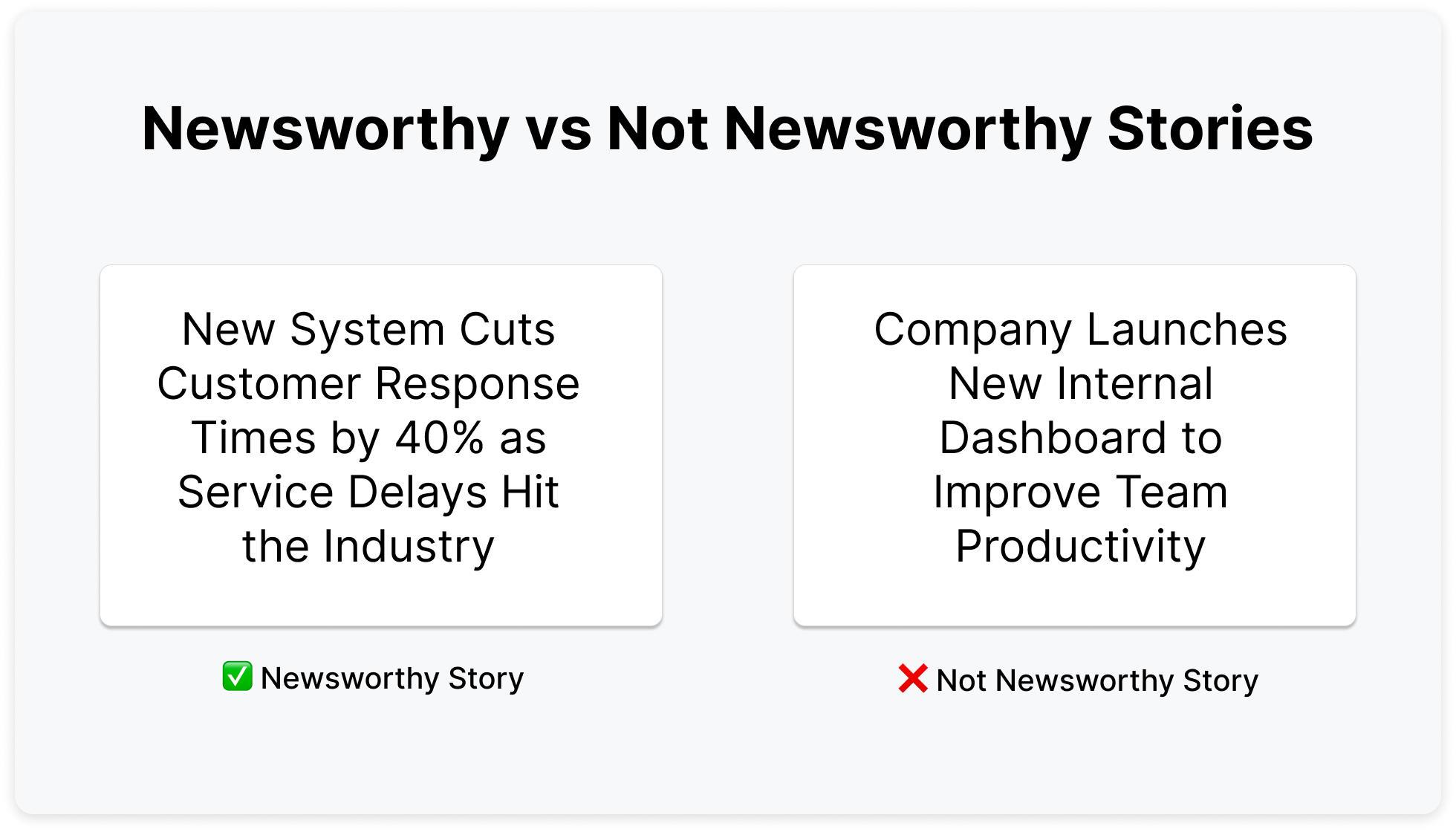
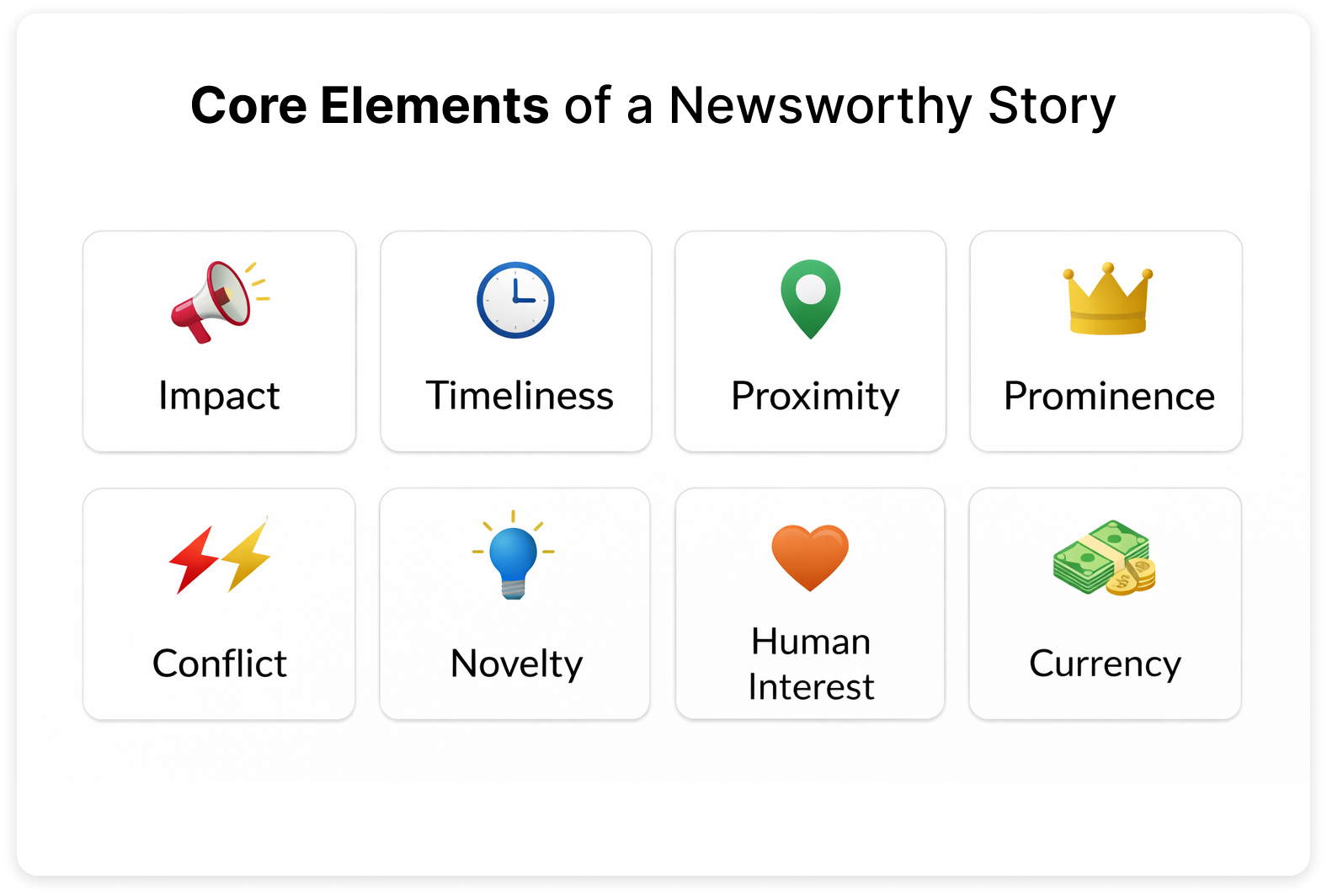
Once the angle is right, the next step is understanding the core elements that make a story newsworthy.
Journalists evaluate stories using specific criteria. Most strong stories contain two or three of these elements.
Understanding these gives you a framework to evaluate your own announcements before you write them.
Impact comes first because it’s the basic test every story must pass.
Ask a few simple questions: Does this story change anything for the reader? Does it affect how they think, decide, or act?
For instance, when AP News reports on new tariffs, the story is newsworthy because it affects prices, jobs, and business decisions—impact that reaches beyond policy into people’s wallets.
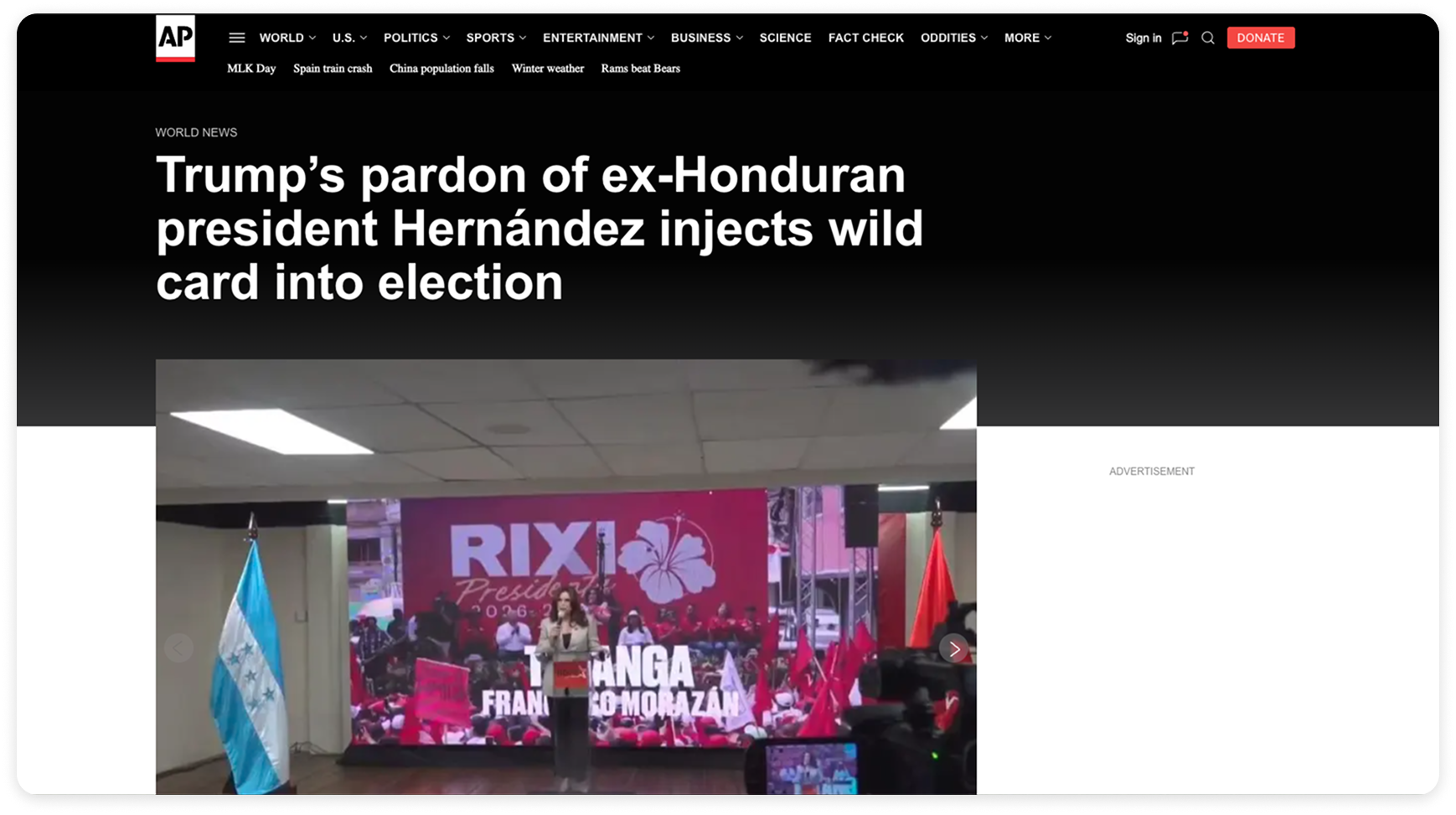
Impact doesn’t have to be huge, but it has to be real.
High-impact stories include:
When evaluating impact, ignore how important the story feels internally. Focus only on what changes for the audience once they know it.
Timeliness is about when a story happens. Currency is about whether the information is still relevant right now.
A story feels newsworthy when it lines up with what people are already paying attention to.
If a new policy starts this week, that’s timely. If you explain how people or businesses are reacting to it, that keeps the story current.
A policy change that goes into effect this week is timely. A follow-up explaining how businesses are responding to that change keeps the story current.
But what can be considered as an example that doesn’t meet the timeliness and currency criteria?
Take this Business Insider article from January 2021 as an example.
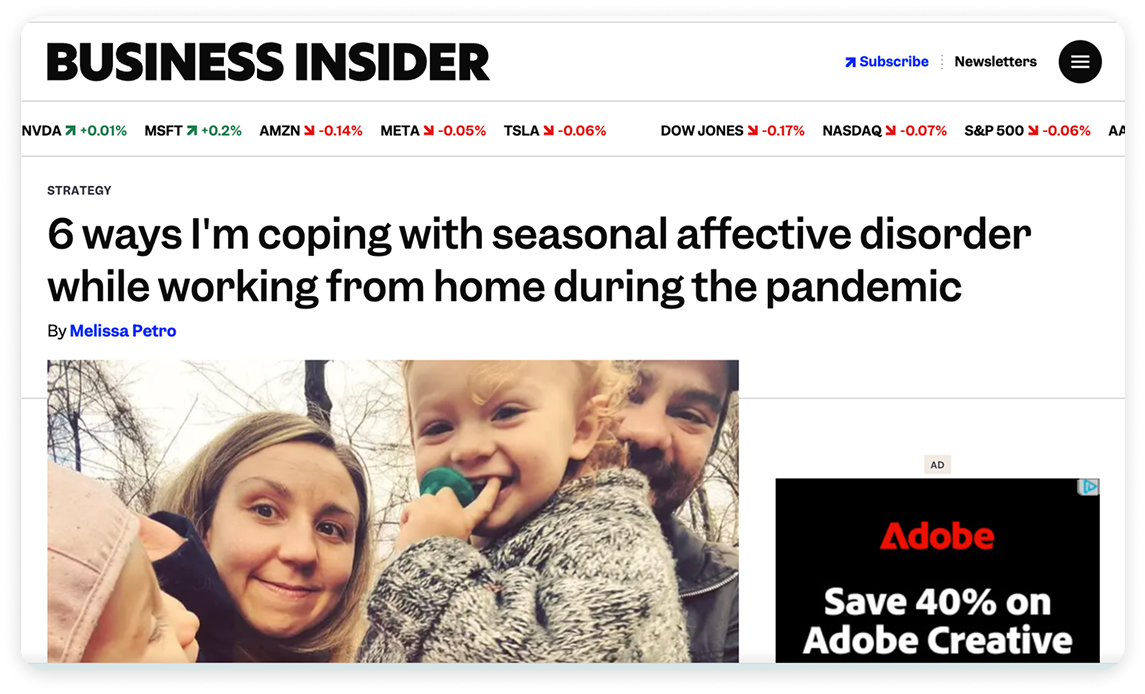
At the time, it spoke directly to a moment when remote work and pandemic-related isolation were part of everyday life.
Today, while the topic itself is still valid, the context has changed. Remote work is no longer a novelty, and the specific conditions that made this story feel urgent have passed.
If the same angle were published now, it would feel dated, not because the writing is weak, but because it no longer aligns with the moment readers are experiencing.
This is why “breaking news” is not the only form of timely reporting. Stories can remain newsworthy when they:
The problem many businesses face is delay. By the time internal approvals finish, the story is no longer timely, even if the information is still accurate. When that happens, relevance fades.
Being timely means showing up early. Staying current means understanding what is important to people after the news breaks. Publishing when the audience is already paying attention makes the story easier to notice and easier to care about.
People pay more attention to stories that feel close to them.
The most obvious form of proximity is location. Local news focuses on local events because they matter more to people who live there. A business opening in Charlotte is far more relevant to Charlotte residents than to someone in Seattle.
But proximity isn’t only about geography. It’s also about relevance.
An update that affects fintech companies resonates most to people working in fintech. A policy change that impacts freelancers will naturally resonate with freelance communities.
These stories feel “close” because they affect a reader’s work or daily life.
This is also why news websites are divided into sections. Local news, national coverage, industry news, and global stories all exist to serve different audiences.
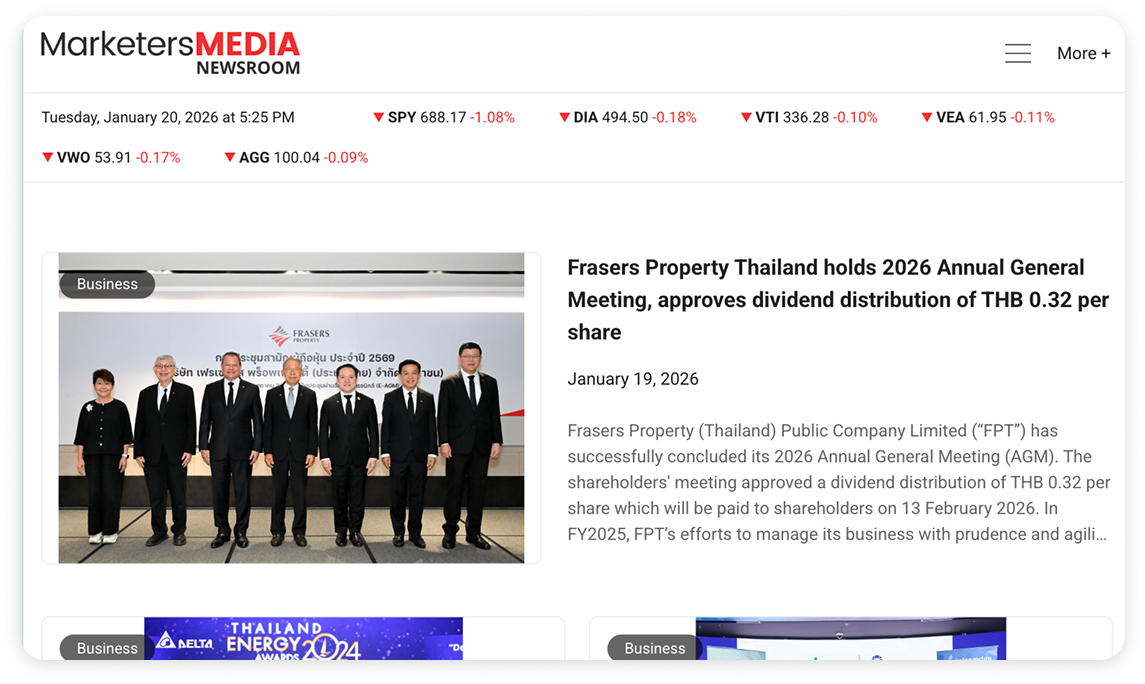
Each section helps readers quickly find what’s most relevant to them. The key takeaway is: proximity can be created through framing.
A national trend becomes newsworthy when you explain how it affects a specific place, industry, or group of people. When readers can see how a story connects to their own situation, they’re far more likely to care.
Public figures and established authorities attract attention. It’s not fair, but it’s true. This is why comments from political leaders, CEOs, or major institutions often become news instantly.
For example, when the former U.S. President Donald Trump makes a statement, it is widely reported not because every comment is groundbreaking, but because his position and influence make it consequential. His words signal potential impact, reaction, or change.
That doesn’t mean smaller organizations can’t be newsworthy. It means they often need to anchor their story to a credible authority, a recognized partner, or a broader issue to gain attention.
Prominence doesn’t guarantee importance, but it strongly affects whether a story gets noticed in the first place.
Stories get attention when there is something at stake.
Conflict doesn’t mean drama or controversy for the sake of it. It simply means there is tension. That tension can come from different opinions, competing approaches, or challenges to the way things are usually done.
An example from AP News:

This story highlights conflict between political leaders over trade policy—the opposing views create tension that makes the topic more engaging.
Many people assume conflict has to be negative. It doesn’t. What matters is that there are opposing views or different outcomes, and that the result is relevant to someone.
When readers can see what’s being challenged, debated, or changed, the story becomes more engaging.
Big, abstract announcements are hard to relate to.
Stories become more engaging when they show how real people are affected. That’s why case studies work. That’s why customer stories get attention. That’s why founder journeys are often shared.
People connect with people, not concepts. It’s easier to understand a change when you see how it affects someone’s daily work, decisions, or challenges.
When you frame a story around a human experience, it becomes more accessible. What changed for someone? What did they learn? What problem did they overcome?
This doesn’t mean adding emotion for the sake of it. It simply means acknowledging that business and industry news affects real people.
Unusual story angles create interest.
A story stands out when it offers something unexpected. This could be a rare event, a surprising result, or a point of view people don’t usually hear.
For instance: a dog biting a man isn’t news, but a man biting a dog is. The second version is unusual, so it makes people stop and look.
That said, novelty alone isn’t enough. A strange or quirky idea might grab attention for a moment, but if it is not relatable or relevant, people quickly move on.
Example of two articles covering the same AI topic from different angles.:
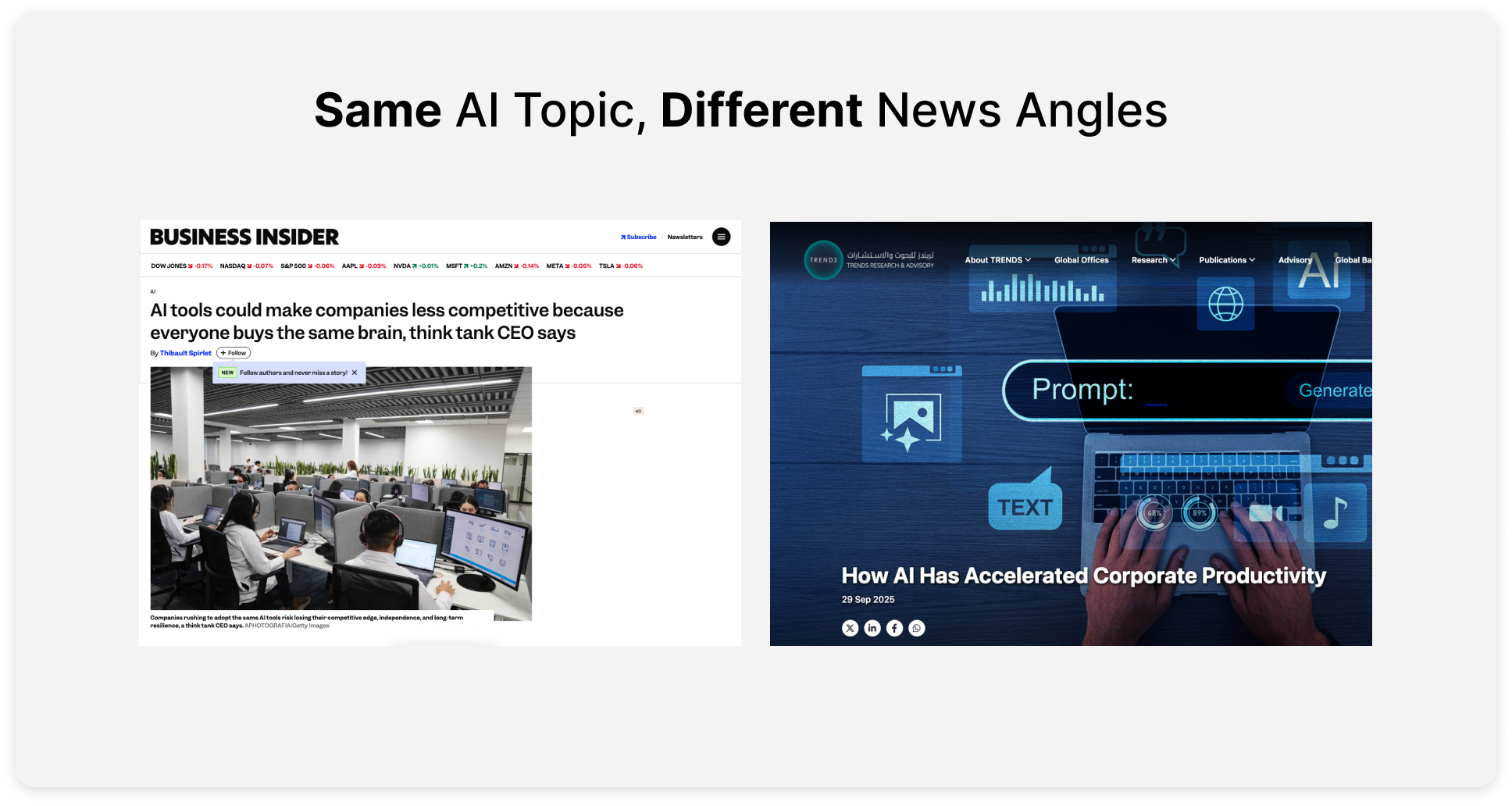
The strongest novelty comes from making familiar topics feel new. Find an angle others haven’t covered yet, reveal an unexpected insight, or present information in a way people don’t expect.
To write a newsworthy story, you need to make it easy for people to see why the story is relevant to them.
These guidelines help you frame your story in a way readers and journalists understand quickly.
Start by stepping outside your company. Ask what part of this story affects customers, an industry, or a specific group of people. Internal wins are rarely news on their own. The story becomes news when you show why it matters beyond your team.
Start your news by putting the key point first. Don’t build up slowly or save the takeaway for later. Readers decide quickly whether to keep going, so tell them upfront what happened and why it is relevant to them.
Clear writing beats clever writing. Avoid jargon, buzzwords, and long explanations. If someone unfamiliar with your industry can understand the story, you’re on the right track.
Strong stories don’t need exaggeration. Numbers, dates, real outcomes, and clear examples make a story credible. Focus on what actually changed instead of how excited you are about it.
Short paragraphs make stories easier to scan and read. One idea per paragraph is enough. This helps readers stay engaged, especially on mobile screens.
When these basics are in place, your story becomes easier to read, easier to understand, and far more likely to earn attention.
Most stories don’t fail because they’re badly written. They fail because they’re written from the inside out.
When a story focuses only on internal achievements, it gives readers no reason to stop, read, or care.
Newsworthy stories work the opposite way. They start with impact. They show why something is important now. They connect to people, places, or problems the audience already understands.
You don’t need every element in this guide to write a strong story. But you do need at least a few. Impact, timeliness, relevance, and human interest are often enough to turn an overlooked update into something worth reading.
Before you publish, ask one last question: “If I weren’t part of this company, would this story be relevant to me?”
If the answer is yes, you’re on the right track.
Want your brand story featured on credible media outlets?
MarketersMEDIA Newswire helps you get the kind of third-party visibility that turns announcements into news—through press release distribution to established publications. Get in touch with us today.
A: A marketing announcement focuses on what the company wants to say.
A newsworthy story focuses on why the information matters to people outside the company. The same update can be either one, depending on how it is framed.
A: No. Newsworthiness is about the substance of the story, not where it appears.
Media coverage is a possible outcome, not the definition. A story is newsworthy if it provides relevance, impact, or timely insight to an audience.
Many newsworthy stories are first shared through owned channels such as company blogs, newsletters, or industry platforms.
If the angle is strong, those stories can still attract attention, discussion, and even later media pickup. The key test is not whether journalists publish it, but whether the story would still matter to the audience regardless of the distribution channel.
A: Sometimes, yes. Older stories can regain newsworthiness when new information, results, or context changes their relevance.
This might include new data, market shifts, updated regulations, or tying the story to a current trend or event.
Simply republishing old information without a new angle usually fails. For a story to feel newsworthy again, something must clearly change for the audience.
A: Yes, but only under certain conditions.
Opinion-based stories can be newsworthy when they come from a credible source and add insight to an ongoing discussion.
This could mean offering expert analysis, a well-supported viewpoint, or a perspective informed by real experience.
A: Length is less important than clarity.
Most newsworthy stories are concise and focused. Long stories work only when every section adds value and explains something the reader needs to know.


 PR playbook to get your brand cited in AI answer
How to check and fix what AI says about your brand
2 minutes checklist to make your PR AI-friendly
PR playbook to get your brand cited in AI answer
How to check and fix what AI says about your brand
2 minutes checklist to make your PR AI-friendly


![24 Best Press Release Examples [For All Occasions]](https://marketersmedia.com/wp-content/uploads/2025/03/Press-Release-Examples-for-All-Occasions.png)