New Media Unlocked!
You can now publish on USA TODAY through MarketersMEDIA. That's 142M+ monthly visitors and DR 92 backlinks for every release you publish.
Better reach, better SEO, better credibility.

You can now publish on USA TODAY through MarketersMEDIA. That's 142M+ monthly visitors and DR 92 backlinks for every release you publish.
Better reach, better SEO, better credibility.
Table of Content


You have about five seconds. Or less.
That is the amount of time most readers give your opening paragraph before they decide to stay or leave.
It does not matter how well researched your article is, how detailed your sources are, or how important the story is. If the first paragraph does not earn attention, the rest of the piece never gets read.
That first paragraph has a name.
In journalism, it is called the lead. And understanding how to write a strong one is one of the most practical writing skills anyone can develop, whether you are a reporter, a content marketer, or a business publishing press releases.
A lead is the opening paragraph of a news story, article, or blog post.
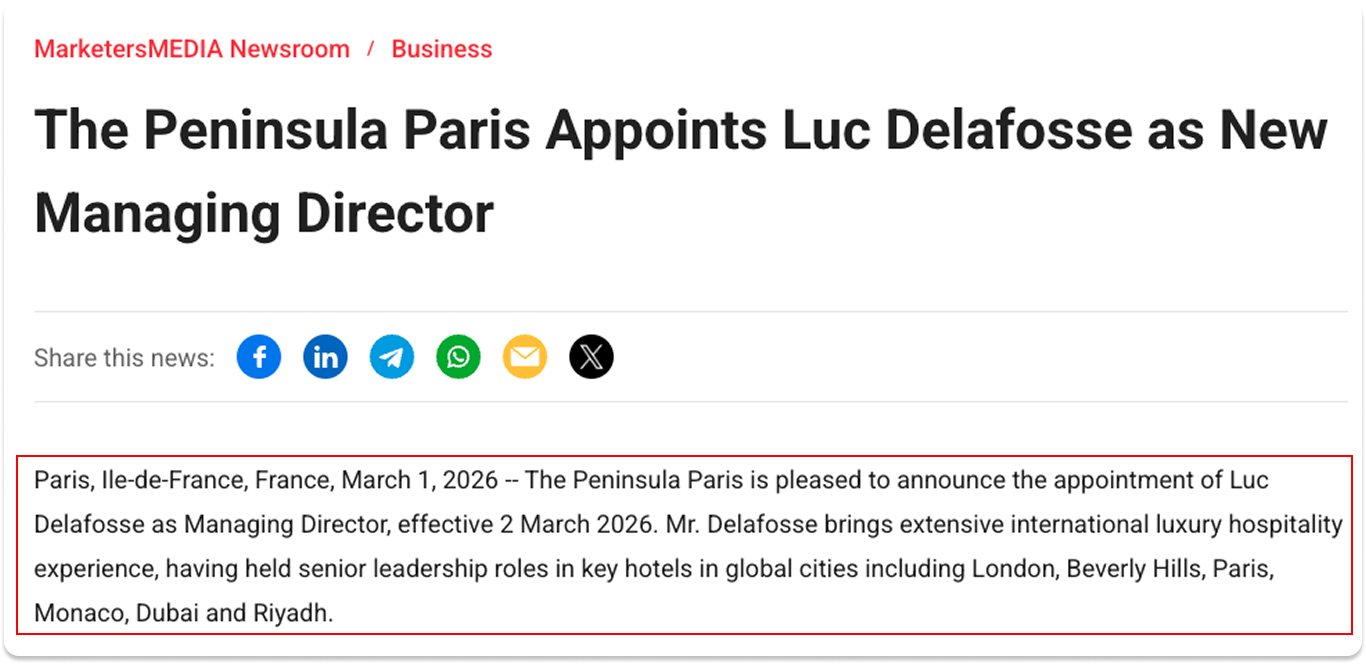
It gives the reader the most important information in a clear, direct way. If someone reads nothing else, the lead should still tell them what the story is about.
The purpose of a lead is straightforward, it is to:
A lead is not just for traditional news reporting.
It applies to blog posts, features, long-form articles, press releases, and nearly any piece of written content that needs to hold attention.
Wherever a reader can walk away, the lead is what convinces them not to. You are telling the reader: here is what matters, and here is why it is worth your time.
Lead is the one part of the article that nearly everyone reads. Everything after it depends on whether the lead did its job.
Here is what makes the lead so critical:
People scroll quickly. They skim headlines. They jump between tabs. They make split-second decisions about what deserves their time.
A slow, vague, or overly detailed opening is easy to skip. Readers will not wait for your point to appear in the third paragraph. They want clarity immediately.
But, a clear and direct lead earns you a few more seconds of attention.
Those few seconds are powerful. They create momentum. If the first paragraph feels sharp and informative, readers are far more likely to continue. If it feels confusing or unfocused, they leave.
Readers have access to thousands of articles on any subject. News websites, blogs, social media posts, newsletters, and video summaries are all fighting for the same audience.
The lead is what separates content that gets read from content that gets ignored. When two articles cover the same topic, the one with the clearer, stronger opening usually wins.
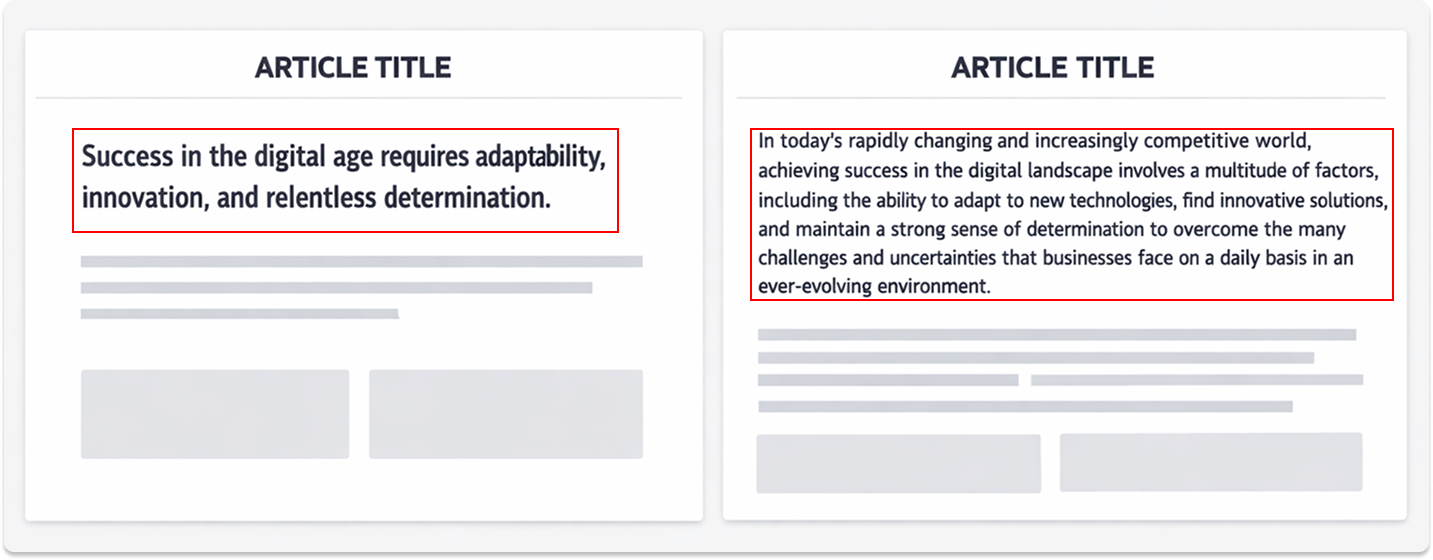
A strong lead signals value right away. It tells the reader, “This is worth your time.” While a weak lead makes the article look ordinary, even if the reporting is excellent.
Journalism follows what is called the inverted pyramid structure. The most critical information appears at the top, and details follow in descending order of importance.
The lead sits at the very top of that structure. It carries the core of the story.
If a reader stops after one paragraph, they should still walk away informed. They should understand what happened, who is involved, and why it matters.
This structure also respects the reader’s time. It ensures that even a quick reader gains the essential information without having to search for it.
The lead sets the tone for the entire article.
A precise, well-written lead shows confidence and clarity. It tells the reader that the writer understands the topic and knows how to communicate it effectively.
A vague, overly dramatic, or confusing lead does the opposite. It raises doubts. It makes the reader question whether the rest of the article will be worth reading.
Credibility begins in the first sentence. If the opening feels factual, focused, and relevant, readers are more likely to trust the information that follows.
In journalism, trust is not built gradually. It begins at the very first line. The importance is clear.
Now let’s look at how to write one.
Writing a strong lead is about being clear, specific, and efficient. These are the core elements that make a lead work:
Every journalism student learns the five Ws and H:
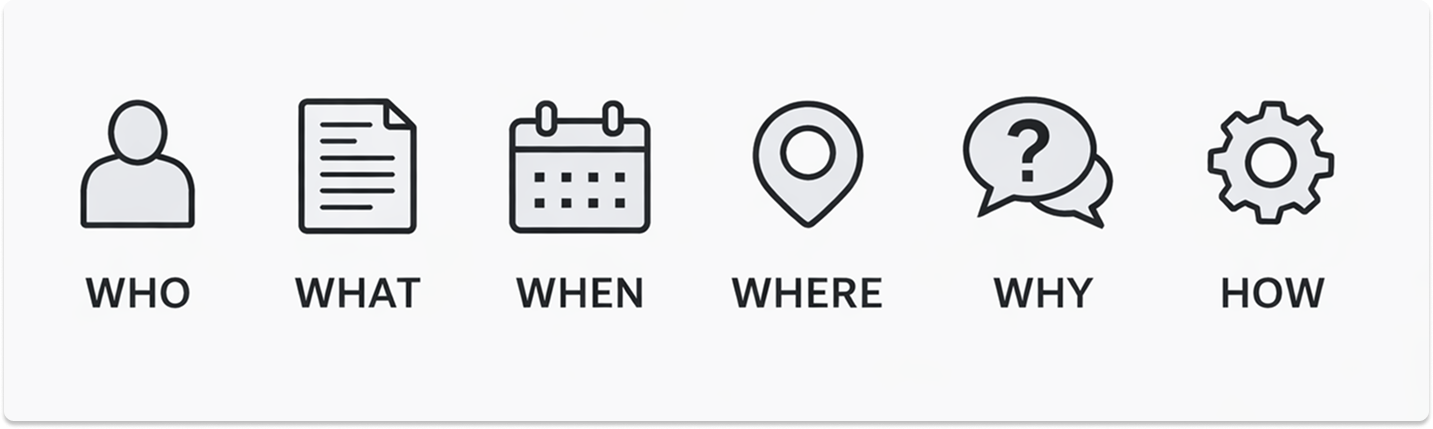
These are the questions your lead should answer, or at least the most important ones.
Not every lead needs all six. In fact, trying to force all of them into a single sentence usually makes it worse. The skill is in identifying which elements matter most for the story you are telling.
If a company just raised $50 million, the “what” and “who” probably belong in the lead. The “where” might not.
If a city council passed a controversial policy at midnight, the “when” suddenly matters a lot more.
Pick the most newsworthy elements. Build your lead around those.
Vague leads lose readers. If your opening line could apply to a hundred different stories, it is not specific enough.
Instead of writing “an important event happened this week,” say what happened, to whom, and why it matters. Make the main point obvious. Do not make the reader work to figure out what your article is about.
Specificity builds trust. It tells the reader you have done the work and you know what you are talking about.
Most strong leads are one to two sentences long. Industry standards generally recommend keeping a lead between 25 and 30 words, and most editors prefer it to stay under 35.
Every word in a lead has to earn its place. If a detail does not serve the reader in the first paragraph, move it lower.
Short does not mean shallow. It means focused. A concise lead forces you to distill the story down to what actually matters.
An active voice keeps a lead sharp and direct. “The board approved the merger” is clearer and stronger than “The merger was approved by the board.”
Passive voice slows the sentence down and often hides who is responsible for the action. In a lead, you cannot afford that. The reader needs to know who did what, and they need to know it fast.
Strong verbs make the writing feel alive. Weak, passive constructions make it feel flat.
These principles form the foundation of a strong lead. But strong leads do not all look the same. Different stories call for different approaches.
Here are the most commonly used lead types:
This is the most traditional and widely used lead in journalism.
It presents the key facts of the story in one or two sentences, usually answering the most important of the five Ws and H.
Summary leads are:
You will see them most often in breaking news and hard news stories where the reader needs to know what happened right away.
Instead of summarizing the full story, a single-item lead focuses on just one or two elements. The idea is to pack a bigger punch by narrowing the focus.
This works well when one aspect of the story is significantly more newsworthy or surprising than the others. You lead with the strongest card instead of laying out the whole hand.
A creative lead uses storytelling, vivid description, or scene-setting to draw the reader in.
It does not deliver the facts as quickly as a summary lead, but it creates interest in a different way.
You will find creative leads most often in feature stories, profiles, and long-form journalism. They work when the story has a strong human element or a narrative arc worth setting up.
An analogy lead compares the subject of the story to something the reader already understands. It uses a familiar reference point to make a complex or unfamiliar topic feel accessible.
This is useful when writing about technical subjects, scientific breakthroughs, or policy changes that might otherwise feel abstract to a general audience.
Sometimes a single word or a brief, punchy statement is the most effective opening. A short sentence lead creates immediate impact through brevity.
This approach works best when used sparingly. Overuse can make it feel gimmicky. But when the moment is right, a short sentence lead can stop a reader in their tracks.
This lead withholds the identity of the main subject. Instead of naming the person right away, it describes the situation, the action, or the consequence first.
The effect is curiosity. The reader wants to know who this person is. By the time the name is revealed, usually in the second or third paragraph, the reader is already invested in the story.
This type of lead works well when the action is more newsworthy than the name, or when the person involved is not well known but the story is compelling.
Free Press Release Template
Get your free copy of press release template and advanced PR guide to run your press release.

The lead determines whether your story gets read. It is the single most important paragraph in any article, press release, or blog post.
A strong lead combines clarity, brevity, and relevance. It answers the reader’s most basic question, “why should I care?”, in the fewest possible words. And it does so with enough precision and energy to make the reader want more.
If you are writing press releases, the lead matters even more.
Editors and journalists scanning hundreds of releases a day will decide in seconds whether yours is worth covering. A sharp, well-structured lead can make the difference between getting picked up and getting ignored.
At MarketersMEDIA Newswire, every press release goes through editorial review before distribution.
Part of that review process includes making sure the lead paragraph is clear, factual, and built to earn attention across more than 2,000 media endpoints, including outlets like Business Insider, AP News, and Yahoo Finance.
If you are working on a press release and want to make sure it lands with the right audience, we are here to help. Get in touch with us today!
A: The lead is the opening paragraph that presents the most important information or hooks the reader. The nut graf comes after the lead and adds context, explains significance, and tells the reader why the story matters. Think of the lead as the “what happened” and the nut graf as the “why it matters.”
A: In some cases, yes. Feature stories and long-form articles sometimes use extended leads that span two or three paragraphs before reaching the nut graf. However, for hard news and press releases, a single-paragraph lead is standard practice. The key is that every sentence in the lead must serve a purpose.
A: Burying the lead means placing the most important or interesting information further down in the story instead of putting it in the first paragraph. It is one of the most common mistakes in news writing. If the strongest fact or most newsworthy detail is hiding in paragraph four, the lead needs to be rewritten.
A: Yes, largely. A press release lead should answer the most important of the five Ws and H, stay under 35 words when possible, and use active voice. The main difference is that press releases often include the company name and a dateline in the first sentence. But the goal is the same: give the reader the essential information immediately.
A: It is possible, but most editors advise against it. A question lead can feel lazy because it asks the reader something instead of telling them something. It also risks starting the article on an uncertain note. If the question is genuinely thought-provoking and directly tied to the story, it can work. But as a default approach, a direct or summary lead is almost always more effective.


 PR playbook to get your brand cited in AI answer
How to check and fix what AI says about your brand
2 minutes checklist to make your PR AI-friendly
PR playbook to get your brand cited in AI answer
How to check and fix what AI says about your brand
2 minutes checklist to make your PR AI-friendly