New Media Unlocked!
You can now publish on USA TODAY through MarketersMEDIA. That's 142M+ monthly visitors and DR 92 backlinks for every release you publish.
Better reach, better SEO, better credibility.

You can now publish on USA TODAY through MarketersMEDIA. That's 142M+ monthly visitors and DR 92 backlinks for every release you publish.
Better reach, better SEO, better credibility.
Table of Content


Owned media is any digital channel or content asset that your brand fully controls.
Your website, your blog, your email list, your downloadable guides—these belong to you. Nobody can take them down, change the algorithm, or decide your content isn’t worth showing. That’s the core advantage.
Unlike paid media or earned media, owned media gives you full control over what you publish, how it looks, and who sees it.
The trade-off is that it takes time to build. But once it’s built, it compounds. A blog post you wrote two years ago can still bring in leads today. That’s what makes owned media the long-term foundation of any smart marketing strategy.
Let’s look at the most important owned media examples and what makes each one worth building.
A brand website is the clearest example of owned media. It is the one place where a business controls the full experience, from the first impression to the moment a visitor decides to take action.
The Grid My Business website is a good example of this.
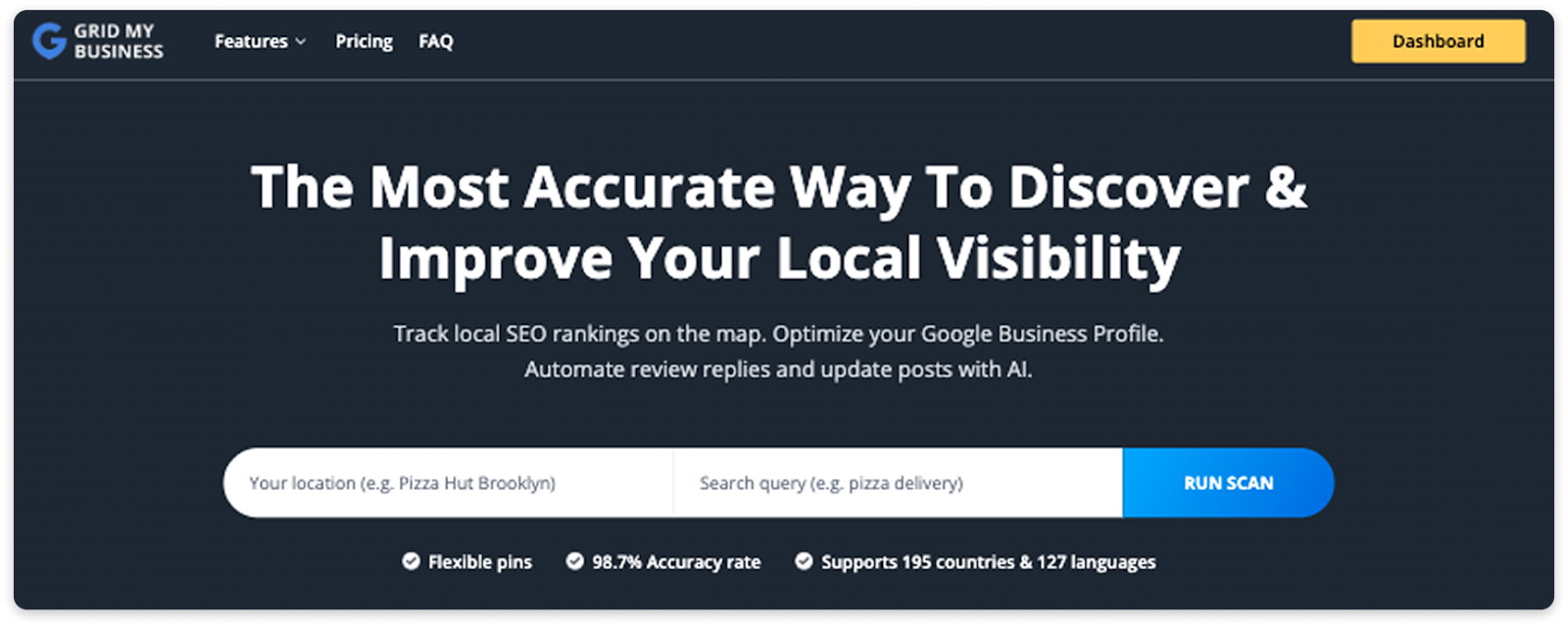
It acts as the product’s main home on the internet and explains what the platform does, who it is for, and how it helps businesses improve their local visibility.
When a potential customer, partner, or journalist lands on its homepage, they form an opinion within seconds.
The message, the layout, and how clearly the value is explained all shape that first impression. This is where the product shows what it does and why it matters.
These pages are designed to answer one simple question: “Is this right for me?”
On the Grid My Business site, they do more than describe what its products do. They help visitors decide. Good product pages explain the benefits in clear language, address common concerns, show proof from other users, and make the next step easy to take.
This is where Grid My Business shows what it can actually do. Many visitors are not ready to buy right away.
They want to test the tool, explore the features, and see if it fits their needs. As they use the site and read the feature explanations, they start to see whether the product really understands local SEO.
Over time, this turns the website into more than just a sales page. It becomes a place people return to and rely on.
And when they are ready to move forward, they come back to Grid My Business.
A blog is a strong owned media asset because it lives on your own platform and keeps working long after it is published.
It helps build authority, attract organic traffic, and earn trust over time. The MarketersMEDIA blog is a strong example of how a brand can use a blog as owned media.
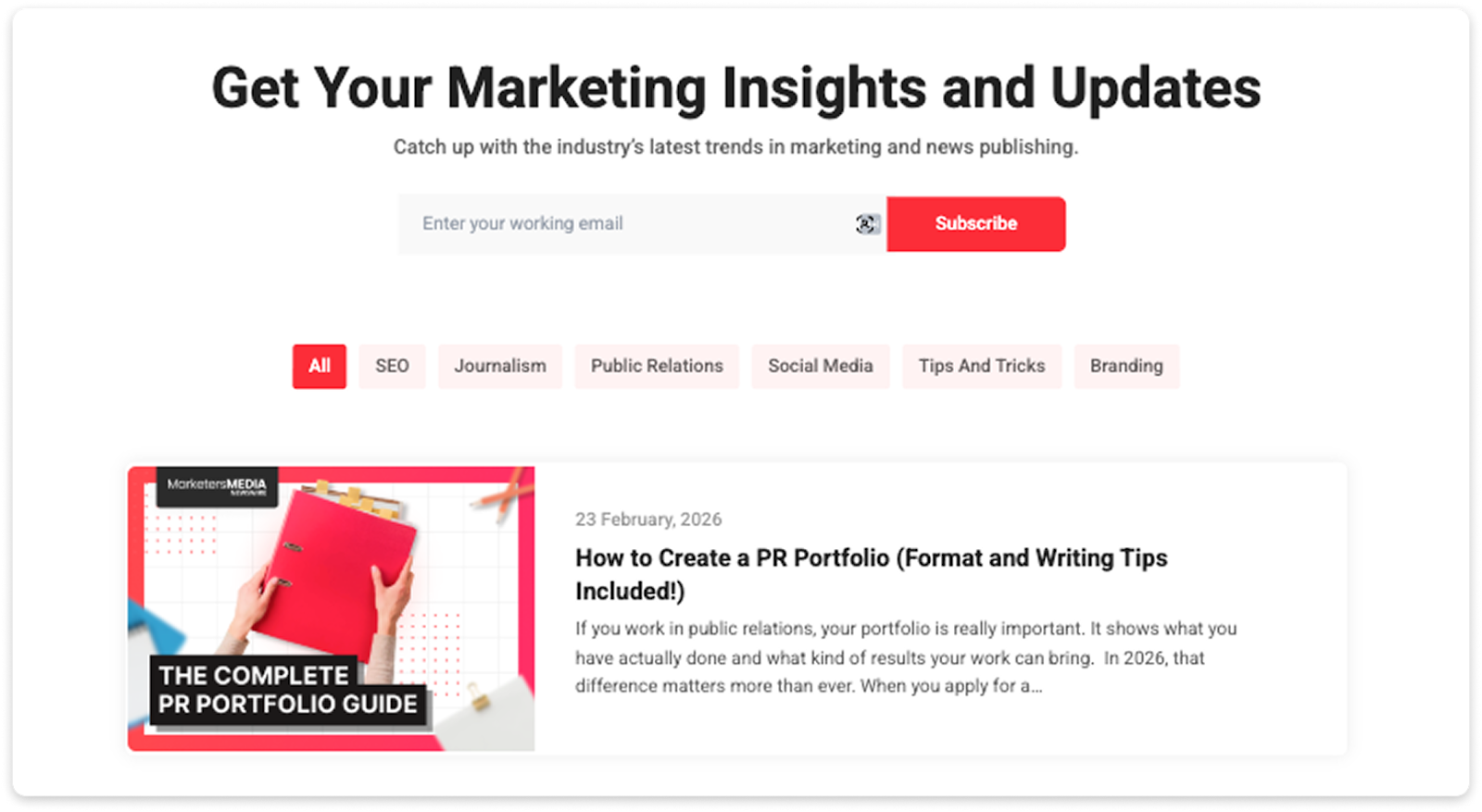
The blog works because it does a few important things:
Through industry insight articles, MarketersMEDIA breaks down trends, explains changes in media, and talks about real challenges businesses face when trying to get visibility.
These are not sales pages. Over time, this kind of content helps position the brand as a reliable reference point, not just another service provider.
MarketersMEDIA uses case studies and real examples show what happens when a business uses press releases and distribution properly.
Instead of talking in theory, they show a real situation, a real problem, and a real outcome. This makes it easier for potential customers to trust the product because they can see how it works in the real world.
How-to guides and explainers focus on specific questions, step by step.
When someone searches for something like how to write a press release or how media distribution works, and the MarketersMEDIA blog gives a clear and complete answer, trust is built before the reader even thinks about buying anything.
Well-written guides can be referenced by journalists. Useful articles get shared by readers.
Good content on the MarketersMEDIA blog does not stay in one place. It spreads, gets cited, and brings new people back to the site.
Want your brand story featured on credible media outlets?
MarketersMEDIA Newswire helps you get the kind of third-party visibility these big brands achieved—through press release distribution to established publications. Get in touch with us today.
This free AI Press Release Generator is a good example of owned media built around utility, not just content.
Instead of asking people to read about how to write a press release, the tool lets them start creating one right away.
Instead of coming to the MarketersMEDIA site just to read about press release distribution, users come to actually use the tool.
They can draft a press release, test ideas, and see how the process works. This creates repeat visits and turns the site into a place people come back to, not just a page they visit once.
The tool lets users experience what MarketersMEDIA offers instead of asking them to take it on faith.
By using the generator, they can see the structure, the output, and how it helps them get started faster. This makes the value clear in a very direct way, without relying only on marketing claims.
Because the generator is something people actively use, the website becomes part of their workflow.
It is no longer just a place to read about a service. It becomes a place where real work starts, which makes the brand more useful and more memorable.
Unlike social media, no algorithm decides who sees an email newsletter.
And unlike ads, Nike does not have to pay every time it wants to reach its audience. When someone subscribes, Nike has a direct line to them.
Email newsletter is used for a few clear purposes:
Nike sends regular updates that do not always try to sell something. These can be new collections, athlete stories, or product highlights.
Example of content included in Nike’s email newsletter:
The goal is to stay relevant and top of mind, not to push a hard offer every time.
When Nike launches new shoes or collections, email is one of the strongest channels. The people on the list already chose to hear from the brand. They already care.
A well-timed launch email to this audience is far more effective than trying to reach cold audiences through ads alone.
Nike also uses email to tell stories, explain products, and highlight how and why things are made.
Instead of aiming to close a sale, the objective is to build interest and trust over multiple emails, so when someone is ready to buy, the decision feels natural.
Email is not only for getting new customers. It is also for keeping existing ones engaged.
By staying in the inbox regularly, Nike stays in people’s minds. That ongoing presence is a big part of why email works so well as owned media.
The Shopify dashboard is an example of a SaaS product acting as owned media.
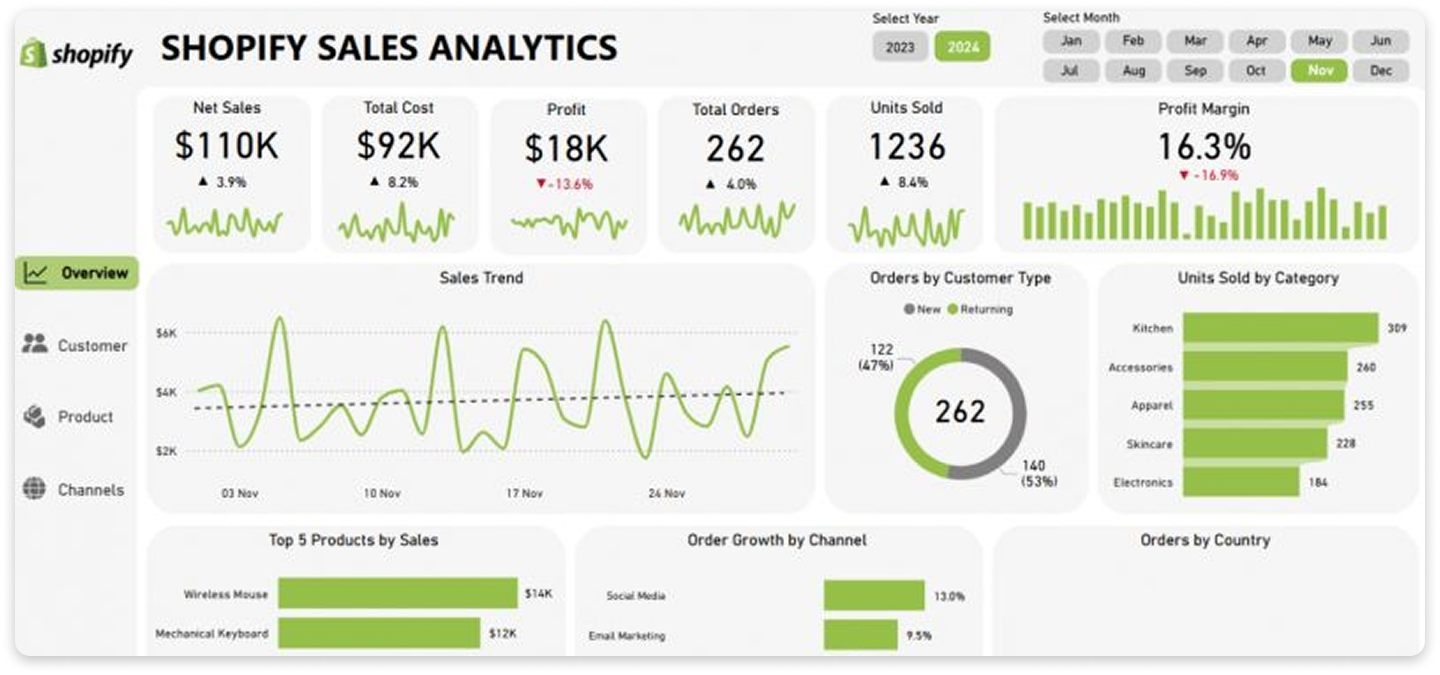
For Shopify users, this is not something they visit once and forget. It is where they manage products, orders, payments, and their entire online store.
People log in regularly and rely on it to run their business. For the brand, this dashboard is beneficial because:
Shopify users open the dashboard daily or weekly to check orders, update products, or review performance.
This means the brand is not just something they see in ads or emails. It is part of their routine.
The dashboard is where real work happens. Users are not there to read about Shopify. They are there to run their business.
This makes the product feel useful and essential, not just promotional.
The more often people use the dashboard, the more comfortable they become with it.
Over time, Shopify becomes the default place they go to manage their store. That habit makes switching away less likely and strengthens long-term loyalty.
Spotify’s Help Center is an owned media built around support and trust.
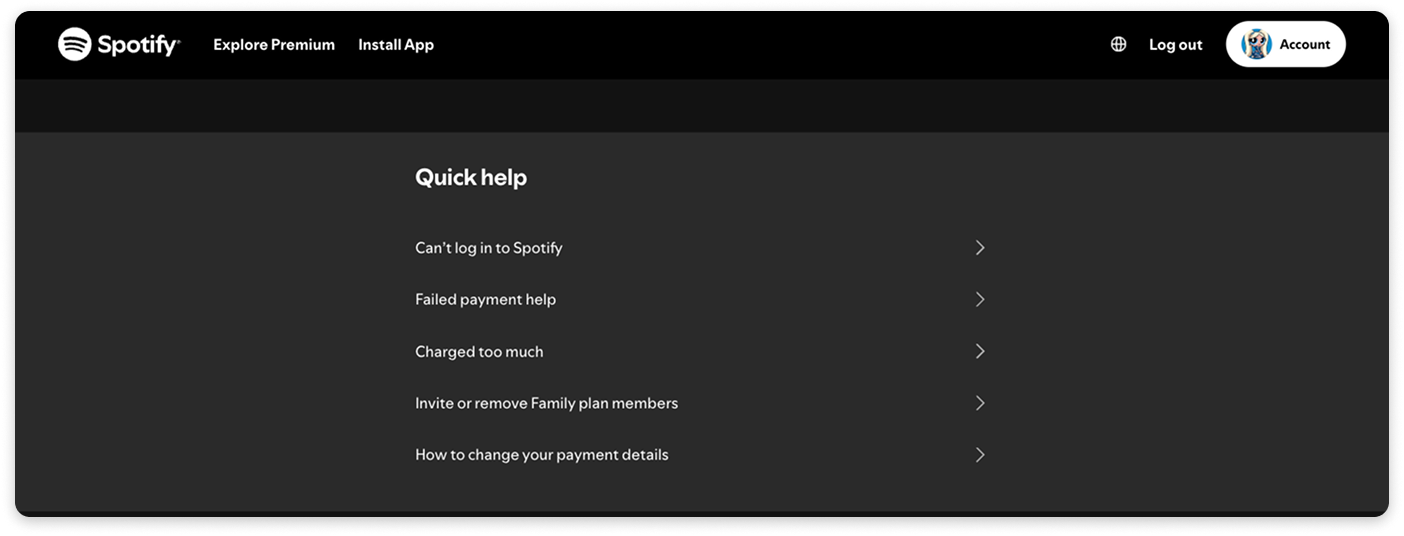
When users run into problems with billing, playback, accounts, or devices, they usually do not go to social media first. They go to Spotify’s own help pages to look for answers.
These pages explain common issues in simple language and guide users step by step toward a solution.
Help centre is a good owned media because:
Instead of waiting for replies on social media or contacting support for every small issue, users can often solve problems on their own.
This makes the experience smoother and saves time, which improves how people feel about the product.
A well-built help center reflects how well a company knows its service.
Clear explanations and useful guides show that Spotify understands the real problems users face and has thought about how to fix them.
By providing answers on its own site, Spotify does not send users elsewhere to search for help.
People stay within Spotify’s environment, which keeps the experience consistent and reduces the chance of confusion or frustration.
Over time, a reliable help center does more than just fix issues.
It makes users feel supported and confident using the service. That confidence makes people more comfortable staying with the brand and continuing to use the product.
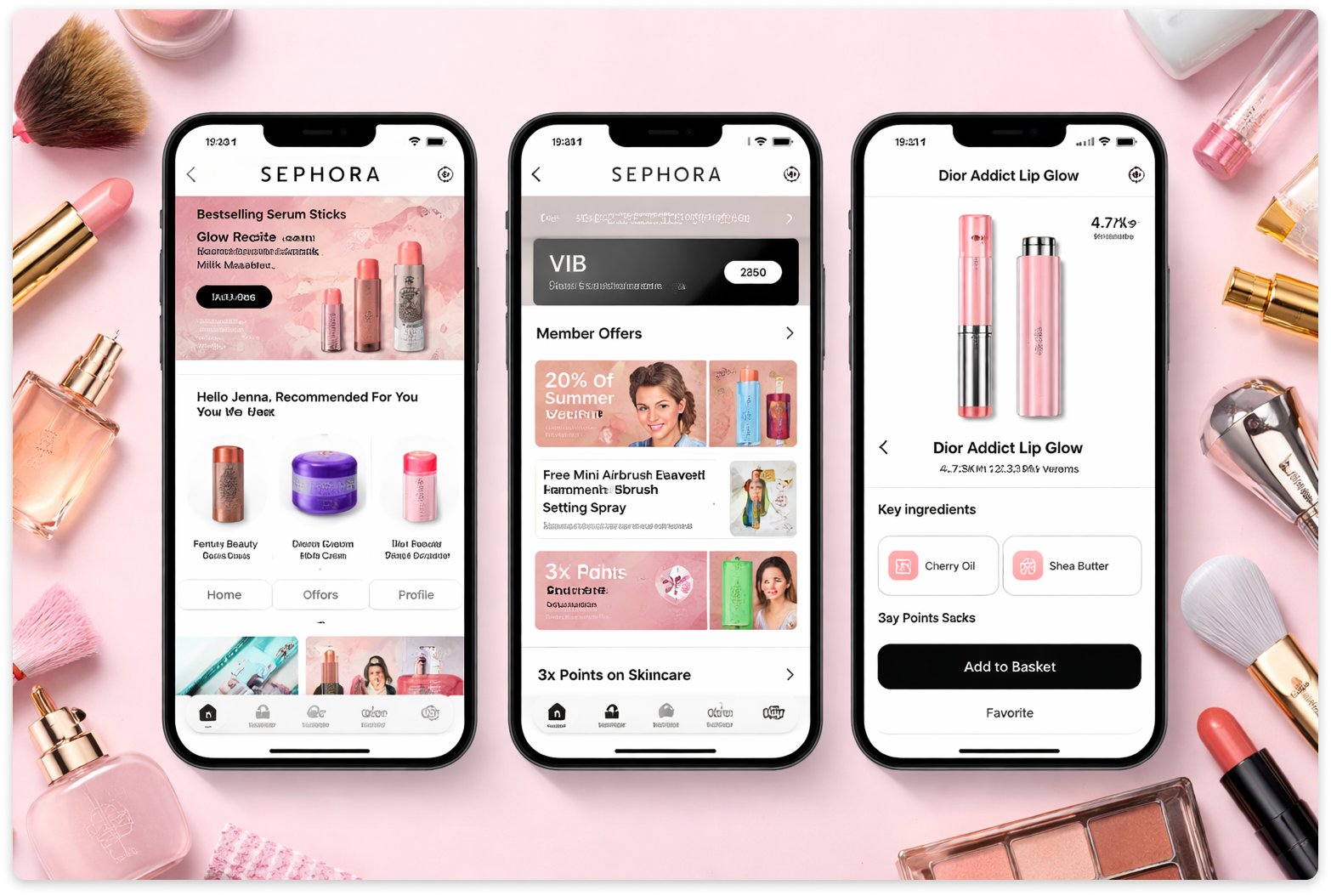
An in-mobile app is also an owned media. Take the Sephora app as an example. Instead of relying only on ads or social platforms, Sephora uses its app to build a direct and ongoing relationship with customers.
People use it to browse products, read reviews, manage rewards, and get personalized recommendations, all in one place.
Other benefits are:
Once the app is installed, Sephora does not have to depend on algorithms or third-party platforms to reach its customers.
The brand is just one tap away, which makes the connection much more direct and reliable.
From content and product discovery to shopping and loyalty rewards, everything happens inside the app.
This allows Sephora to shape the entire journey instead of relying on other platforms to do it for them.
Features like saved products, tailored recommendations, and member rewards give people reasons to come back regularly.
The app becomes part of their shopping routine, not just something they open once in a while.
Across all of these examples, a few things are consistent.
Across all of these examples, a few important patterns show up again and again. These are the reasons owned media works, no matter whether it is a website, a blog, a tool, a dashboard, a help center, or a mobile app.
With owned media, no advertiser, algorithm, or platform policy decides what you can publish, how it should look, or how people should experience it. You decide.
That means you control the tone, the layout, the timing, and the story you tell.
This matters because consistency builds credibility. When your brand always shows up in a clear and familiar way, people start to trust it more.
A well-written blog post, a useful guide, a strong case study, or a helpful tool can keep bringing in traffic, leads, and users for months or even years.
Paid ads stop working the moment you stop paying. Owned media keeps working because it stays online, keeps getting discovered, and keeps helping people long after it is published.
When you rely on social media or ads, you are always going through someone else’s platform.
With owned media, you are talking to your audience directly through channels you control, like your website, your email list, or your app.
That direct connection is important because it reduces dependency on third parties and creates a more stable, long-term relationship with your audience.
Owned media content does not live in only one place. A blog post can become an email. An email series can become a downloadable guide. A webinar can become an on-demand resource or a series of articles.
Because you own the content, you can reuse it across paid, earned, shared, and owned channels.
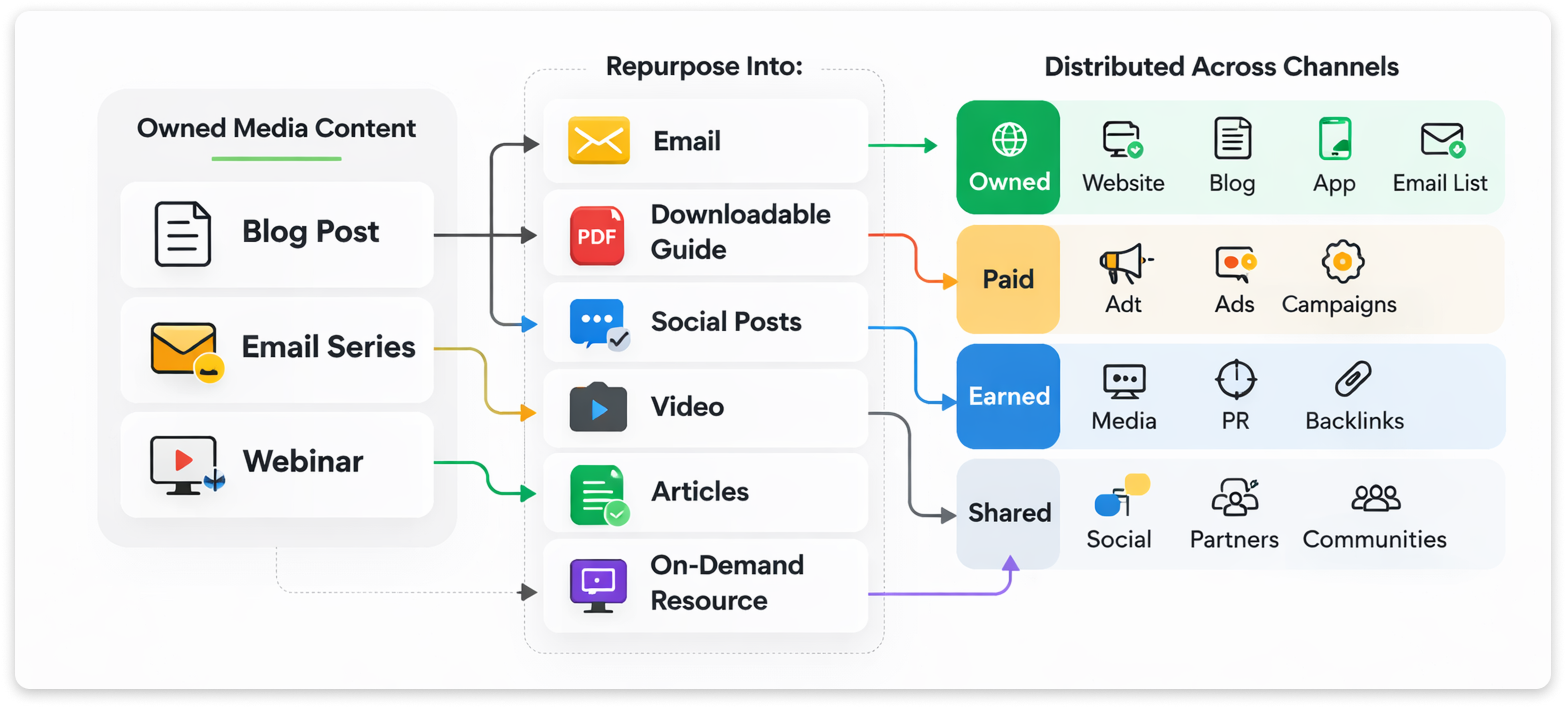
This makes your marketing more efficient and more consistent.
All the examples above do something important: they help first.
They educate, solve problems, save time, or make work easier. That creates goodwill. When people finally reach the point where they are ready to buy, the brand already feels familiar and reliable.
The sale becomes a natural next step, not a hard push.
In short, owned media is not just a marketing tactic. It is a long-term strategy for building attention, trust, and demand on channels you actually control.
Yes, creating owned media takes investment upfront — in time, in writing, in production.
But unlike paid media, the cost doesn’t repeat every month to maintain the result. A blog post written today can still drive traffic five years from now.
Brands that consistently publish useful, accurate, well-crafted content build authority in their category.
That authority makes it easier to sell, easier to retain customers, and easier to attract earned media coverage.
Search engines tend to reward content that is genuinely useful and well organized. Evergreen articles, in depth guides, and clear resource pages give people real answers, which is exactly what search engines are trying to surface.
Owned media is how brands build this kind of visibility over time. Instead of paying for every click, you invest once in good content and it can keep bringing in traffic for months or even years.
That is why organic search is often one of the most cost effective and sustainable traffic sources.
Owned media helps brands build relationships, not just transactions. Newsletters that share useful insights, communities built around a shared interest, and apps that make customers’ lives easier all give people reasons to stay connected.
Instead of hearing from a brand only when there is a promotion, customers hear from it regularly in a helpful way. This ongoing interaction builds familiarity, trust, and loyalty over time.
When a brand relies too much on social platforms, it is always exposed to changes it cannot control.
If a platform changes its algorithm, reach can drop overnight. With strong owned media, such as a website, a blog, or an email list, the brand keeps a direct line to its audience.
That makes the business more stable and less dependent on decisions made by other platforms.
Owned media is the foundation that other channels build on over time.
Your website, your blog, your tools, your email list, your help center, and your app are all assets you control.
They do not disappear when a budget runs out or when a platform changes its rules. They keep working because they are yours.
The examples above show that owned media is not about one format.
It can be a product site, a content hub, a useful tool, a dashboard people use every day, a support center, or a mobile app.
But, that does not mean owned media should live in isolation. In practice, the strongest brands do not choose between owned, paid, earned, or shared media. They combine them.
A good blog post can attract organic traffic, get shared on social media, earn mentions from other sites, and be promoted with ads. A useful tool can do the same.
If you want to see how these channels work better together, it is worth looking at the PESO model.
It shows how paid, earned, shared, and owned media support each other, and how you can use them as a system instead of treating them as separate tactics. Owned media is the base. The PESO model shows you how to build on top of it.
A: Owned media usually does not deliver instant results like paid ads. A blog, resource hub, or tool often takes a few months to gain traction, especially for SEO. However, once it starts working, the results tend to be more stable and long-lasting. Think of owned media as a long-term investment rather than a quick campaign.
A: Owned media is actually more important for small businesses. Big brands can afford to rely on ads, but small businesses benefit more from building assets that keep working over time. A simple website, a helpful blog, or an email list can become a steady source of traffic and leads without needing a large budget.
A: Yes, and it may be even more important. AI systems rely heavily on clear, well-structured, trustworthy sources. Strong owned media, such as guides, help centers, and in-depth resources, increases the chance that your brand becomes a trusted reference point in search and AI-driven results.
A: Your profiles and posts are under your control, but the platform is not. That means social media is usually treated as shared media, not true owned media. You can use social platforms to distribute and promote your content, but your website, email list, and tools are safer long-term assets because you control them fully.
A: It depends on your business model, but most companies should start with a strong website and email list. These two give you a direct relationship with your audience. Blogs, tools, and other assets can then be added based on what your customers actually need.


 PR playbook to get your brand cited in AI answer
How to check and fix what AI says about your brand
2 minutes checklist to make your PR AI-friendly
PR playbook to get your brand cited in AI answer
How to check and fix what AI says about your brand
2 minutes checklist to make your PR AI-friendly