New Media Unlocked!
You can now publish on USA TODAY through MarketersMEDIA. That's 142M+ monthly visitors and DR 92 backlinks for every release you publish.
Better reach, better SEO, better credibility.

You can now publish on USA TODAY through MarketersMEDIA. That's 142M+ monthly visitors and DR 92 backlinks for every release you publish.
Better reach, better SEO, better credibility.
Table of Content


Your influencer marketing will fail.
Not because influencers don’t work, but because the wrong type was chosen for the goal.
Different influencers are built to deliver different outcomes.
For instance, micro influencers are more effective at building trust and driving engagement or conversions within specific niches.
Macro influencers are better suited for visibility, reach, and brand awareness, especially during launches.
Problems arise when businesses choose influencers based on follower count alone. This often leads to mismatched expectations and campaigns that generate activity without delivering results.
The difference between micro and macro influencers directly affects the key factors that determine campaign performance:
Once you understand the difference between the two influencer types and the key factors involved, choosing the right option becomes much easier.
This article breaks down the differences between micro and macro influencers, when to use each, and how to evaluate them using these key factors.
Free Press Release Template
Get your free copy of press release template and advanced PR guide to run your press release.

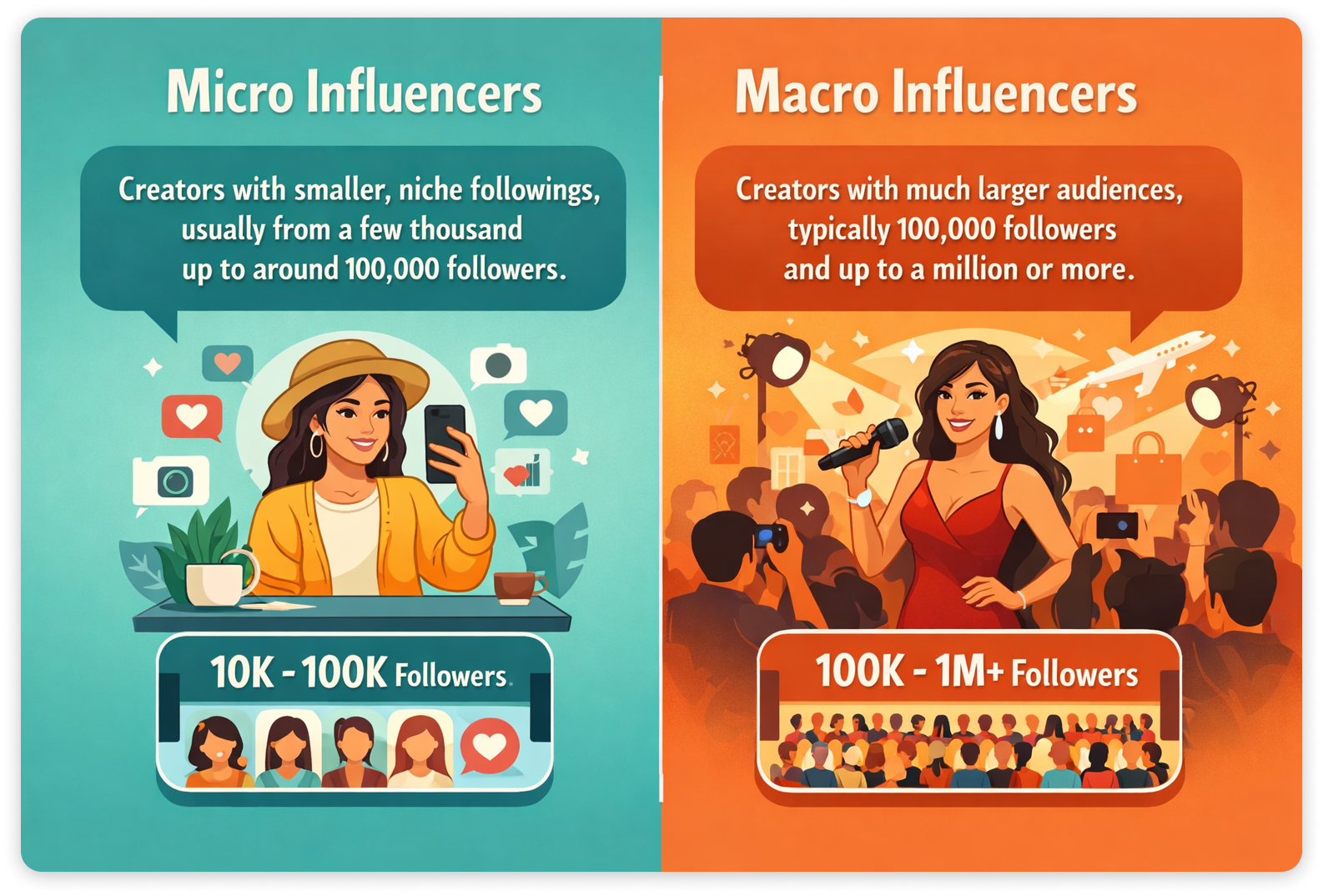
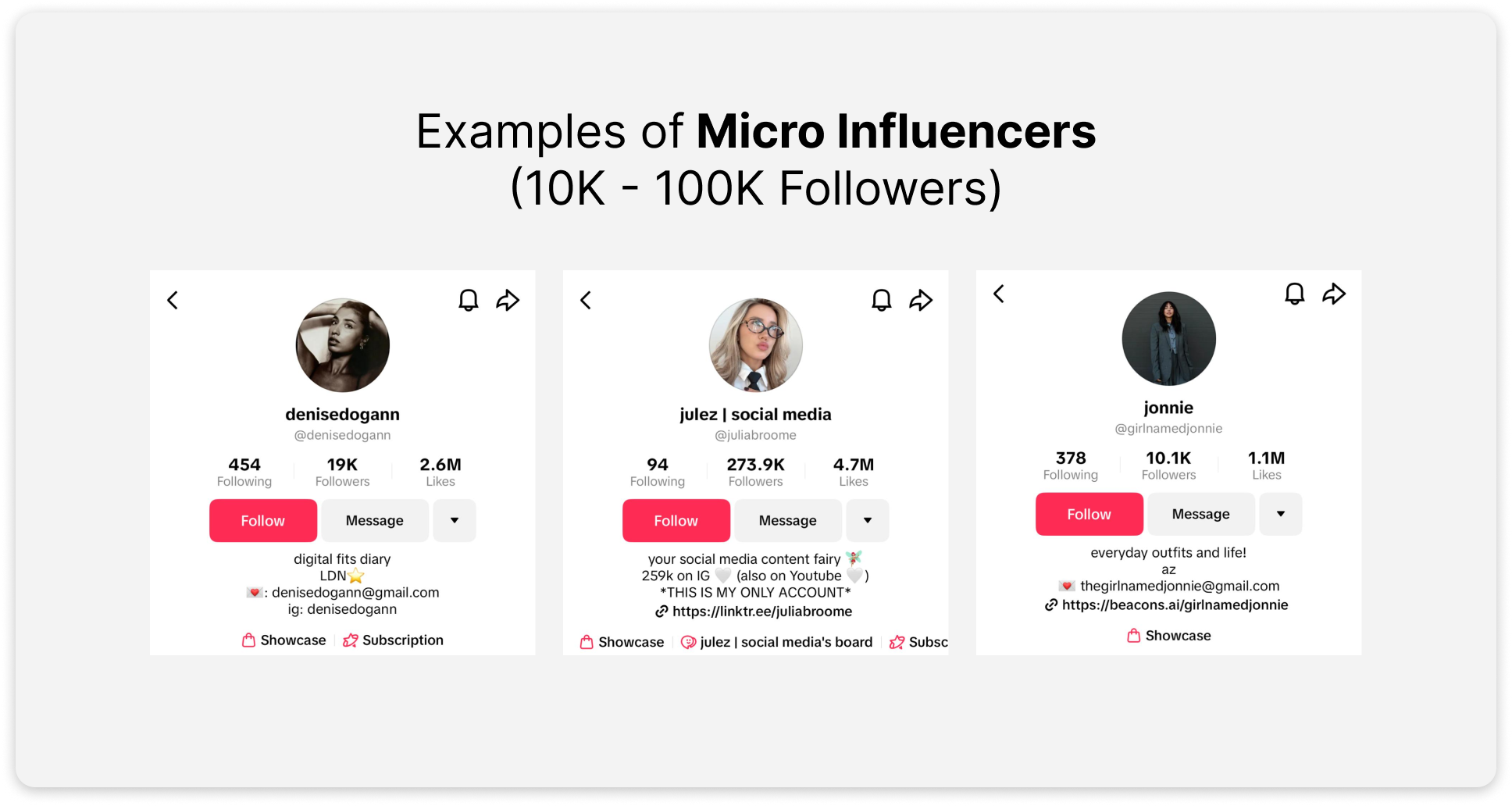
Micro influencers have 10,000 to 100,000 followers.
Their strength isn’t in numbers. Their strength is connection.
These creators focus on specific topics or communities. Their followers see them as relatable and trustworthy—more like a friend sharing advice than a celebrity pushing products.
This closer relationship translates into higher engagement rates. When a micro influencer recommends something, their audience listens and acts.
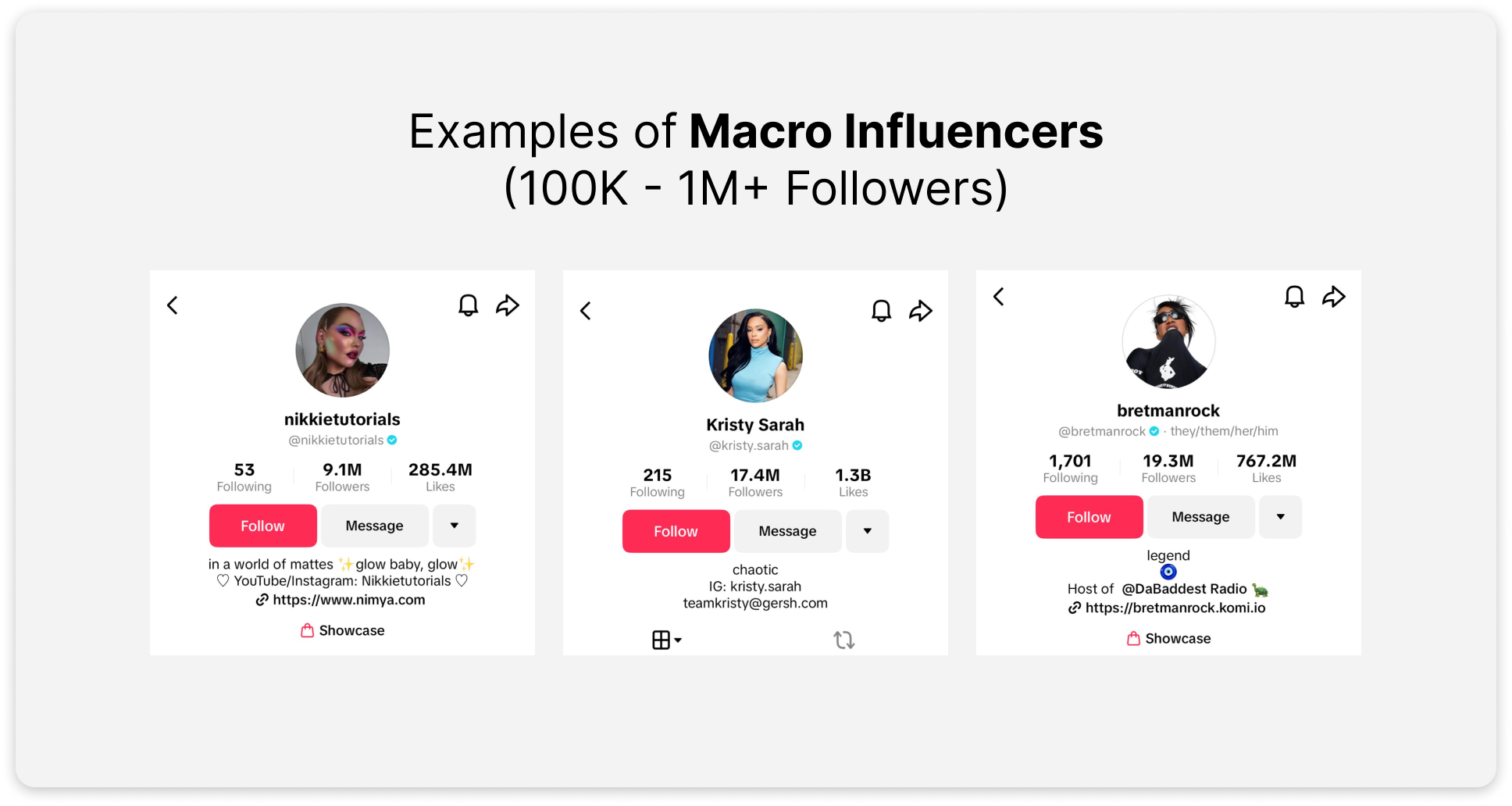
Macro influencers reach 100,000 to 1 million+ followers.
They often extend beyond a single niche, creating content that appeals to broader interest areas. Their visibility is wide, making them recognizable across multiple communities.
Because of their scale, brands use macro influencers primarily for awareness campaigns where broad exposure matters more than deep engagement.
The difference between these two isn’t just about follower count.
Micro influencers typically have smaller, niche followings, while macro influencers reach larger, broader audiences. Both serve different purposes in your marketing strategy.
The funnel stage determines what type of content you need. The content type determines which influencer will be most effective.
Macro influencers excel when your goal is introducing your brand to as many potential customers as possible.
Since they’re recognized beyond a single niche, they’re useful for campaigns aimed at broad awareness rather than targeted action.
Use macro influencers when you need:
Engagement and conversion rates may vary due to their broader audience. But the exposure can be valuable when the goal is to be seen.
Once people are aware of your brand, they move into the consideration phase, where they compare options, evaluate fit, and look for reasons to trust a product.
This is where credibility matters more than visibility.
Micro influencers speak to specific communities or interest groups. Their followers see them as relatable rather than aspirational, which makes recommendations feel like advice instead of advertising.
Because of this trust, micro influencers are particularly effective at influencing decisions and driving conversions. When they recommend a product, their audience is more likely to believe the recommendation is genuine.
This makes micro influencers a strong choice for:
While their reach is smaller, the audience is often more attentive and more likely to engage or convert.
While micro influencers excel at driving trust and conversions, they are not automatically the right choice for every campaign.
The same applies to macro influencers. The right decision depends on how each option performs against specific criteria.
To choose correctly, businesses need to compare micro and macro influencers using a consistent set of factors rather than relying on instinct or follower count.
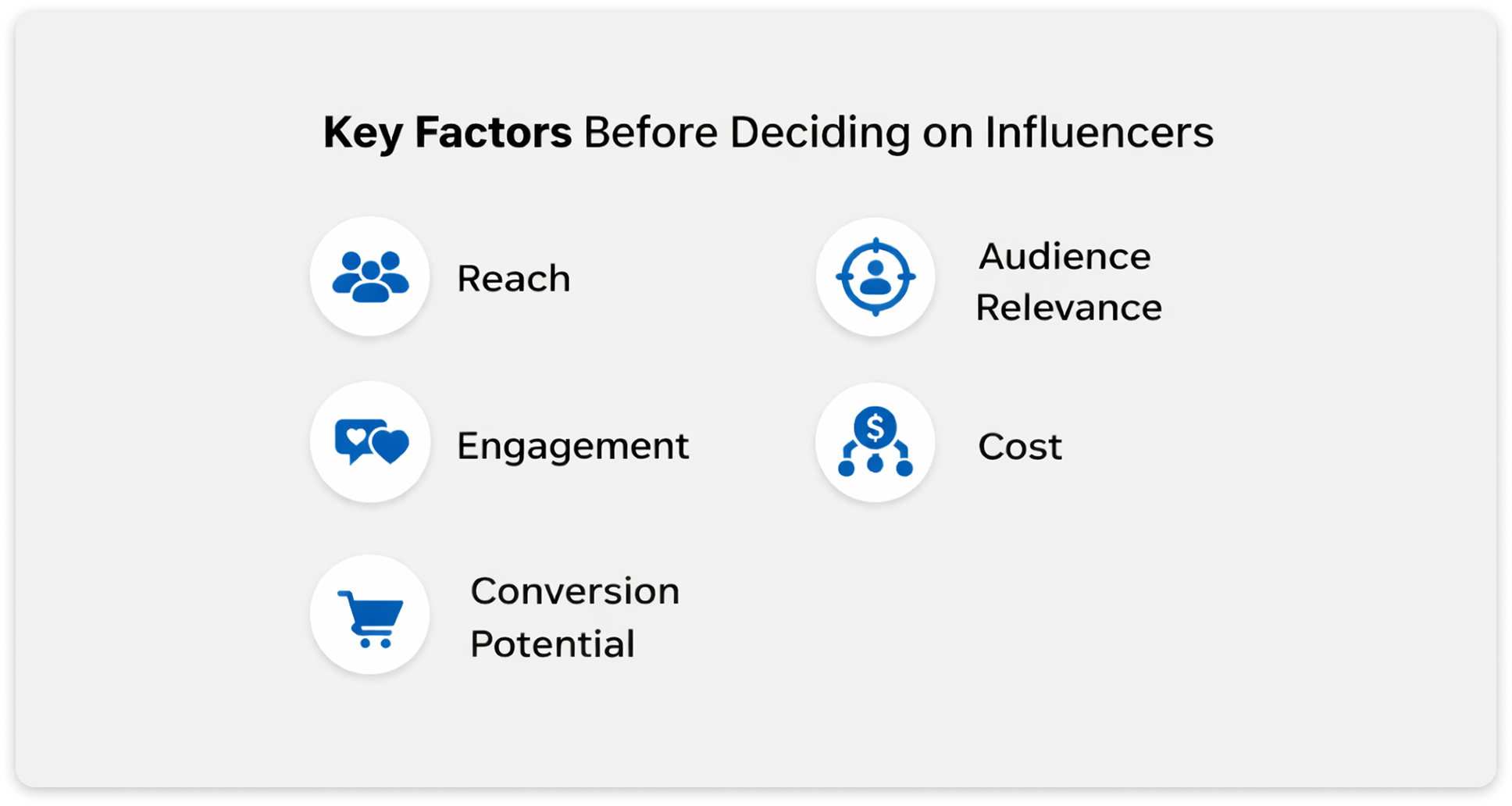
Reach is the total number of people who could potentially see a piece of content. It’s the most visible metric and easiest to compare.
But, it doesn’t tell you if those people care or if they’ll take action.
A macro influencer with 2 million followers can expose your brand to 2 million people, but that doesn’t mean all 2 million people are potential customers.
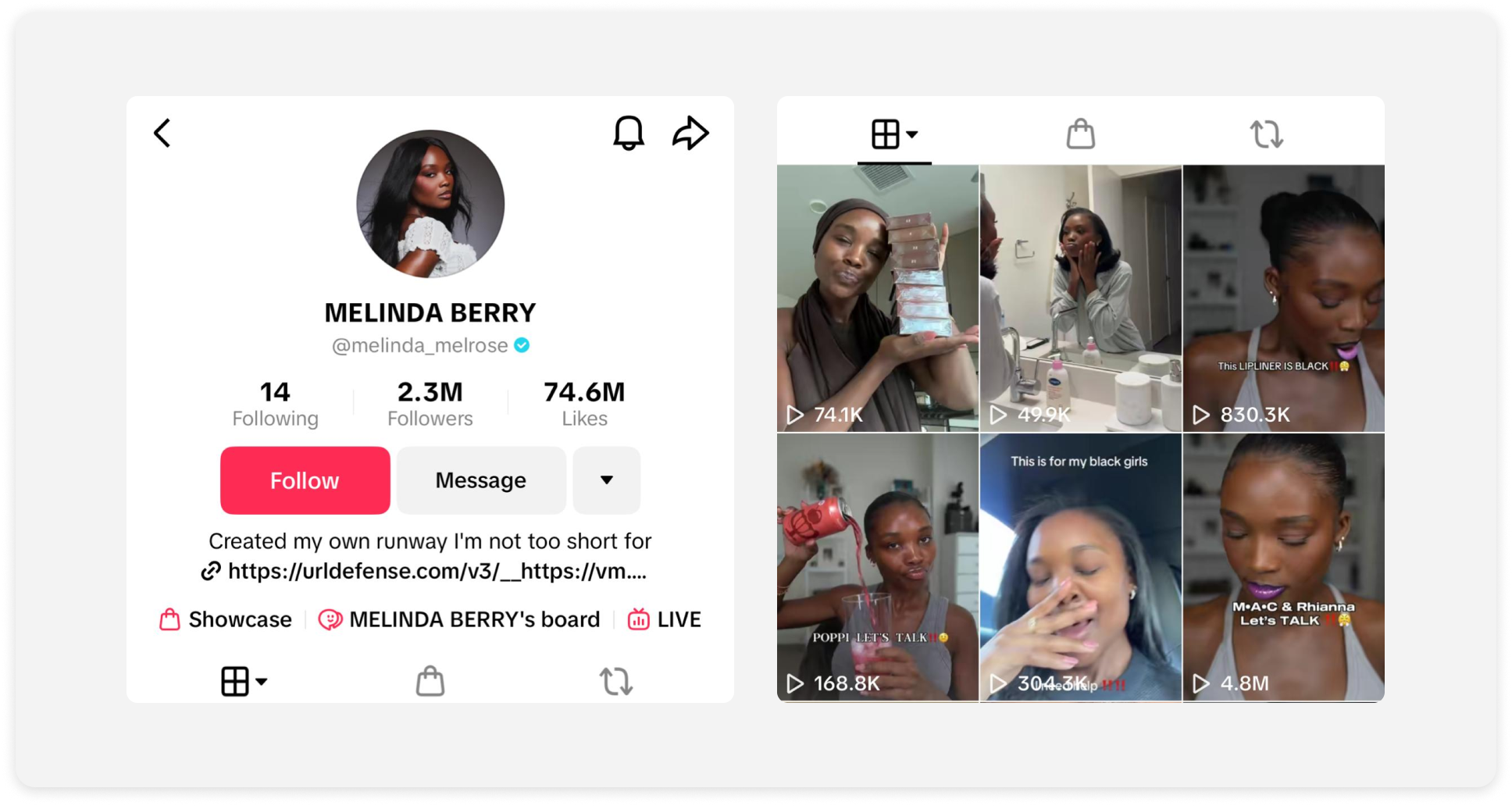
For instance, despite having 2.3 million followers, this macro influencer’s (@melinda_melrose) videos can receive as few as 100,000 views, highlighting the gap between follower count and actual reach.
If your primary goal is brand awareness and you need maximum visibility, macro influencers offer the most efficient path. This works particularly well for product launches or entering new markets where most people haven’t heard of you yet.
But if you’re targeting a specific niche audience or your goal is conversion rather than awareness, raw reach becomes less important than audience quality.
The math is simple: 5,000 interested people beat 50,000 indifferent ones.
Relevance is the degree to which an influencer’s audience matches your target customer profile.
High relevance means the influencer’s followers are the exact people you’re trying to reach.
Micro influencers typically have more relevant audiences because they focus on specific topics or interests. If you sell yoga equipment, a micro influencer who teaches yoga to beginners will have an audience full of potential customers.
A macro lifestyle influencer might have 10 times the followers, but only a small fraction might be interested in yoga.
Engagement measures how actively an audience interacts with an influencer’s content through likes, comments, shares, saves, and other actions.
Research shows that micro influencers have higher engagement rates compared to macro influencers.
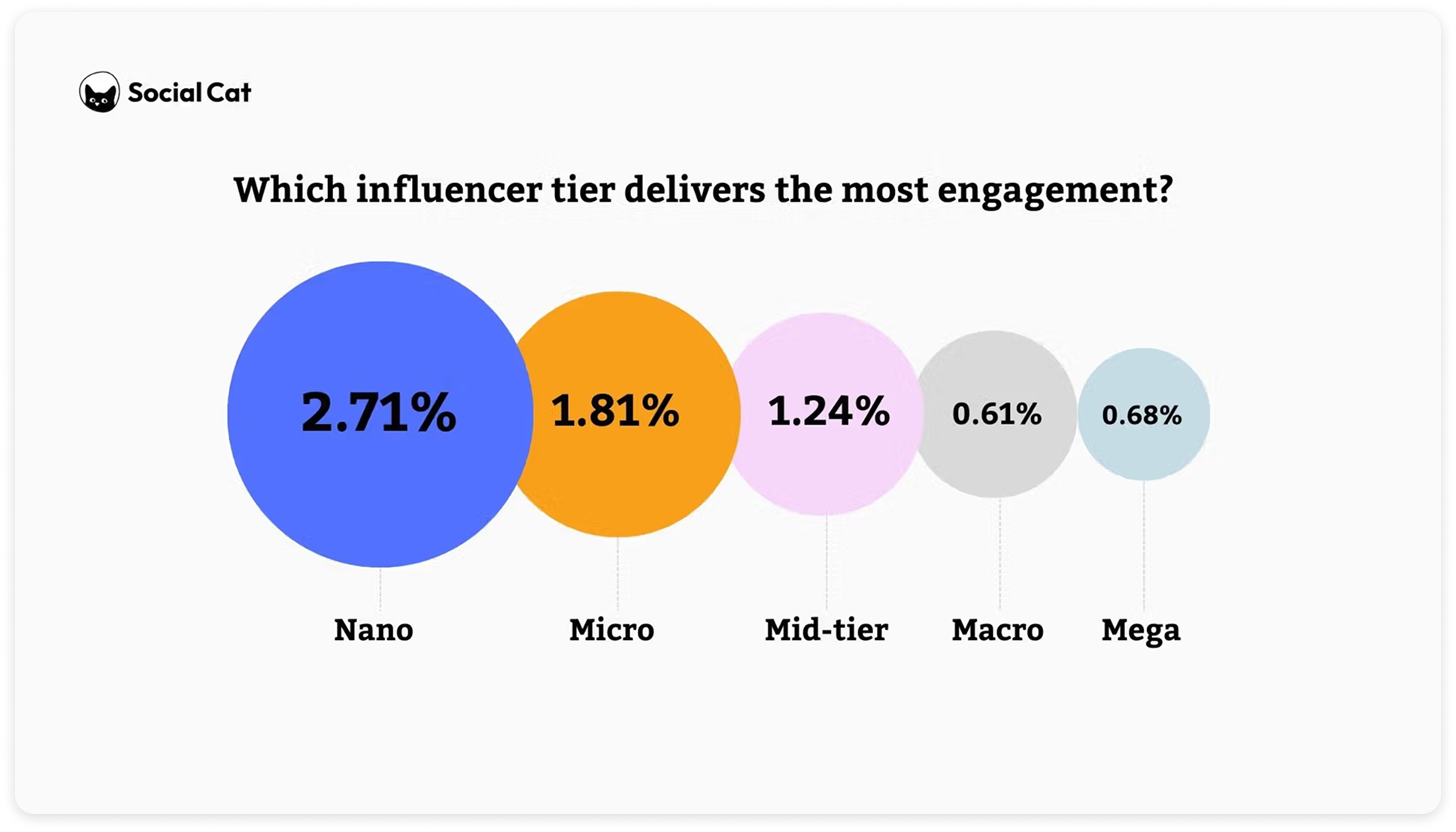
High engagement indicates that an audience pays attention, cares about the content, and trusts the creator. This matters because engaged audiences are more likely to click through to your website, read product details, and ultimately make purchases.
But not all engagement is equal. Some engagement is genuine, while some is not.
Genuine engagement shows that people are paying attention, thinking about the content, and willing to interact, such as:
This type of engagement is a stronger signal of trust and interest than surface-level reactions.
Cost is what you pay an influencer for creating and posting content on your behalf. This varies dramatically based on follower count, platform, and content type.
Typical pricing:
The cost advantage of micro influencers is significant.
For the price of one macro influencer post, you could work with 10-20 micro influencers. This allows you to test different messages, reach multiple niche audiences, and reduce the risk of putting all your budget into a single partnership.
Conversion potential is the likelihood that someone exposed to an influencer’s content will take a desired action, whether that’s clicking a link, signing up for an email list, or making a purchase.
Trust is the primary driver of conversion, and micro influencers have stronger trust relationships with their audiences.
This is because followers perceive micro influencers as relatable peers who share similar lives, challenges, and values. When a micro influencer says “this product solved my problem,” their followers believe it could solve their problem too.
Macro influencers, while admired, are often seen as living different lives with access to resources most people don’t have.
Micro influencers have been shown to drive more weekly conversations about purchase recommendations than average consumers. This word-of-mouth multiplication effect extends the impact of the campaign beyond the initial post.
Macro influencers can drive conversions when the product has mass appeal, when the buying decision is simple and low-risk, or when the macro influencer has established genuine expertise in the product category.
However, for considered purchases or niche products, micro influencers typically outperform because their endorsement carries more weight with their audience.
Choosing based only on follower count leads to common problems.
You see numbers like views, likes, or impressions, so it looks like the campaign worked. But those numbers do not lead to sales, sign-ups, or real business results.
Money is spent, activity happens, but nothing meaningful changes for the business.
The fix is simple: use the right types of influencers that match your campaign goals.
When influence and intent are aligned, results follow. When they are not, even a well-executed campaign underperforms.
A: Micro influencers are not inherently better. They are better for specific goals. Micro influencers perform well when trust, relevance, and conversion matter.
Macro influencers perform well when visibility and reach are the priority. The mistake happens when businesses treat one type as universally superior instead of matching the influencer to the campaign objective.
A: In most cases, yes. Micro influencers typically charge much less per post, allowing brands to work with multiple creators instead of relying on a single partnership.
This spreads risk, enables testing of different messages, and often delivers better overall return when conversions are the goal.
A: It can be, if coordination is poor. Managing many creators requires clear guidelines, timelines, and expectations.
Without structure, messaging becomes inconsistent and hard to measure. The risk is operational, not strategic. Proper briefing and tracking reduce this issue significantly.
A: Yes, when possible. Creators who already use or understand the product communicate more naturally and convincingly.
Their content feels less scripted and more credible. This often leads to better audience response than partnerships built purely on reach or pricing.
A: Engagement patterns reveal more than follower count. Large swings in views, repetitive or generic comments, and low comment-to-like ratios can indicate low-quality or inactive audiences.
Reviewing comment quality and audience interaction over time provides better insight than surface metrics.


 PR playbook to get your brand cited in AI answer
How to check and fix what AI says about your brand
2 minutes checklist to make your PR AI-friendly
PR playbook to get your brand cited in AI answer
How to check and fix what AI says about your brand
2 minutes checklist to make your PR AI-friendly