New Media Unlocked!
You can now publish on USA TODAY through MarketersMEDIA. That's 142M+ monthly visitors and DR 92 backlinks for every release you publish.
Better reach, better SEO, better credibility.

You can now publish on USA TODAY through MarketersMEDIA. That's 142M+ monthly visitors and DR 92 backlinks for every release you publish.
Better reach, better SEO, better credibility.
Table of Content


While most ads compete for attention on phones and laptops, out-of-home advertising appears in places people cannot scroll past. From city streets to transit hubs, out-of-home (OOH) advertising places brand messages directly into everyday routines.
Research shows 31% of consumers trust OOH advertising, a higher level of trust than social media. Brands that can afford premium locations in major city centers or busy airports automatically gain perceived status and consumer trust.
Here’s what you need to know about how OOH works, why brands still invest in it, and how it complements your digital campaigns.
OOH is the umbrella term covering both traditional static formats and digital screens.
Traditional static OOH includes printed billboards and posters that stay unchanged throughout the campaign. They offer constant visibility, low CPM, and broad reach—perfect for mass awareness.
Digital Out-of-Home (DOOH) uses digital screens that update in real-time and integrate data for targeted advertising. While more expensive, DOOH offers greater flexibility and measurement.
🎯 For a deeper look at DOOH capabilities and how they work, check out our full guide here: https://marketersmedia.com/blog/what-is-dooh
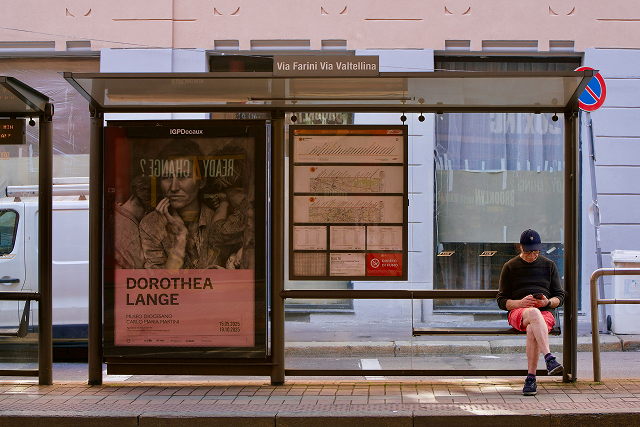
OOH’s effectiveness comes down to a few core characteristics that set it apart from digital and other media channels.
The human brain processes visual images in as little as 13 milliseconds—much faster than text. High-contrast colors and bold visuals capitalize on this speed, ensuring immediate message recognition during fleeting exposure.
Highway billboards reach commuters. Transit ads target urban dwellers. Mall displays catch shoppers near purchase decisions. You control exactly where your message appears.
Repeated exposure to the same message (especially among daily commuters) triggers what psychologists describe as the Mere Exposure Effect. Frequent exposure builds familiarity, preference, and implicit trust over time. This constant visibility strengthens brand awareness more effectively than intermittent digital impressions.
Digital screens near retail checkouts, restaurant entrances, or service locations reinforce your message at the exact moment consumers decide what to buy. This proximity to the point of purchase drives immediate action.
Different formats serve different strategic purposes based on viewing distance, dwell time, and audience speed.
Billboards
Street Furniture
Transit Media
Place-Based Media
Each format brings unique advantages. The key is matching your message to how and where your audience will see it.
Beyond format and placement, OOH delivers measurable benefits that explain why brands continue investing in physical advertising.
Delivers Mass Reach
Strong Complement to Digital and Mobile
Builds Trust and Credibility
Cost-Effective CPM
These advantages work together. OOH builds trust while driving digital action, creating a multiplier effect across the marketing mix.
Here’s how leading brands turned OOH placements into viral moments that generated massive earned media.
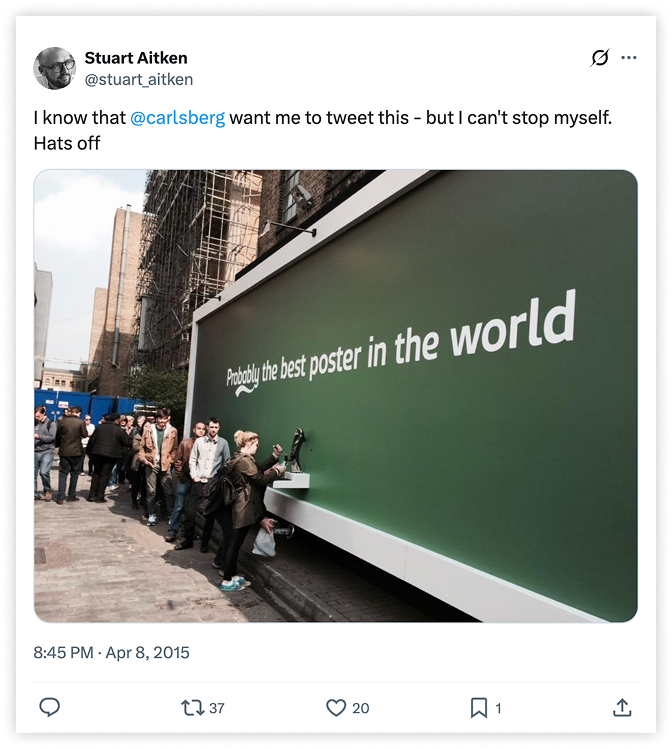
Carlsberg created a poster that dispensed actual beer to passersby.
This turned an advertisement into a public event, generating massive media coverage and social sharing. The physical spectacle became content that spread far beyond the original location.
Why it works: By turning a static poster into an experience, Carlsberg rewarded curiosity and participation. The surprise factor makes the ad memorable and easy to share.
British Airways displayed real-time flight tracking on digital billboards.
When planes flew overhead, the billboard showed which flight it was and where it was headed. This contextually relevant, delightful use of technology captured significant press attention and demonstrated OOH’s modern capabilities.
Why it works: The campaign connected the physical environment with live data. It shows how DOOH can feel timely and relevant.
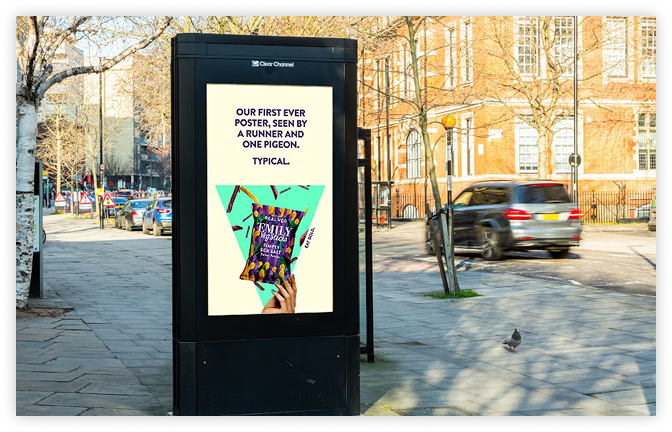
Emily Crisps ran self-aware billboards during lockdown that acknowledged the strange timing of outdoor advertising when everyone stayed home.
The wit and cultural awareness made the ads highly shareable online, proving that smart copy can turn a limitation into an opportunity.
Why it works: Instead of ignoring the situation, the brand leaned into it. The honesty and cultural awareness resonated with audiences, turning a limitation into a point of connection and brand likability.
Building on the characteristics and examples covered earlier, here are a few practical tips to keep OOH campaigns clear and effective:
By keeping these fundamentals in focus, OOH campaigns remain effective without needing unnecessary complexity.
OOH creative often generates earned media value that exceeds the original media spend, if it is announced properly.
A spectacular installation needs a press release to provide context. Announce campaign launches to trade media. Explain the technology behind dynamic creative optimization. Detail the geographic scope and objectives.
The right distribution amplifies your campaign announcement beyond the physical placement.
Design your OOH creative to be photogenic and shareable. High-quality photos of your billboard, 3D build, or interactive installation provide visual content that journalists need.
OOH advertising works as both a brand awareness tool and a performance marketing channel with measurable results. The format has evolved from simple printed posters to data-driven digital displays that update in real-time.
The most successful campaigns treat OOH as part of an integrated strategy—using physical presence to prime audiences for digital engagement, then converting that interest through mobile and social channels.
Pick formats that match your viewing conditions, and design creatives that work at the speed and distance of your placement. Test, measure, and refine based on attribution data now available through modern OOH platforms.
A: OOH stands for Out-of-Home advertising—any ad format that reaches consumers in public spaces, during transit, or inside commercial locations outside their homes.
A: OOH is the umbrella term covering both static and digital formats. DOOH (Digital Out-of-Home) specifically refers to digital screens that can rotate content, update in real-time, and integrate data for targeting.
A: Costs vary widely based on format, location, and market size. Highway billboards in major cities cost more than local street furniture. DOOH typically has higher upfront costs than static formats but offers better targeting and measurement.
A: Modern OOH uses mobile location data to track foot traffic lift, online conversions, and website visits. Programmatic DOOH platforms provide detailed attribution connecting exposure to specific actions.
A: Yes. OOH delivers guaranteed exposure that can’t be skipped or blocked. It builds trust (31% consumer trust rate), amplifies digital campaigns (54% search lift), and generates strong ROI (some formats report 495% returns).
A: Follow the seven-word rule for high-speed formats. Use high-contrast colors and bold typography. Make the message instantly readable. Include a simple call to action. Match creatives to the viewing distance and dwell time of your placement.


 PR playbook to get your brand cited in AI answer
How to check and fix what AI says about your brand
2 minutes checklist to make your PR AI-friendly
PR playbook to get your brand cited in AI answer
How to check and fix what AI says about your brand
2 minutes checklist to make your PR AI-friendly