New Media Unlocked!
You can now publish on USA TODAY through MarketersMEDIA. That's 142M+ monthly visitors and DR 92 backlinks for every release you publish.
Better reach, better SEO, better credibility.

You can now publish on USA TODAY through MarketersMEDIA. That's 142M+ monthly visitors and DR 92 backlinks for every release you publish.
Better reach, better SEO, better credibility.
Table of Content


Your customers trust your employees more than they trust your brand.
That’s not a guess. It’s the operating reality of how buying decisions are made today. When someone hears about your company from a team member, a forum post by a current employee, or a LinkedIn update from someone inside your organization, it carries weight that paid advertising simply cannot replicate.
Internal marketing is how companies earn that trust from the inside out. It’s the practice of treating employees as internal customers, selling them on the company’s mission, products, and direction so they’re equipped and motivated to carry that message forward.
Most organizations acknowledge it exists. Few actually do it well.
The evidence is hard to ignore. Global employee engagement fell from 23% to 21% in 2024, with lost productivity costing the global economy an estimated $438 billion.
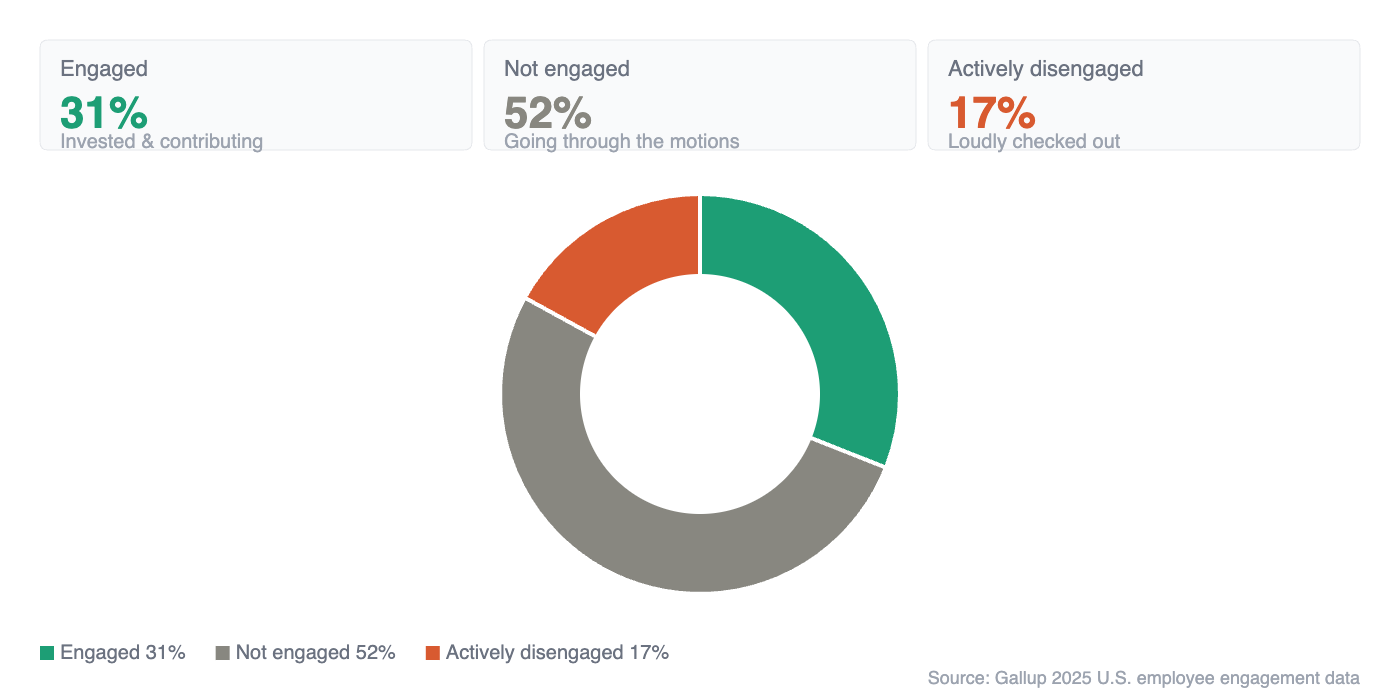
U.S. engagement hit a 10-year low, with only 31% of employees reporting feeling engaged with their work.
The scale of that disengagement becomes clearer when you see the trend over time:
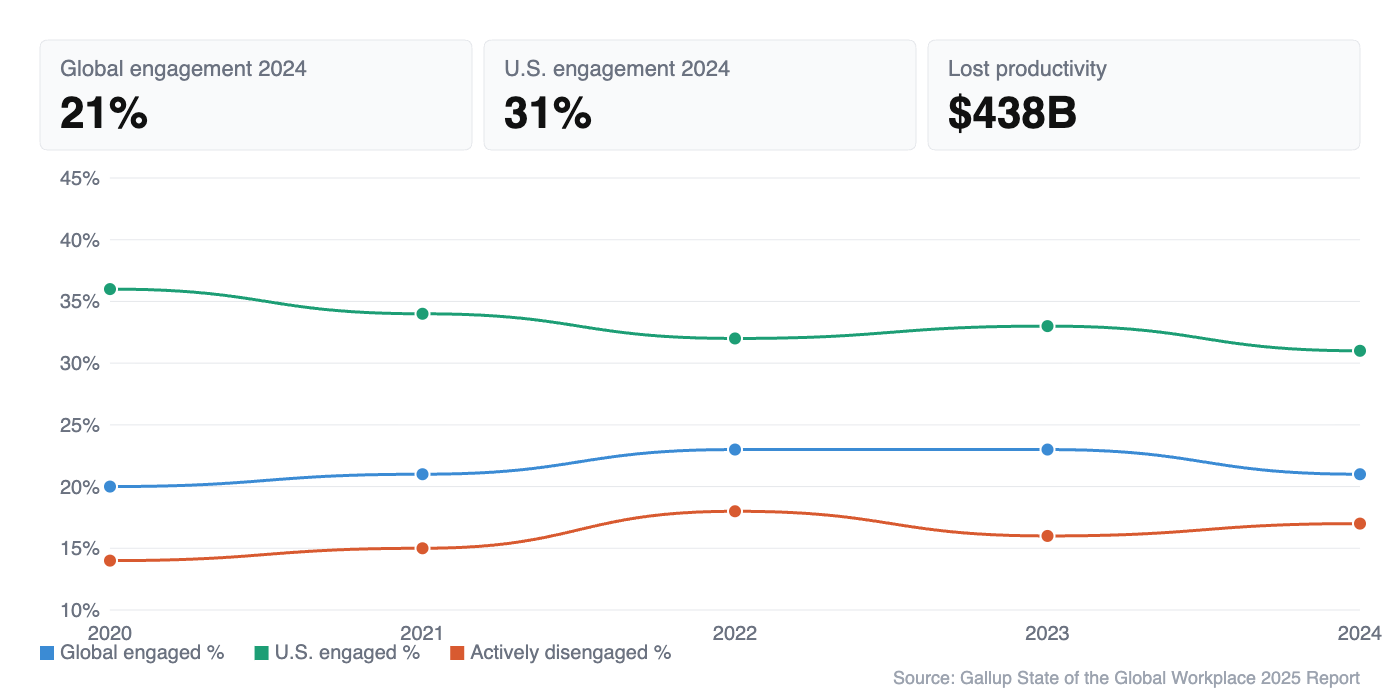
Those numbers reflect what happens when internal marketing is treated as an afterthought.
Here are 10 concrete internal marketing examples, drawn from real practices at companies worth paying attention to.
At a company, its managing director records short video updates on his smartphone every few weeks and shares them directly with staff through the company’s internal platform.
No production crew. No teleprompter. Just a candid update delivered at a human pace.
This approach works because it strips away the corporate filter that makes most leadership communication forgettable.
Employees don’t want a polished press release about company direction. They want to understand what’s actually happening, what it means for them, and that someone at the top is thinking about it plainly.
Video as a format accelerates that trust. 96% of people say they watch explainer videos to learn more about a product, and the same principle applies internally.
When leadership makes video a consistent habit, teams begin to feel informed rather than managed.
The format also scales. A two-minute video reaches 2,000 employees with the same message, with the same tone, instantly.
Most onboarding programs are administrative exercises. Fill out the forms, attend the orientation, get your laptop. Done.
Starbucks built something different. In its early growth years, the company invested heavily in creating genuine excitement among its baristas.
Staff were made partners in the company’s success through equity participation and benefits like health insurance.
The company later extended that investment to include tuition coverage at Arizona State University for U.S. employees.
The philosophy behind it was clear: if employees don’t believe in the brand, customers won’t either.
At HubSpot, that same thinking shows up in how onboarding is designed as an internal marketing effort from day one.
New hires receive brand education, storytelling, and team-building activities designed to connect them to company values before they ever speak to a customer.
Starbucks treats employee onboarding as a brand-building experience from the very first shift:
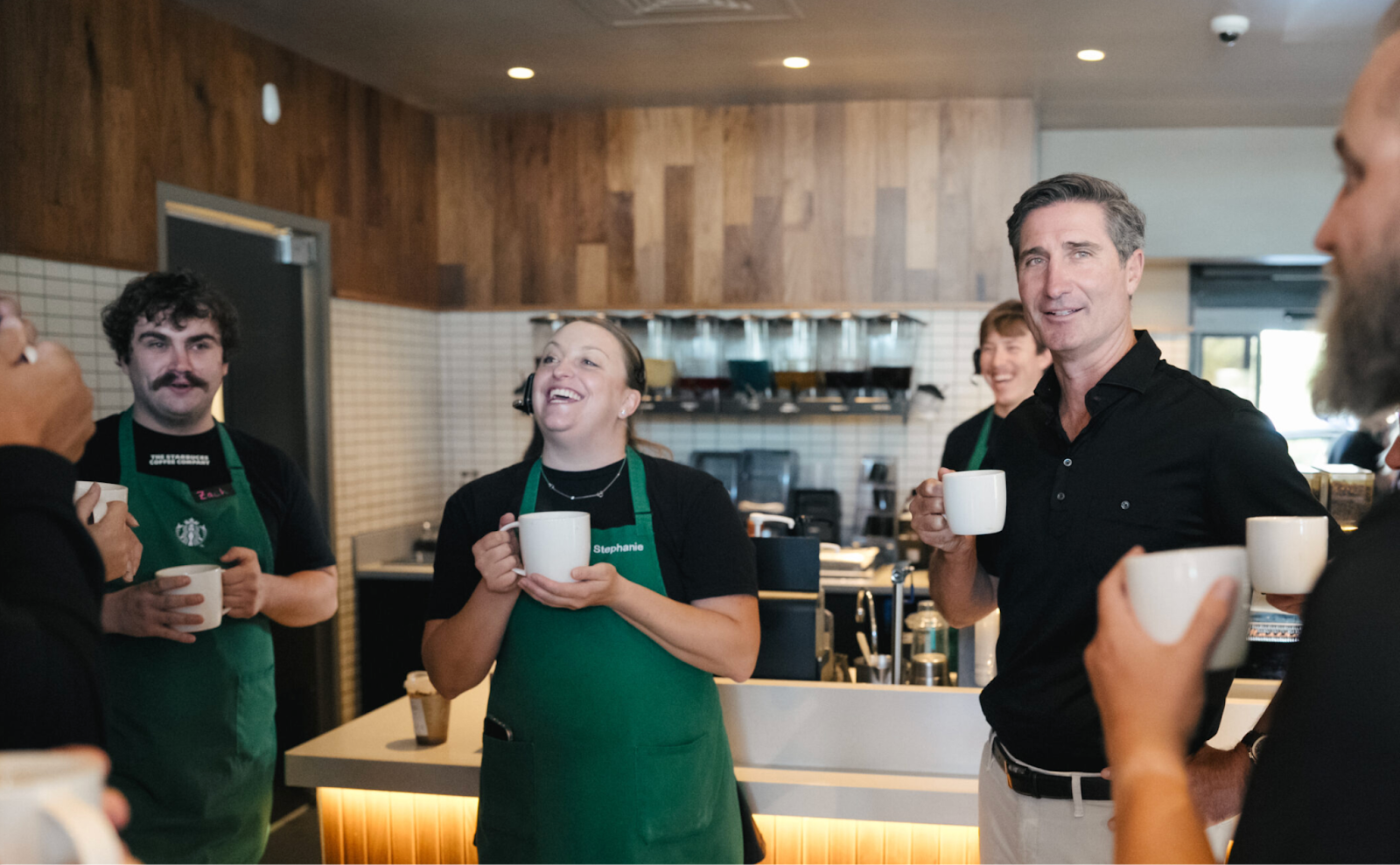
This is the internal marketing move most companies leave undone: treating the first 30 days as the most important marketing campaign an employee will ever experience.
Recognition is one of the highest-leverage internal marketing tools available, and most companies underuse it.
Google runs monthly recognition campaigns that spotlight employee achievements across departments, creating a culture of appreciation that reinforces the behavior the organization wants to see more of.
At the Digital Marketing Institute, an internal campaign called Cheers From Your Peers lets employees nominate each other for monthly awards linked to company values like respect and collaboration.
The result isn’t just a feel-good moment. It’s structural alignment.
When recognition is tied to values, it communicates what the organization actually cares about through action rather than policy.
Organizations that follow best practices in recognition consistently outperform national engagement averages by a wide margin:
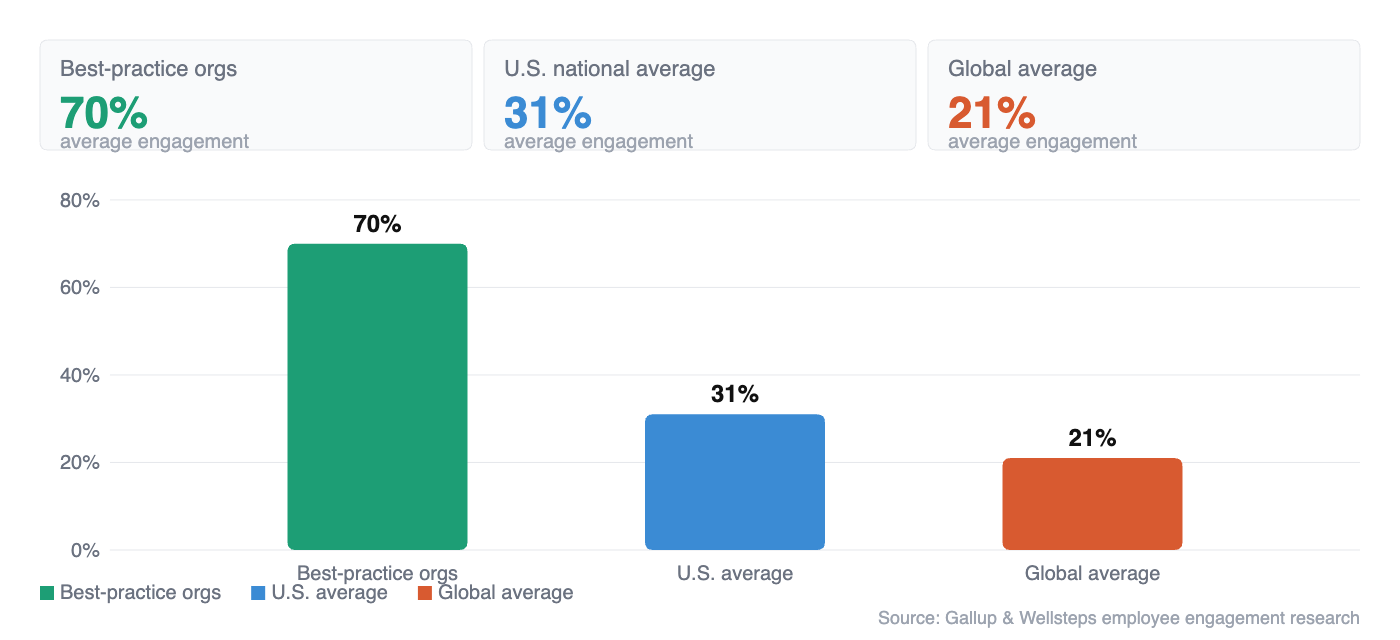
The mechanic matters less than the consistency. A peer nomination system, a public Slack channel for shoutouts, a quarterly awards event. What builds the culture is repetition.
Most internal newsletters fail because they’re written for the company, not for the employee.
They open with a message from the CEO, recap quarterly results, and list upcoming all-hands meetings. They’re formatted like HR announcements and read like terms and conditions.
The internal marketing version is different. It treats the employee as a reader with limited time and specific interests.
It leads with something relevant to their work, delivers one primary update clearly, and closes with something worth sharing.
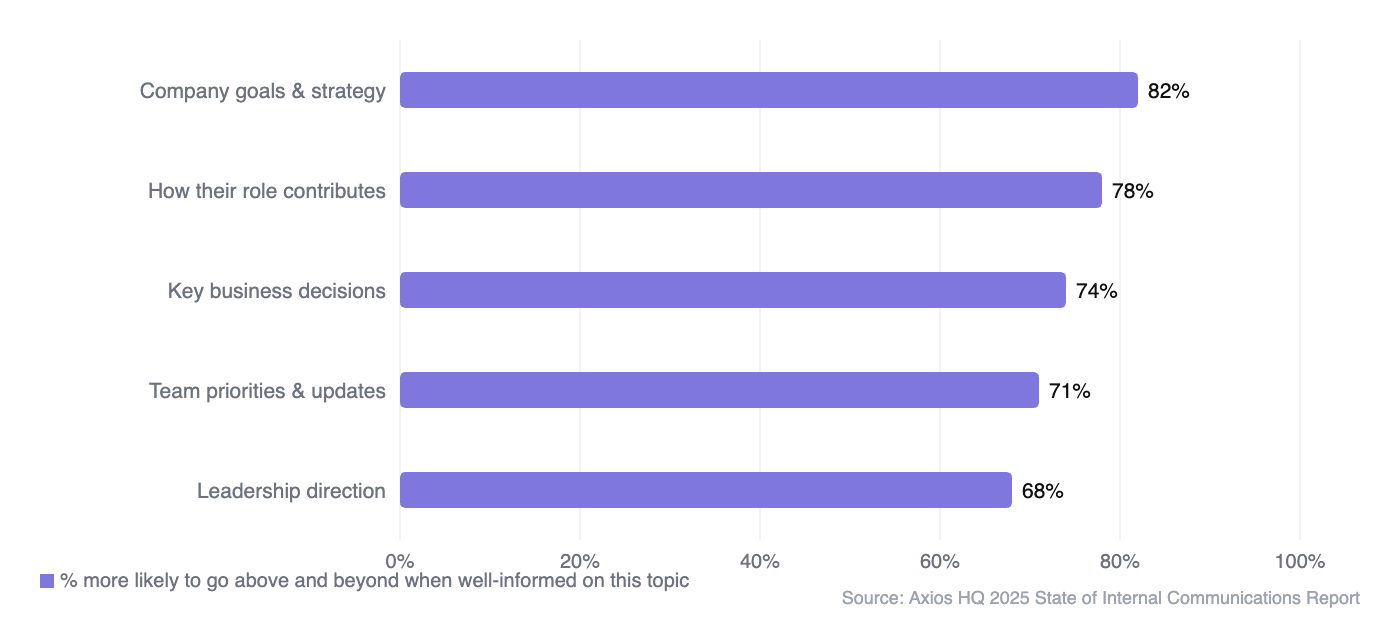
Employees are more likely to go above and beyond when they’re well informed about key business decisions.
Clarity isn’t a soft benefit. It directly correlates with discretionary effort. What employees need to be informed about to go above and beyond at work:
A well-designed internal newsletter looks more like a media product than a company memo.
Short, specific, and sent on a predictable cadence. The goal is to make employees feel slightly ahead of what’s happening, not constantly catching up.
One of the most underused internal marketing tactics is running internal campaigns that mirror external ones.
When you launch a product update to customers, your sales team learns about it the same day from social media, not from you. That’s a problem.
A study cited by Shorthand argues for treating internal marketing as a key element of everything the marketing team does: whenever a product update goes to customers, an internal-facing version should go to employees simultaneously.
Nike is a well-documented example of this approach in practice. When external campaigns launched, internal alignment happened first.
Staff understood the creative direction, the positioning, and the language being used before customers ever saw it.
The effect is immediate: employees speak coherently about the brand instead of stumbling when asked questions they weren’t prepared to answer.
And when employees are confident, it shows in every client interaction, support call, and offhand conversation.
Collecting feedback without acting on it is worse than not collecting it at all.
Employees read that silence as confirmation that their input doesn’t matter.
Internal marketing works when it’s a dialogue, not a broadcast. That means creating mechanisms for employees to share input and making the response visible.
This doesn’t require a sophisticated platform. Google Forms, a quarterly pulse survey, or a dedicated Slack channel can open the loop.
What closes it is communicating back: “Here’s what we heard. Here’s what we’re changing because of it. Here’s what we heard that we can’t act on right now, and why.”
Burnetts Solicitors built this into their internal culture with a dedicated Wow space on their employee platform for personal achievements, client feedback, and peer recognition.
The design sends a consistent signal: your experience here is worth noticing.
The companies that get this right report lower voluntary turnover, higher customer satisfaction scores, and stronger employer brand perception — all of which directly affects recruiting quality.
AIA, the insurance giant, built one of the more effective internal marketing programs around a shared wellness cause.
By aligning internal campaigns with a mission that resonated with employees at a personal level, they created voluntary participation that no top-down mandate could generate.
The mechanic here is simple but often overlooked: employees engage when the cause feels real rather than corporate.
A sustainability initiative, a community service program, a literacy drive. The specific cause matters less than whether it aligns authentically with the company’s stated values.
When the cause does match, the internal marketing almost runs itself.
Teams organize their own participation. Peer pressure becomes positive. Leadership participation adds credibility.
The activity creates shared memories and stories that reinforce culture over months and years.
Gamification takes internal marketing out of the inbox and into something employees actually want to engage with.
Points systems, leaderboards, online quizzes, and challenges tied to company knowledge or values create a dynamic that passive communication cannot replicate.
Employees are not just receiving information. They’re participating in a system that rewards attention and recognizes progress.
The format is particularly effective for:
Gamified training platforms use points, badges, and leaderboards to turn passive learning into active participation:
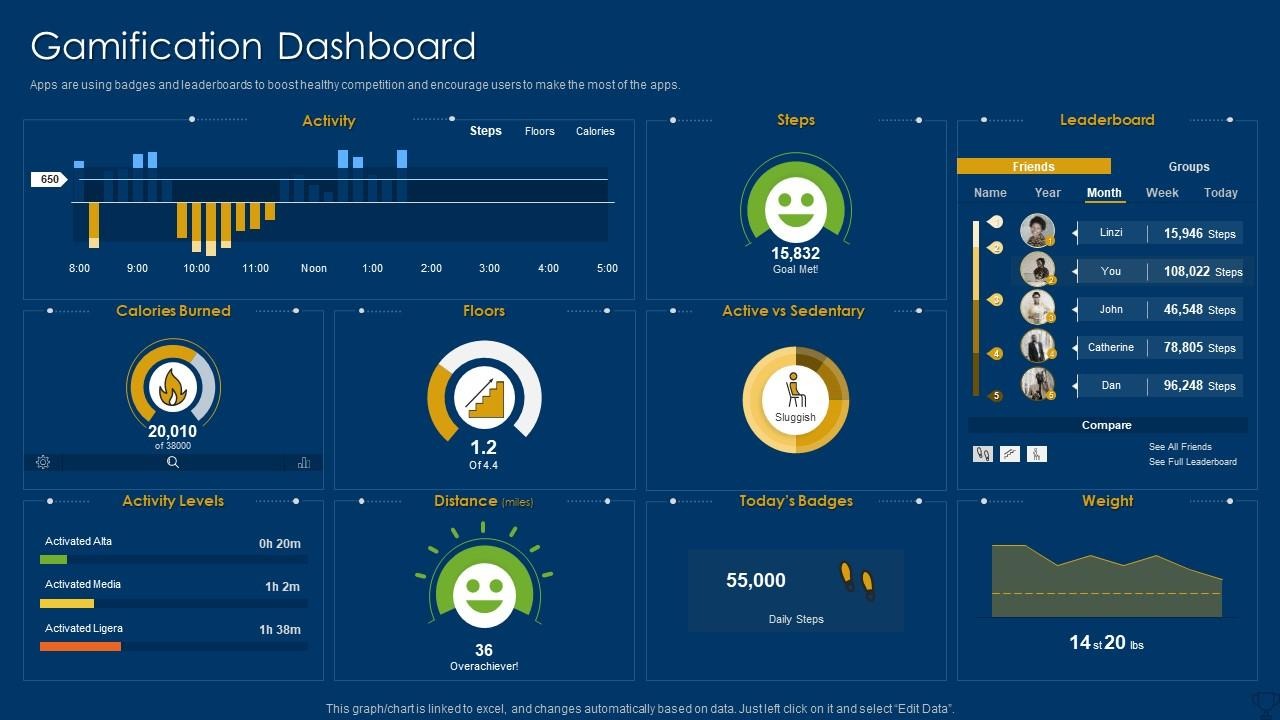
When employees are competing, collaborating, or tracking their own progress, retention improves. The content they engage with actively becomes knowledge they carry into customer conversations.
What gets recognized gets repeated.
The final internal marketing example is also the simplest: make internal milestones public, visible, and celebrated with genuine energy.
A team that just closed their biggest quarter. A support agent who received exceptional feedback from a client. A product team that shipped a long-delayed feature. A new hire who passed their 90-day review.
These moments, made visible inside the organization, send a clearer signal than any company value statement.
They tell employees what success looks like in practice. They give people a narrative to locate themselves within. And they create the kind of ambient pride that shows up in how employees talk about their work outside the office.
The U.S. workforce breakdown shows just how much room most organizations have to move the needle:
Knowing the examples is one thing. Building a coherent strategy is another.
Start by identifying who owns internal marketing in your organization. Most commonly it sits between HR, Marketing, and Communications.
Each has a legitimate claim to parts of it. The risk is that divided ownership produces inconsistent execution.
Designate a point person or a small cross-functional team. Give them a mandate and a cadence.
Then identify your highest-leverage touchpoints:
Use those channels with intention. Test what resonates. Close your feedback loops.
Track the signals that matter: voluntary turnover, internal NPS, participation in optional programs.
Internal marketing is not a campaign. It’s a system. And like any system, it rewards consistent investment more than one-time effort.

Use press releases to get your brand mentioned and recommended by ChatGPT, Gemini, and Perplexity when people search.
 PR playbook to get your brand cited in AI answersHow to check and fix what AI says about your brand2 minutes checklist to make your PR AI-friendly
Where would you like to receive the AI PR toolkit:
The connection between internal marketing and external brand performance is direct.
Employees who understand the mission, trust the leadership, and feel recognized for their contributions are more likely to represent the company well in every interaction they have — with customers, with peers, and in public spaces where brand perception is formed.
The brands doing this well don’t treat internal marketing as an HR obligation. They treat it with the same creative and strategic rigor they apply to their external marketing programs.
If you’re thinking about how to strengthen your brand’s external presence, MarketersMEDIA Newswire helps brands distribute structured, editorial-reviewed press releases to established media outlets — including AP News, Business Insider, USA Today, and Yahoo Finance — that search engines and AI systems trust.
A brand that communicates well internally tends to have a clearer story to tell externally, and press release distribution gives that story the reach it deserves.
A: Internal marketing is a strategic discipline focused on communicating the company’s mission, values, and products to employees as an audience. Employee engagement is an outcome — the level of emotional commitment and investment employees feel toward their work and organization. Internal marketing is one of the primary tools used to improve employee engagement, but engagement is also influenced by compensation, culture, management quality, and other variables beyond communication.
A: Ownership varies by organization. In many companies, internal communications sits within HR. In others, it’s managed by Marketing or Corporate Communications. The most effective setups involve a cross-functional team with a designated lead, because internal marketing requires brand voice expertise (Marketing), people insight (HR), and leadership alignment (Executive team). Without clear ownership, internal marketing tends to be inconsistent.
A: Key metrics include employee engagement scores, voluntary turnover rates, participation rates in optional programs, performance on internal knowledge assessments, and internal Net Promoter Scores. Qualitative data from pulse surveys and exit interviews also provides directional insight. The specific metrics that matter most depend on the objective of the campaign being measured.
A: Yes, and often more effectively than large enterprises because the feedback loops are shorter and changes are easier to implement. Small teams can use simple tools like shared Slack channels, regular team retrospectives, and informal peer recognition to execute strong internal marketing without significant budget or infrastructure.
A: Employees are among the most credible and frequent sources of information about a company. When employees feel informed, valued, and aligned with company direction, they’re more likely to speak positively about the brand in public settings, on social media, in professional networks, and with customers. That word-of-mouth carries significantly more credibility than traditional advertising, making internal marketing one of the highest-ROI activities a brand can invest in.


 PR playbook to get your brand cited in AI answer
How to check and fix what AI says about your brand
2 minutes checklist to make your PR AI-friendly
PR playbook to get your brand cited in AI answer
How to check and fix what AI says about your brand
2 minutes checklist to make your PR AI-friendly