New Media Unlocked!
You can now publish on USA TODAY through MarketersMEDIA. That's 142M+ monthly visitors and DR 92 backlinks for every release you publish.
Better reach, better SEO, better credibility.

You can now publish on USA TODAY through MarketersMEDIA. That's 142M+ monthly visitors and DR 92 backlinks for every release you publish.
Better reach, better SEO, better credibility.
Table of Content


A kiss cam at a Coldplay concert is meant to be harmless fun.
For Andy Byron, then CEO of Astronomer, being caught on it with Kristin Cabot, the company’s Chief People Officer, turned into something far more consequential.
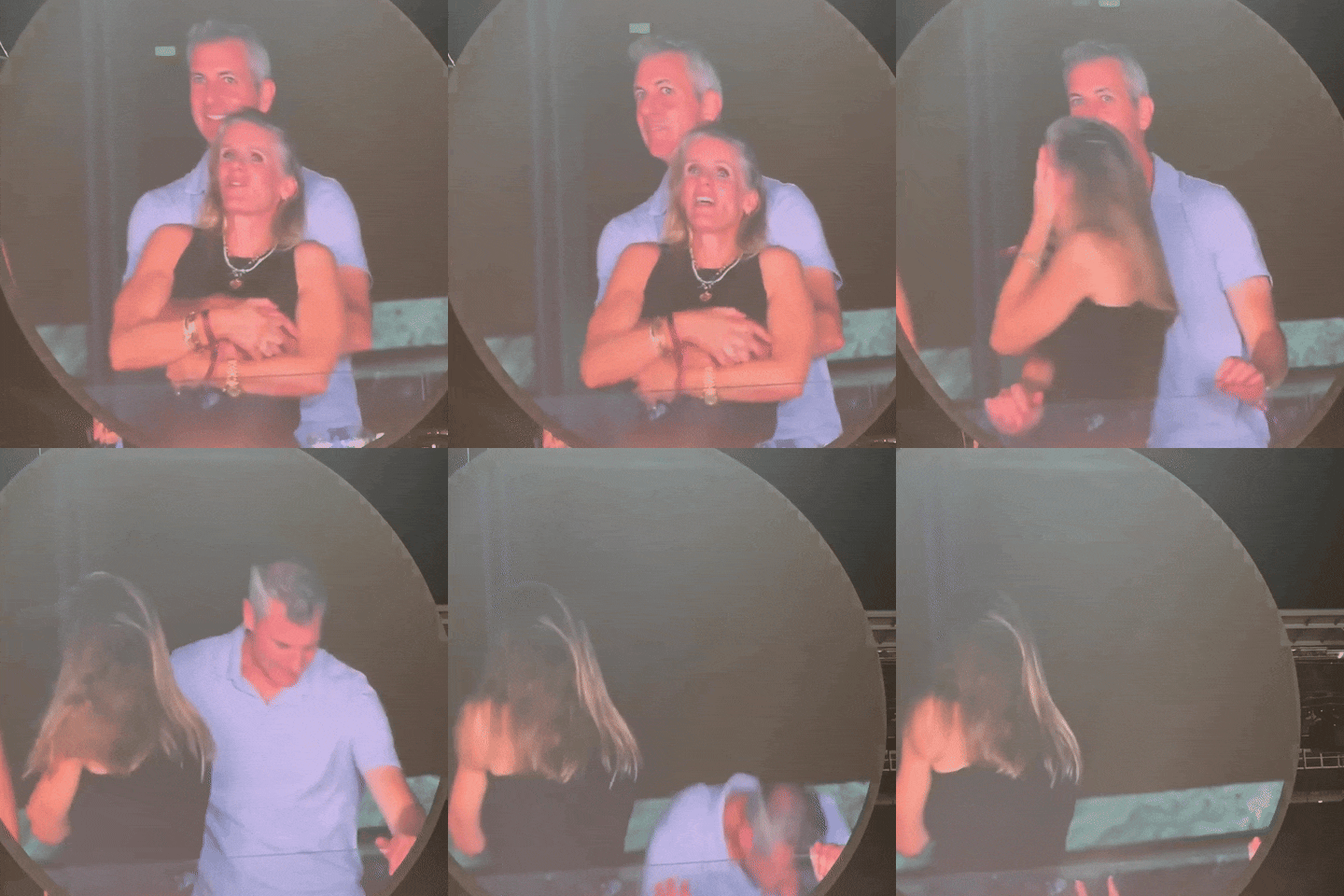
Both later resigned. Public opinion toward them, and toward the company itself, turned sharply negative.
This is what a PR disaster looks like.
Your PR Disaster doesn’t need to be a billion-dollar fraud scheme to destroy your brand.
Sometimes it’s just a kiss cam. A poorly worded ad. A leaked message. A tone-deaf response to tragedy.
In the age of TikTok, Reddit, and AI-powered search engines that never forget, one bad moment can define your brand unless it’s handled with effective PR crisis management.
A PR disaster is when your brand’s reputation takes serious damage—either because something terrible happened, or because you handled it terribly.
Think of it like this: the actual problem might be small, but how people perceive it becomes your real crisis.
Here’s how these situations typically unfold:
Every PR disaster starts with a moment when something goes wrong and becomes public.
It could be:
On its own, the trigger event may not seem catastrophic. But once it is public, everything else follows.
Once the trigger event happens, people react immediately. The story spreads, opinions form, and the company loses control of how the situation is framed.
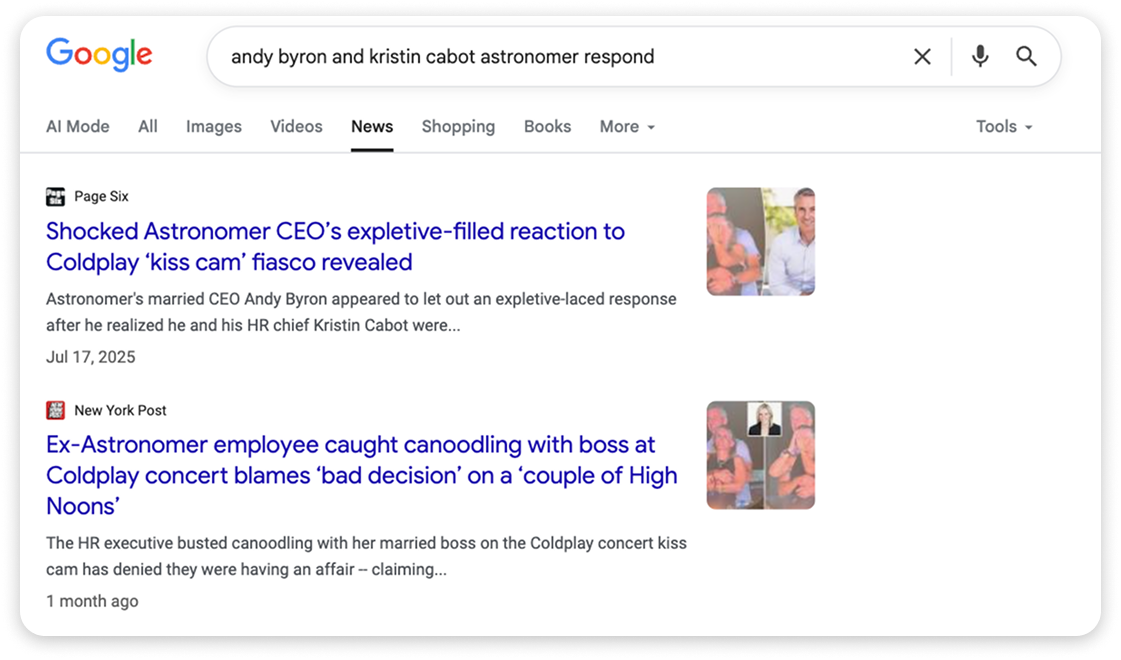
Social media accelerates this process. Posts, clips, and screenshots get shared faster than any official response can be prepared. The original context keeps on changing and people’s assumptions start to fill the gaps of the story.
The Astronomer incident is a good example of how this escalation can happen.
Within hours, clips from the concert were circulating across social media. Online communities began discussing the situation and drawing their own conclusions.
By the next day, the story had reached a wider audience and media outlets started reporting on it.
By day two, the incident was being referenced as an example of poor judgment, slow response, and weak crisis handling.
Once the story of a PR disaster has spread and opinions have formed, the reaction moves beyond social media chatter.
Customers start asking what happened and whether they can still trust the brand. Employees look for clarity, both about the incident and what it means for their own roles.
Investors begin to pay closer attention. Commentators and activists add their own interpretations. The audience grows, and so does the pressure.
At this stage, the company is being watched more closely than it realizes. People are not just reacting to the original incident. They are watching to see what the company will do next.
This is the turning point. The situation can still be contained, but only if the response matches the moment.
Some companies struggle to give a proper response during a PR crisis, or worse, they do not respond at all.
In some cases, teams spend too much time debating what to say. Other times, the company hopes the issue will fade on its own. While they hesitate, the conversation continues without them.
When a response finally comes, it is often too late or poorly framed. A delayed statement feels reactive. A defensive one feels dismissive. Shifting blame only increases skepticism.
Instead of calming the situation, these responses signal that the company does not fully grasp why people are upset.
This pattern shows up again and again across industries. The trigger event may differ, but the way situations escalate, attract outrage, and collapse under poor responses is remarkably consistent.
To see how this plays out in practice, let’s look at a few real examples of PR disasters and what went wrong in each case.
Free Press Release Template
Get your free copy of press release template and advanced PR guide to run your press release.

Let’s look at the biggest train wrecks of 2025, and what they teach us about how not to handle a crisis.
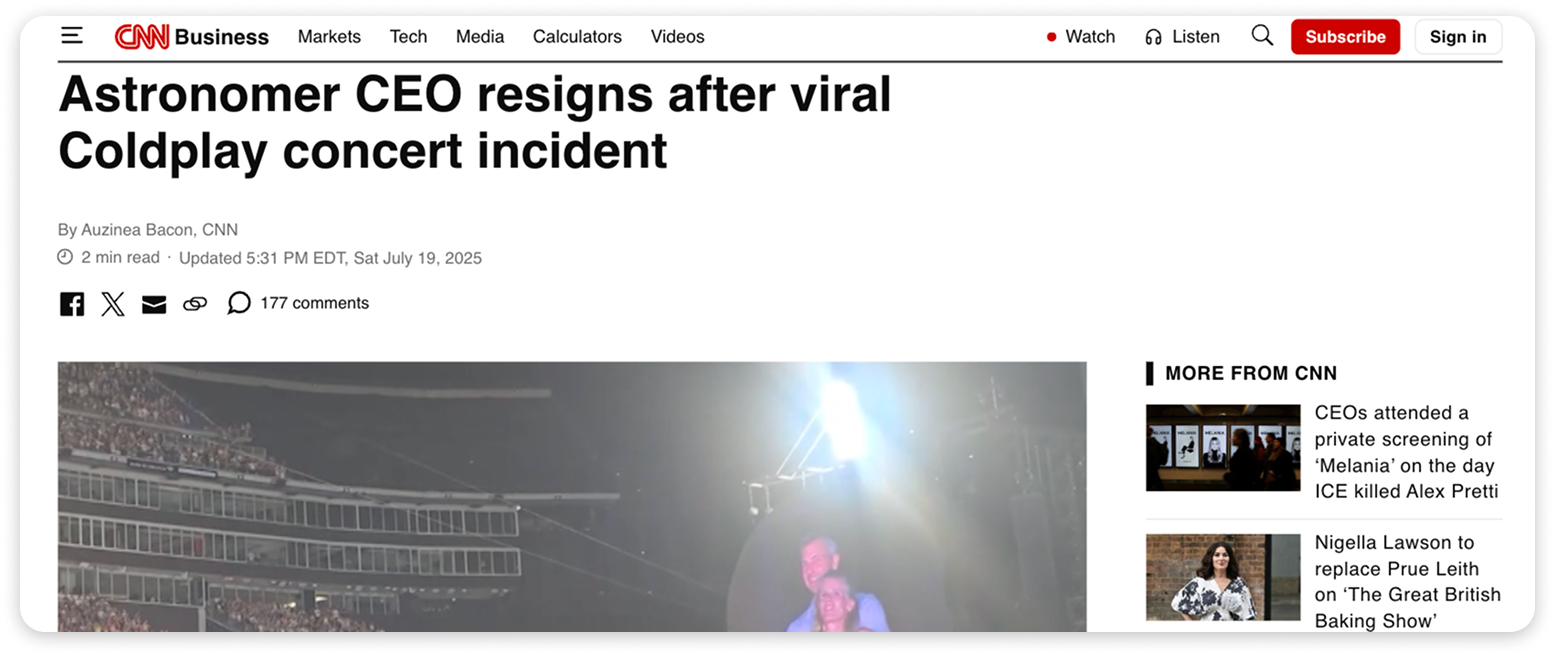
Astronomer’s crisis began when a clip surfaced showing CEO Andy Byron and Chief People Officer Kristin Cabot on a Coldplay concert kiss cam.
The video spread quickly and raised questions about leadership judgment, workplace ethics, and power dynamics.
Astronomer stayed silent for nearly two days, and when it finally responded by saying “no policies were violated,” public concern had already shifted.
The statement addressed policy, not perception, and failed to engage with questions about leadership behavior and company culture.
Employees, former staff, and commentators questioned whether leadership understood the issue at all, and media coverage moved from the video itself to internal accountability.
Both executives resigned soon after.
While the business continued operating, the company’s credibility took a public hit that could not be repaired by later clarification.
The lesson is simple: when senior leaders are involved in ethically questionable situations, speed and accountability matter more than perfect wording. Early acknowledgment, clarity about what is being reviewed, and a commitment to next steps help contain damage. Silence and defensive language do the opposite.
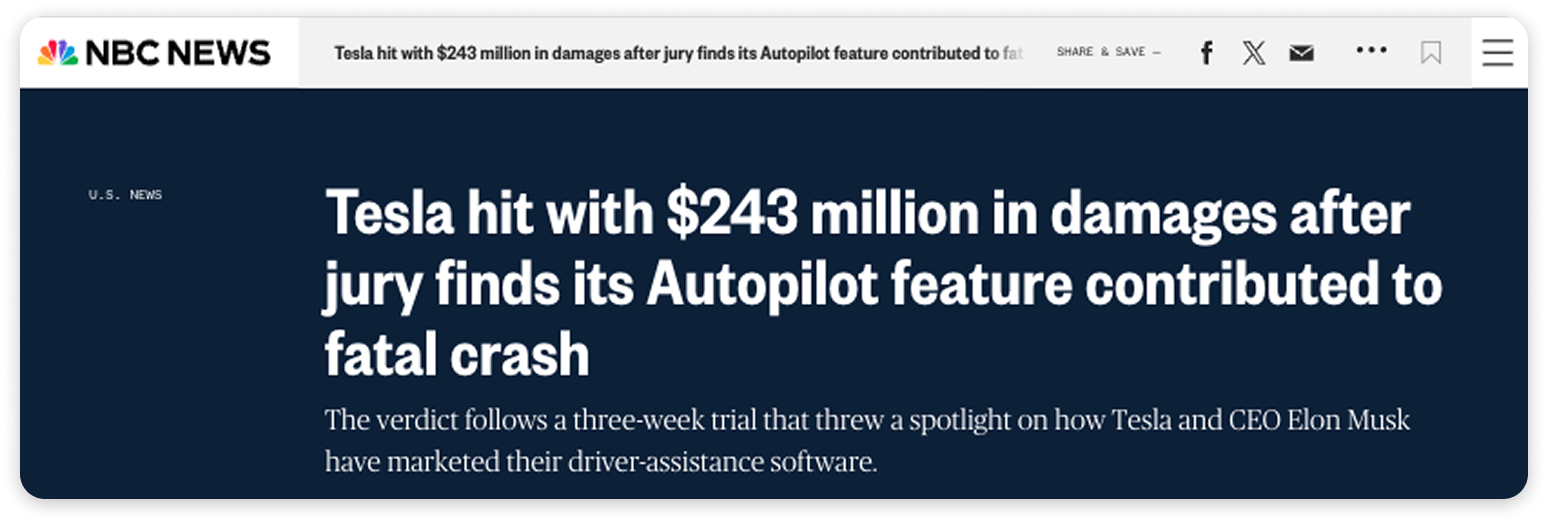
Tesla’s crisis unfolded over several years as its driver-assistance systems, marketed as “Autopilot” and “Full Self-Driving,” were linked to multiple crashes, including a fatal case in Florida that later resulted in a $240 million jury verdict against the company.
When questioned, Tesla responded with technical explanations and statistics comparing its vehicles to human drivers. While those points may have been factually accurate, the tone landed poorly when people had died.
The company appeared more focused on defending its technology than acknowledging the human cost. That approach shaped how the story was received.
Instead of easing concerns, it reinforced the perception that Tesla prioritized protecting its brand over showing empathy. Media coverage and public discussion moved beyond the specific incident to broader questions about responsibility, accountability, and corporate values.
Once that perception took hold, each subsequent defense sounded colder and more self-interested. The lesson is clear: when lives are lost, empathy must come first. Acknowledge the tragedy before explaining the facts.
Data cannot replace compassion, especially in moments of human loss.

A denim campaign featuring Sydney Sweeney used the tagline “great jeans,” intended as a playful reference to the product.
Online, however, many interpreted it as a wordplay on “good genes,” and the interpretation quickly gained traction, with critics accusing the campaign of echoing eugenics-related messaging, even if unintentionally.
The brand responded by clarifying its intent, emphasizing that the campaign was about denim and nothing more. While factually accurate, the response failed to acknowledge why people were upset.
It addressed what the brand meant, not how the message was received, and came across as dismissive to critics.
The fallout was mixed. The controversy drove attention, with reports of increased foot traffic and a surge in social media followers, but it also triggered widespread backlash.
Thousands of negative articles followed, and many Gen Z consumers criticized the brand for brushing aside social and cultural concerns. What could have been a straightforward marketing campaign became a polarizing case study instead.
The lesson is more complex than simply whether to apologize. Refusing to do so can work, but it comes with trade-offs. Doubling down may rally some audiences while alienating others. When a campaign touches on sensitive cultural territory, intent alone is not enough.
Perception, audience values, and long-term trust all matter, and choosing not to apologize is a strategic decision that inevitably leaves some people behind.

In 2018, Dolce & Gabbana released ads showing a Chinese model awkwardly eating Italian food with chopsticks, a campaign widely criticized for relying on stereotypes and portraying Chinese culture as unsophisticated.
The situation escalated when private messages allegedly sent by co-founder Stefano Gabbana leaked online, containing racist and derogatory remarks about China and Chinese people.
The brand’s response fell flat. Its apology was slow, framed around misunderstanding rather than harm, and failed to directly address either the cultural insensitivity of the ads or the seriousness of the leaked messages.
To many, it felt defensive and performative, reinforcing the perception that the company did not fully understand why people were offended.
China accounted for roughly 20 percent of the brand’s global revenue at the time, and sales reportedly dropped by as much as 90 percent in the region. A major Shanghai fashion show was canceled, and retailers, celebrities, and e-commerce platforms cut ties.
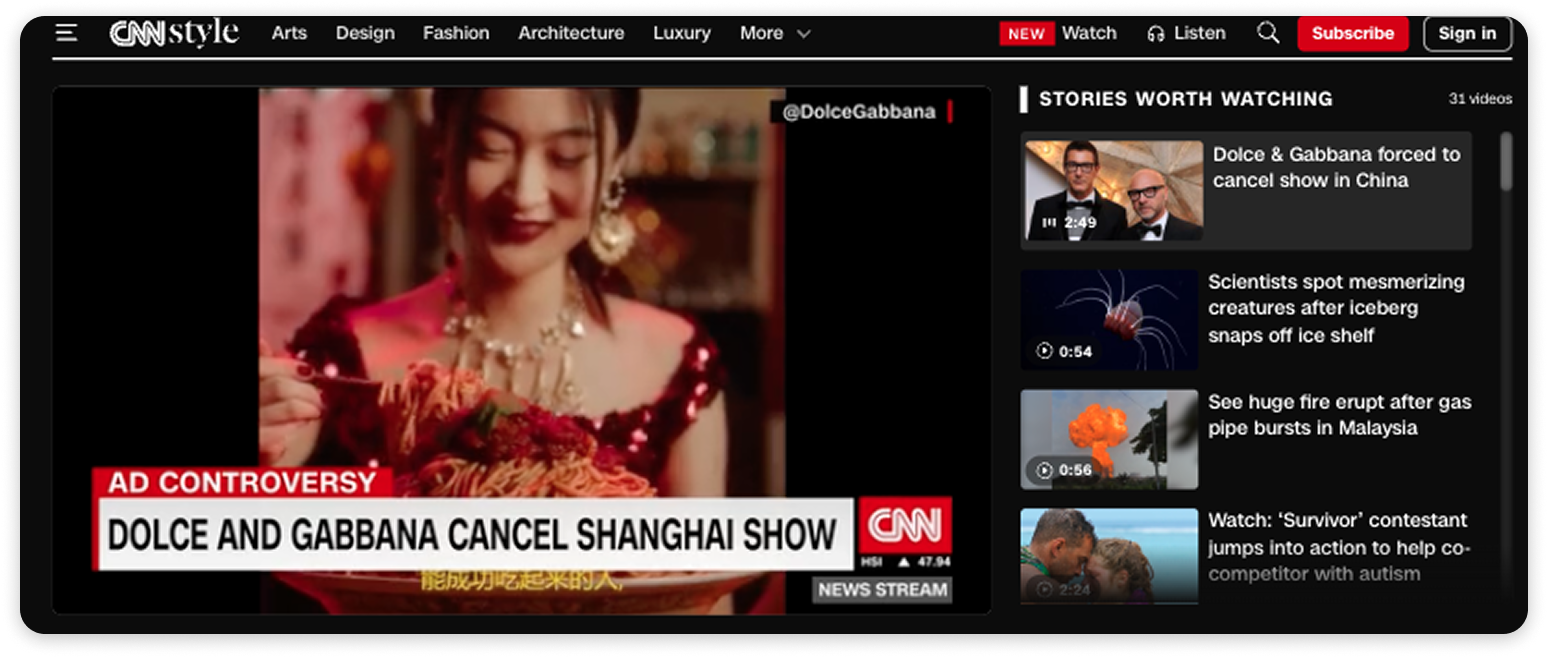
The damage also proved lasting, with the brand struggling for years to rebuild trust in the Chinese market.
The lesson is clear: cultural ignorance is not just offensive, it is expensive. In global markets, respect and awareness are business fundamentals, and when internal messages contradict public apologies, credibility collapses. Cultural competence is not optional.
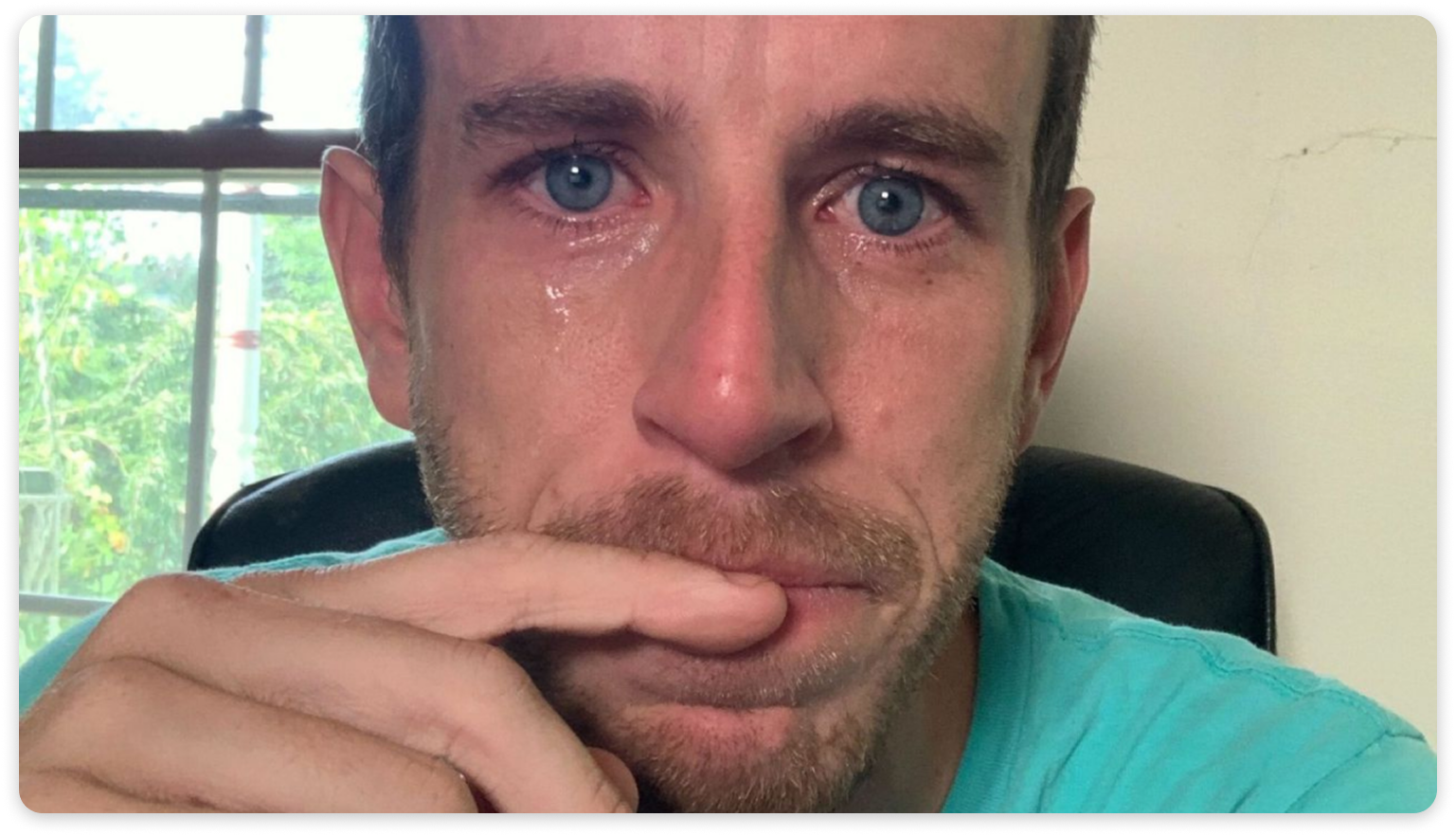
In August 2022, Braden Wallake, CEO of marketing firm HyperSocial, went viral after posting a LinkedIn selfie of himself crying while announcing layoffs.
He framed the post as vulnerability and took responsibility for the decision, but the reaction was swift and unforgiving. The problem was not emotion, but focus.
The message centered on the CEO’s personal distress rather than on the employees who had just lost their jobs. For people facing sudden loss of income and uncertainty, the post felt disconnected and self-focused.
What may have been intended as empathy quickly became a meme, shared widely and often without context.
Any practical support the company may have offered was overshadowed by the optics of the message itself.
The lesson is clear: empathy in a crisis is not about how leadership feels. It is about acknowledging those harmed and addressing their needs first. When communication centers on the speaker instead of the impact, trust erodes. In moments involving layoffs, focus, restraint, and accountability matter more than personal expression.
Before we get into this, a quick note: There is no single response that fits every crisis. Legal constraints, regulatory issues, and the severity of the situation all matter.
These are not rigid rules or legal advice. They are practical recommendations based on recurring patterns seen in real-world PR disasters, including the cases above.
When a crisis hits your brand, here’s a proven playbook.
✅ Get your first crisis statement out within the first hour, or as soon as possible
The “golden minutes” matter. Silence allows others to define the narrative.
✅ Lead with empathy and accountability
If you messed up, say “We messed up” clearly and directly. No corporate jargon.
✅ Be transparent about what you’re doing to fix it
Give specific, actionable steps. “We are investigating” isn’t enough. Say how and when.
✅ Communicate internally first
Your employees need to hear from you before they read about it on Twitter. Internal chaos becomes external chaos.
✅ Monitor social media and sentiment
You can’t respond effectively if you don’t know what people are actually saying.
✅ Demonstrate genuine change with tangible action
Words mean nothing without proof. Launch third-party audits, create public progress dashboards, or make visible policy changes.
❌ Don’t delay your response
Every hour you’re silent, the narrative gets worse.
❌ Don’t make excuses or shift blame
United Airlines’ “re-accommodating passengers” line after dragging a doctor off a plane is a textbook example of what not to say.
❌ Don’t use cold, corporate language
Speak like a human, not a lawyer.
❌ Don’t try to silence critics or suppress information
This approach will backfire spectacularly.
❌ Don’t lead with statistics when people are hurt
For instance, Tesla’s technical defense after a fatal crash felt heartless because it was.
❌ Don’t ignore the root cause
If your crisis exposed a deeper cultural or operational problem, address it. Band-aids don’t work.
Once the initial response is out, the crisis is not over yet. In fact, this is where many brands make their second mistake.
They assume that surviving the backlash is the same as repairing the damage. It is not. Stopping the bleeding and rebuilding trust are two very different challenges.
A fast, empathetic response can prevent a situation from spiraling. But long-term recovery depends on what happens next. How consistently you act, how visibly you change, and whether people believe the crisis actually led to something better.
So the next question becomes: what do you do after the headlines fade?
Want your press release featured on credible media outlets?
MarketersMEDIA Newswire helps you get the kind of third-party visibility these big brands achieved—through press release distribution to established publications. Get in touch with us today.
Recovery typically takes six to eighteen months of sustained effort. Here’s the roadmap:
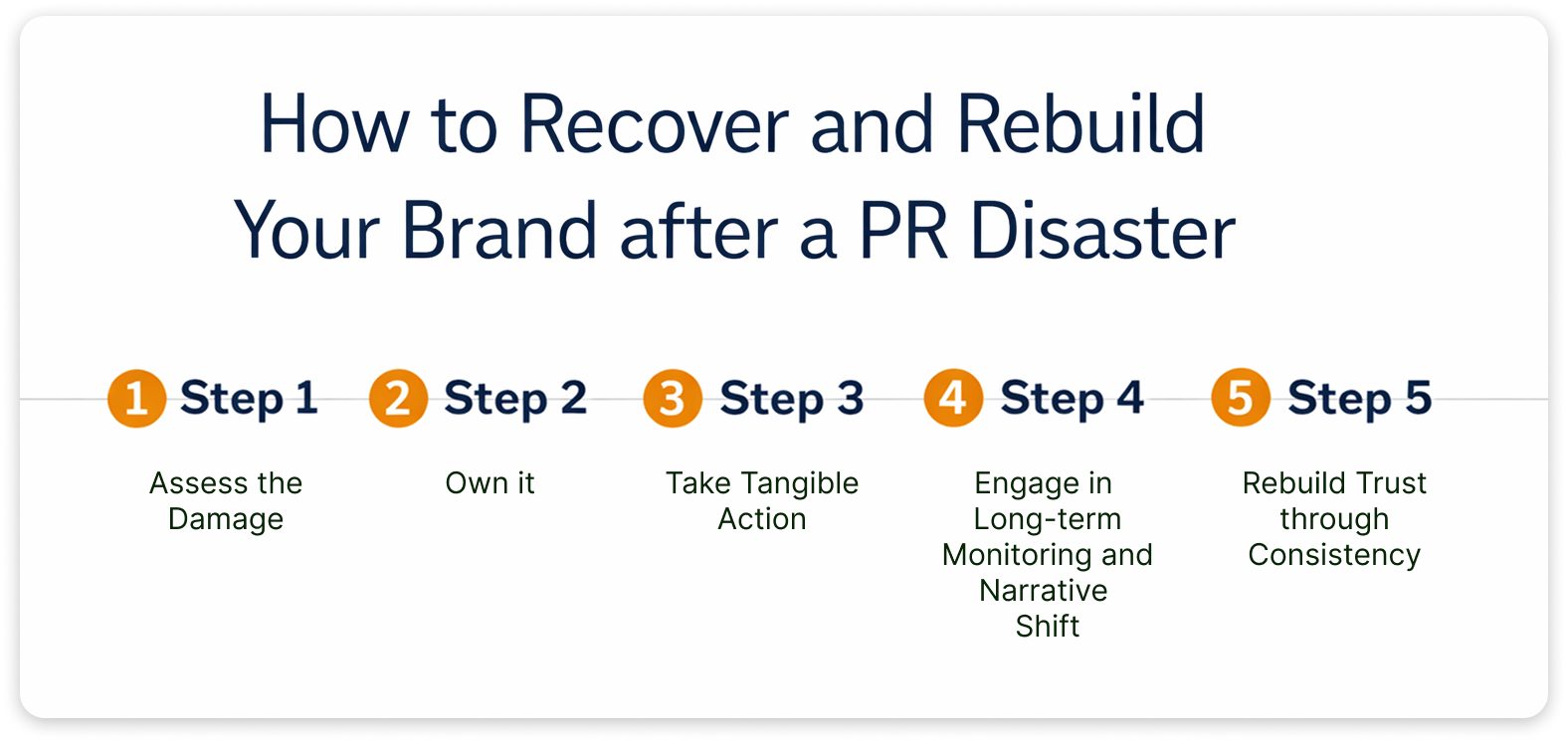
Use social listening tools to understand:
Don’t guess. Track sentiment data and trending keywords.
Your first statement sets the tone for everything that follows. It must:
Example of a good statement: “We made a serious mistake that hurt people. We’re sorry. Here’s exactly what we’re doing to fix it.”
Example of a bad statement: “We regret any confusion this may have caused.” (Passive, vague, no accountability.)
Words aren’t enough. You need proof of change:
For instance, Volkswagen once committed massive emissions fraud.
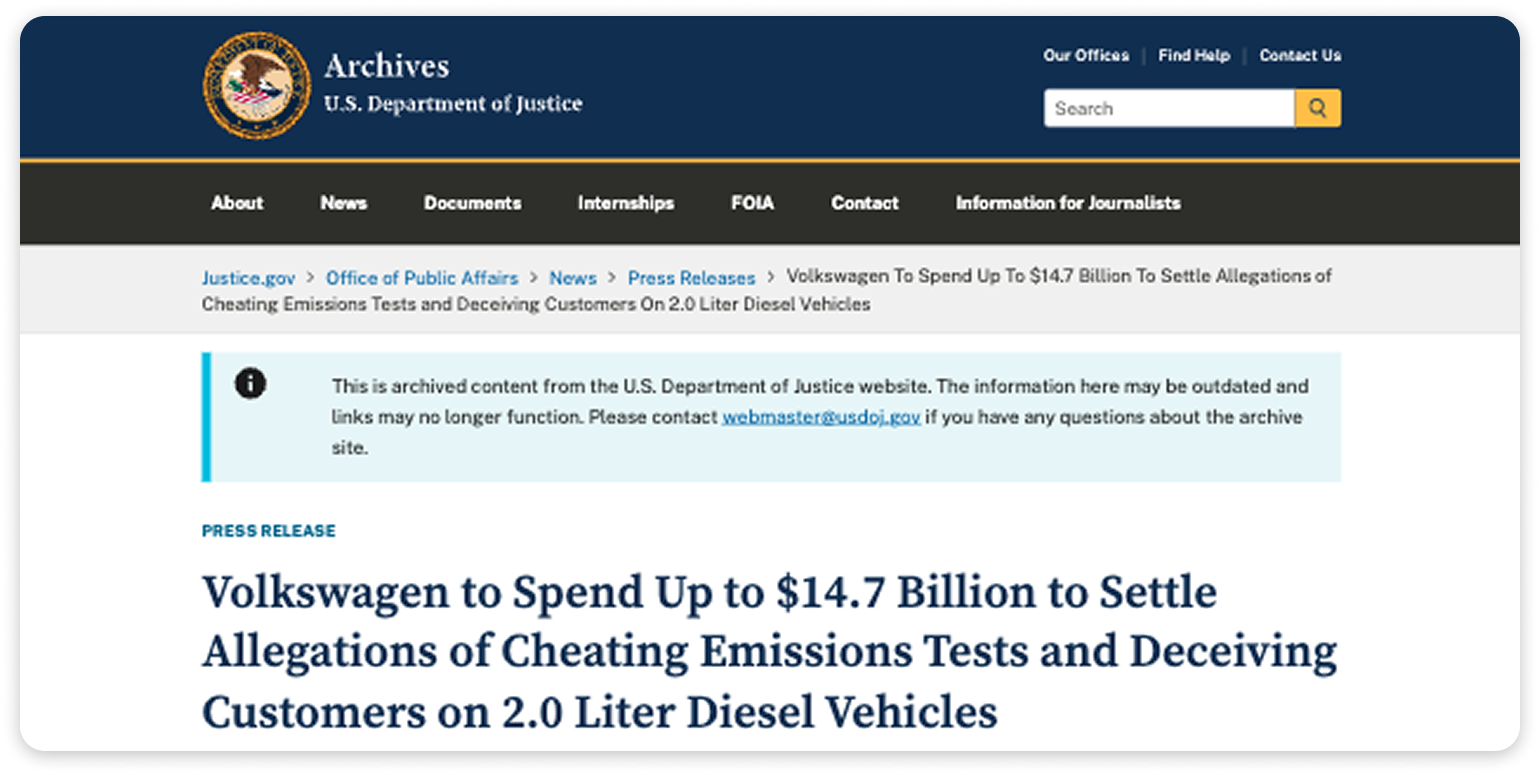
But they’ve begun to rebuild by becoming a leader in EV sales and supporting decarbonization. Tangible pivot, tangible progress.
Recovery is not a one-time announcement. It is an ongoing process that depends on consistent reputation management:
The goal is to move from “the brand that screwed up” to “the brand that learned, changed, and now leads in [X].”
That shift only happens when reputation management is treated as a long-term commitment, not a crisis-only response.
Trust is rebuilt slowly, through repeated proof that you’ve changed. This means:
One slip-up during recovery can undo months of progress.
PR disasters can happen to any company, often sparked by seemingly minor events.
However, a crisis does not have to be the end of your brand. Handled correctly, it can become a turning point.
Crisis response isn’t about perfect messaging, but clarity, responsibility, and follow-through. Own what happened, acknowledge the impact, take action, and keep showing up long after the headlines fade.
In a world where mistakes are searchable and permanent, reputation is built on how you respond, not what you claim. The brands that survive are those that earn trust, not assume they’re entitled to keep it.
Bonus Tip: If you’re unsure how to communicate your crisis, a press release can help justify your actions to the public.
If you don’t have a template yet, we’ve got a practical guide to writing crisis communication press releases that ensures your message is clear, accountable, and effective.
A: Internal communication should be prioritized. Your employees must hear from you before they read about it on social media or in the press. Clear, transparent communication helps maintain internal morale and ensures that everyone is aligned and ready to act as ambassadors for the company’s recovery efforts.
A: Measure effectiveness by continuously tracking social media sentiment, media coverage, and changes in customer perceptions. Use feedback loops from customers and stakeholders to gauge whether the actions you’re taking are having a positive impact.
A: Prevention requires proactive risk management. Establish clear internal policies, practice ethical decision-making, and ensure a crisis communication plan is in place. Regularly audit your operations, monitor customer and employee feedback, and create a strong culture of accountability to reduce the likelihood of crises.
A: If the situation escalates, don’t panic. Ensure that your team continues to act swiftly, transparently, and consistently. If necessary, reevaluate your response and communicate any adjustments or further actions being taken. You may need to revisit your strategy if new issues arise during the recovery process.
Answer: A response is considered too late if the issue has already spiraled out of control and public sentiment has solidified. Ideally, you should aim to communicate within the first hour of a crisis. If you respond too late, you may come across as reactive or disengaged, which can worsen public perception.


 PR playbook to get your brand cited in AI answer
How to check and fix what AI says about your brand
2 minutes checklist to make your PR AI-friendly
PR playbook to get your brand cited in AI answer
How to check and fix what AI says about your brand
2 minutes checklist to make your PR AI-friendly